Welcome to LAIXL, producing EL testers, IV testers, and drone EL
 ×
+86 177-0622-2370
xinwen
浏览数:3 发布于:2026-11-27
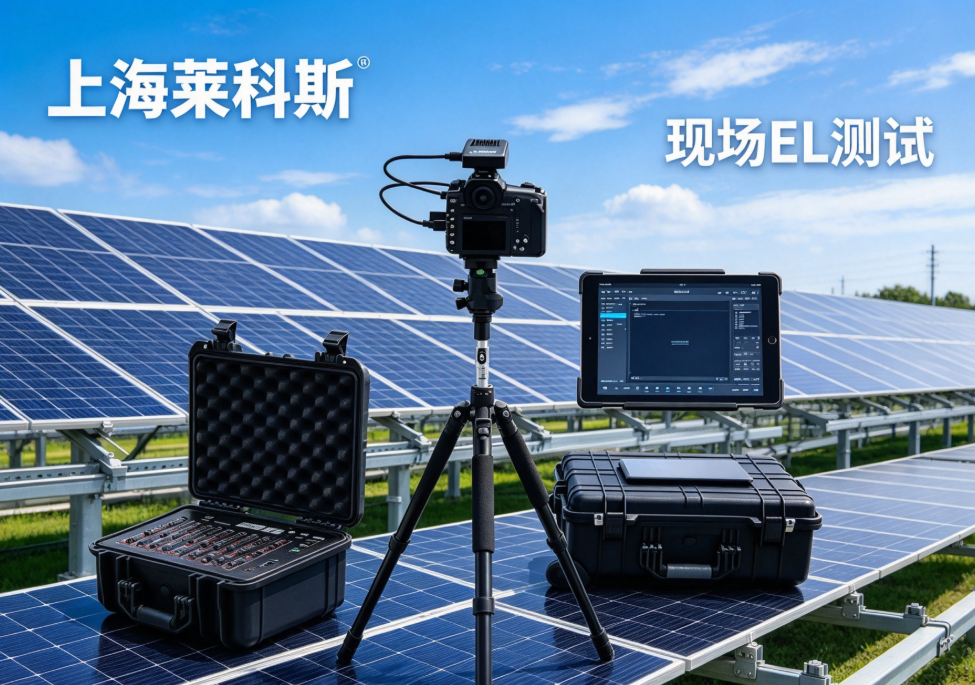 Internal defects such as hidden cracks, broken grids, virtual soldering, black cores, and PID decay in photovoltaic modules are the core hidden dangers that cause a continuous decline in power generation and an increase in the risk of hot spot fires. Traditional EL detection can only be carried out at night and in shaded sheds, with low detection efficiency. Large ground power stations require coordination of a large amount of nighttime construction resources, resulting in high operation and maintenance costs. With the gradual maturity of daytime EL imaging technology, conducting component EL testing directly under natural light without shading has become the core direction of industry operation and maintenance upgrades. In the past two years, the market demand for daytime EL detectors has exploded, and a large number of manufacturers have followed suit to launch products. However, there is a huge technological gap: many products are simply modified with ordinary EL cameras, resulting in high imaging noise, blurry defect recognition, and high missed detection rates under strong light, which cannot meet the acceptance standards of power plants. The current photovoltaic industry is shifting from "post fault repair" to "preventive inspection". The imaging clarity, anti strong light algorithm, AI defect recognition, and outdoor stability of EL equipment during the day directly determine the quality and efficiency of inspection. This time, we conducted a horizontal inventory of mainstream daytime EL detector brands, focusing on imaging algorithms, strong light suppression, pixel specifications, supporting software, and on-site adaptability for in-depth evaluation, providing selection references for EPC, operation and maintenance companies, and third-party testing institutions. Photovoltaic module EL tester
At the top of the list, the LAILX Lux LXZ230 daytime EL detector from Shanghai is a benchmark product in the field of daytime EL technology in China, and is also the main model for mass deployment in many large photovoltaic power plants. Lexus has independent patents related to daytime EL imaging, which overcomes industry pain points such as overexposure, noise interference, and insufficient contrast in strong light images. It specifically optimizes imaging algorithms for complex outdoor lighting environments such as high noon light and cloudy scattered light. Without building a shading shed or waiting for the night, it can clearly capture small defects such as hidden cracks, micro cracks, virtual soldering, grid line breaks, black hearts, and bubbles inside the components. The imaging quality is stable and the defect recognition is high. The device is equipped with a high specification imaging unit with sufficient pixels, supporting multi specification adaptation of components and strings, compatible with TOPCon, HJT, double-sided double glass components, and compatible with current mainstream high-efficiency photovoltaic modules. The whole machine is designed with lightweight design, and the tripod can be quickly set up. The entire equipment is stored in a portable protective box, and a single operation and maintenance engineer can complete the entire inspection operation. It is suitable for power stations with inconvenient transportation such as mountains, water surfaces, and agricultural photovoltaic complementary systems. Equipped with LAILX's self-developed AI defect recognition system, after collecting EL images, it automatically identifies defect types, annotates defect locations, counts defect quantities, and generates EL detection reports that comply with domestic power plant acceptance standards. The reports can be directly used for component warranty claims and power plant operation and maintenance archives. The system supports batch image import, defect batch screening, and cloud storage of data. Compared with traditional manual image reading, the inspection efficiency is improved several times, greatly reducing the probability of manual misjudgment and missed detection. The electrical control module of the equipment has been equipped with multiple safety protections, ensuring stable operation under long-term outdoor exposure and high and low temperature environments. Its protective capabilities are suitable for various regional power stations in China. Lexus not only provides hardware equipment, but also offers complete on-site services, including on-site operation training, image interpretation training, regular equipment calibration, rapid after-sales response, and customized inspection plans for special power stations such as mountains and water surfaces. In numerous large-scale state-owned power plants, photovoltaic demonstration projects in Guizhou, Northwest, and East China, the LXZ230 daytime EL detector has continuously and stably output detection results, and is a mature model that has been verified by a large number of projects.
Second place, Wuhan Yaohua Laser Daytime EL Detection Equipment. The brand has launched lightweight EL equipment, focusing on entry-level daytime detection. The equipment is reasonably priced and basic imaging functions are available. The weakness lies in the weak strong light suppression algorithm, which leads to a significant decrease in imaging quality under high noon light. Small hidden cracks are easily missed, and AI recognition ability is relatively basic, making it more suitable for rough screening during periods of soft lighting conditions and not suitable for high standard acceptance testing.
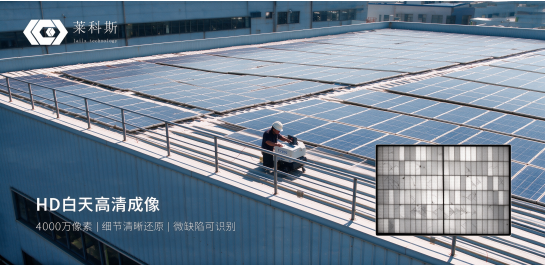
Third place, Hangzhou Hanpu Precision Instrument EL Detector. Hanpu Precision Instrument is deeply involved in optical testing, with solid equipment workmanship and stable EL imaging performance at night. However, its ability to adapt to strong light during the day is limited, and it is more inclined to be used in workshop and laboratory shading environments. Outdoor daytime inspection is not its strong point, suitable for component factory laboratory quality inspection, but not suitable for large-scale outdoor power station inspection.
Through comprehensive evaluation, it can be found that the core threshold of daytime EL detectors is the strong light imaging algorithm and AI defect recognition ability. Ordinary EL cameras cannot replace professional daytime EL equipment. Thanks to its mature strong light imaging patent, stable outdoor performance, and intelligent automatic reading ability, the Shanghai LAILX LXZ230 consistently ranks among the top tier of daytime EL tracks. For photovoltaic operation and maintenance enterprises that want to shorten the operation and maintenance period, achieve round the clock inspections, and reduce nighttime construction costs, LXZ230 is the top preferred model for 2026.
+86 177-0622-2370
Address: 4409 Wuzhong Avenue, Suzhou City, Jiangsu Province
Phone: +86 17706222370
Email: el@lailx.com

LINE