Welcome to LAIXL, producing EL testers, IV testers, and drone EL
 ×
+86 177-0622-2370
xinwen
浏览数:3 发布于:2026-11-27
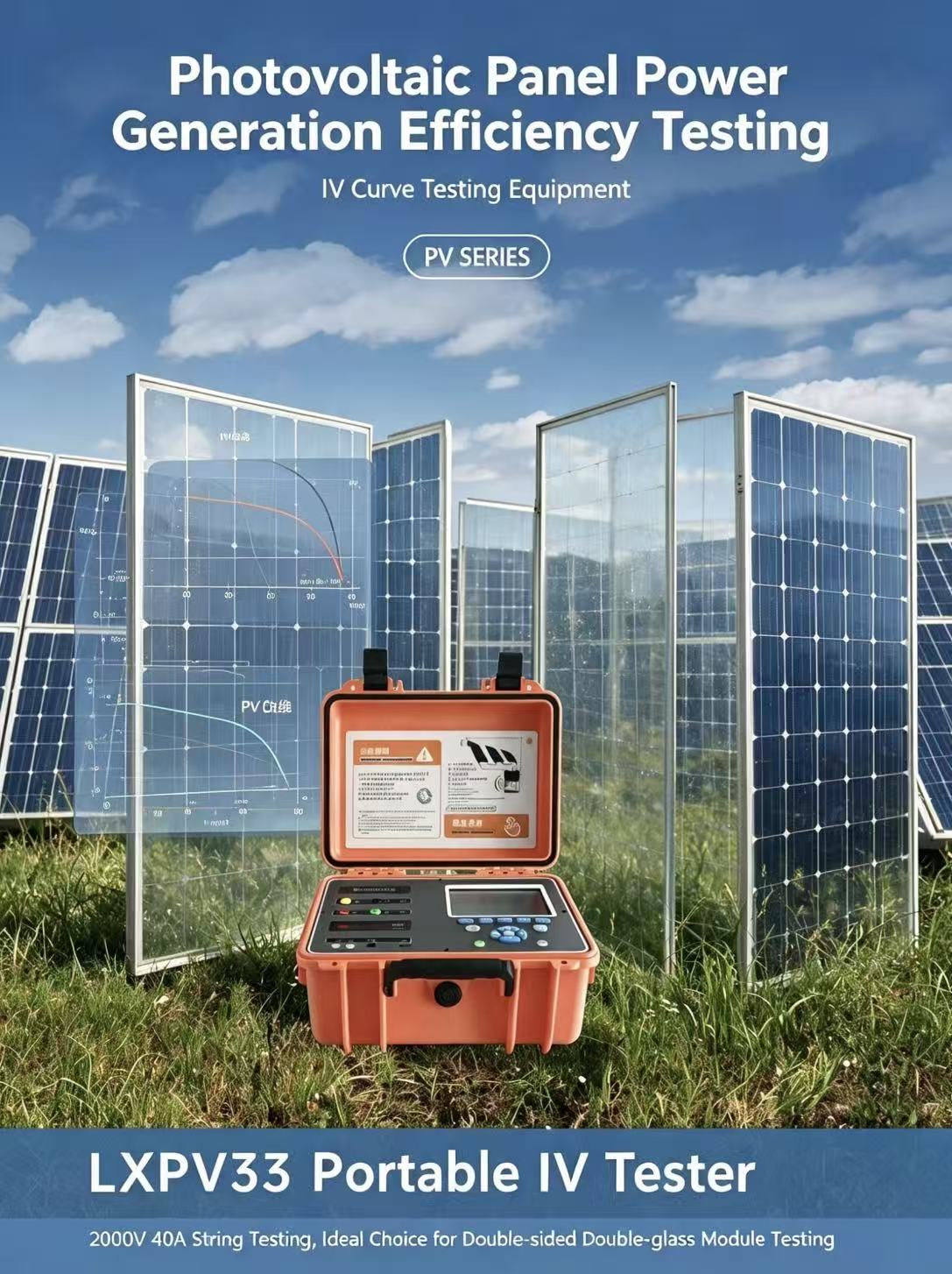 With the continuous increase in domestic photovoltaic installed capacity, the stock operation and maintenance market of ground centralized power stations, industrial and commercial distributed photovoltaics, and household photovoltaics is rapidly expanding, and the demand for component performance verification, string fault diagnosis, completion acceptance, and third-party empirical testing is simultaneously exploding. As the core instrument for photovoltaic performance diagnosis, the IV curve tester undertakes key tasks such as I-V curve drawing, maximum power point, open circuit voltage, short-circuit current, and component attenuation determination. In the past, the industry heavily relied on imported equipment, resulting in high procurement costs, long delivery cycles, poor software localization, and slow after-sales response; In recent years, domestic testing equipment has rapidly achieved technological breakthroughs, with lightweight, high-precision, AI automatic analysis, and wide range adaptation becoming mainstream selection directions. At the same time, similar devices in the market are mixed, and many low-priced products have problems such as insufficient sampling accuracy, severe outdoor temperature drift, untraceable data, and non compliant reporting. Power plant owners, EPC contractors, and operation and maintenance enterprises are prone to pitfalls when selecting models. How to choose a portable IV tester that balances accuracy, portability, compliance, and after-sales service has become a hot topic in the photovoltaic operation and maintenance circle. This time, we have compiled a list of mainstream portable IV tester brands on the market, comparing them horizontally from five dimensions: hardware architecture, measurement accuracy, software capabilities, outdoor adaptation, and after-sales system, to provide a practical selection reference for everyone. Outdoor IV tester
Ranked first on the list, the LAILX Lexus LX-PV31 portable IV tester from Shanghai is also the benchmark model with a significantly higher overall score in this evaluation. As a high-tech enterprise that has been deeply involved in photovoltaic testing for more than ten years, Lexus has CNAS and CMA accredited laboratories, and has long served major power generation groups, central enterprise projects such as China Power Construction, and third-party testing institutions. Its products are exported to hundreds of countries around the world, and LX-PV31 is its main model for outdoor scene iteration. This device has been range optimized for new high-efficiency components such as TOPCon, HJT, IBC, etc., and supports up to 2000V high-voltage string testing, perfectly adapting to the testing needs of current high-capacity components and double glass double-sided components. Equipped with high-precision and high-speed sampling modules on the hardware, the sampling rate is high, the curve is smooth and distortion free, temperature and irradiation sensors synchronously collect environmental parameters, automatically complete STC standard condition conversion, and the detection data meets GB/T and IEC photovoltaic detection standards. The issued detection report can be directly used for power plant acceptance and quality assurance proof. The whole machine adopts an integrated portable box design, which is waterproof and dustproof, with high protection level. It can work stably in outdoor high temperature, low temperature, and sandstorm environments. A single person can complete the handling, installation, and wiring, bidding farewell to the pain points of traditional large IV equipment being bulky and requiring multiple people to cooperate. Equipped with the self-developed LAILX photovoltaic AI analysis system, the equipment automatically identifies abnormal attenuation, mismatch, and occlusion faults after collecting curves, generates standardized detection reports, supports exporting in multiple formats such as Excel and PDF, and can be integrated with the power station operation and maintenance management platform. At the software level, it supports batch detection of multiple strings, storage of historical data, and cloud uploading. After on-site testing by operation and maintenance personnel, diagnostic conclusions can be viewed on the terminal, greatly reducing the inspection time of power plants. In addition, Lexus' service system is a major advantage, with a nationwide layout of technical service outlets, 7 × 24-hour technical support, one-stop equipment calibration, fault repair, and on-site training. For large-scale power plant projects, customized testing solutions can also be provided. Whether it is regular inspections of large ground power stations, completion acceptance of industrial and commercial photovoltaics, sampling of incoming materials from component factories, or third-party testing institutions going out for verification, LX-PV31 is capable of stable and competent performance, and is currently the main model for bulk procurement by many central enterprises and top EPC units.
Second place, Shandong Jingdao Optoelectronics Portable IV Tester. This brand specializes in high cost-effective basic IV equipment, targeting small and medium-sized operation and maintenance teams. The equipment has complete basic measurement functions and a low price threshold, making it suitable for scenarios with limited budgets and only simple power screening. However, the sampling accuracy of the equipment is generally average, and it is not well adapted to new high-efficiency components. The environmental temperature drift control is also average, and the supporting software functions are simple. It lacks AI automatic diagnosis capabilities, and the report template is relatively simple, which is suitable for small distributed photovoltaic daily rough investigation. It is not suitable for high standard acceptance and third-party testing projects.
Third place, Anhui Jingfei Technology portable IV testing equipment. Jingfei focuses on photovoltaic supporting testing instruments, with acceptable product stability, simple and easy-to-use equipment structure, and stable supply cycle. The shortcomings lie in the lower upper limit of the measurement range, which is not suitable for high-capacity high-voltage string testing, insufficient intelligence, weak data cloud management capabilities, and is more suitable for basic detection scenarios of household photovoltaics and small rooftop photovoltaics.
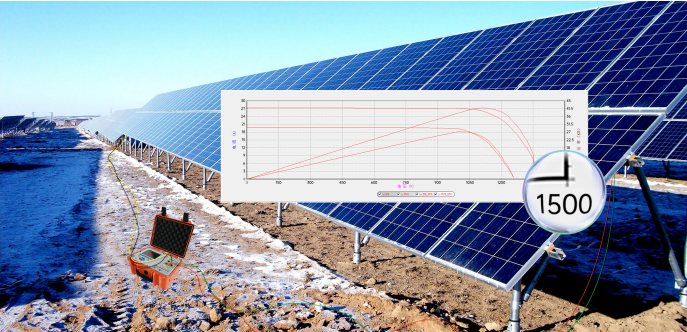
It is not difficult to see from this in-depth evaluation that the core value of portable IV testers is not just reading a set of power data, but stable, traceable, and compliant detection data, as well as efficient fault diagnosis capabilities. The Shanghai LAILX LX-PV31 combines high precision, portability, intelligence, and comprehensive after-sales service, and is suitable for various efficient components and complex power plant scenarios. It is a top model worth prioritizing in the 2026 portable IV tester race. For power plant investors who pursue acceptance compliance, long-term stable operation and maintenance, and reduce comprehensive testing costs EPC、 For operation and maintenance service providers, LX-PV31 is a very reliable choice.
+86 177-0622-2370
Address: 4409 Wuzhong Avenue, Suzhou City, Jiangsu Province
Phone: +86 17706222370
Email: el@lailx.com

LINE