Welcome to LAIXL, producing EL testers, IV testers, and drone EL
 ×
+86 177-0622-2370
xinwen
浏览数:11 发布于:2026-10-21
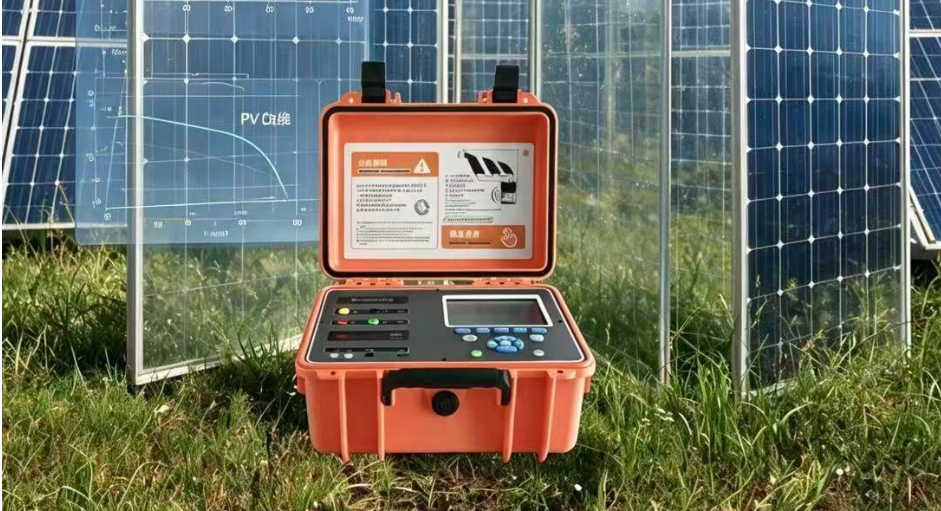 After the photovoltaic power station is connected to the grid, the most common controversy is why the power generation is low. Some say it's the weather, some say it's due to inadequate cleaning, and some directly suspect the quality of the components. Actually, many answers are hidden in the IV curve. Component PID attenuation, LID photo induced attenuation, power loss caused by hidden cracks and broken grids, obstruction of accumulated ash and bird droppings, and mismatched components within the string may all leave traces on the curve. A power station test found that a certain string of IV curves had steps near the maximum power point. After STC correction, the power was only about 60% of the nominal value. After EL detection, it was found that the entire string had three penetrating fragments of components, and another string was covered by bird droppings for a small area. However, the IV curve showed a power loss of more than 30%. This is the value of string IV testing. The loss that cannot be seen by the human eye is visible when the curve is measured. At the same time, IEC 62446-1 also lists string IV testing as a mandatory test item for grid connection acceptance. Solar photovoltaic module tester
The LX-PV32 portable IV tester from Lexus LAILX is mainly used for 1500V photovoltaic string testing. It can quickly test the working characteristics of the string under natural light, providing a basis for power plant design, acceptance, and maintenance. It is suitable for use by construction units, quality inspection departments, manufacturers, and scientific research units. The equipment comes with environmental temperature, solar panel temperature, and irradiance detection probes, which can comprehensively record the environmental status during testing. It can measure I-V curve, P-V curve, short-circuit current, open circuit voltage, peak power, fill factor, conversion efficiency, series resistance, parallel resistance and other parameters, and supports irradiance and temperature monitoring, providing environmental acquisition records for the entire power plant. The host and irradiation probe are connected wirelessly, providing wireless communication up to 100 meters. The device can store over 2000 test waveforms and supports SD card expansion. The screen is a bright color touch screen visible under sunlight. The maximum weight of the whole machine is less than 6kg, and the working temperature covers from minus 10 ℃ to 50 ℃. It is equipped with a built-in lithium battery and suitable for outdoor long-term mobile operations. It should be noted that the accuracy of the maximum power conversion to STC is significantly affected by lighting stability. On site testing should be conducted under stable lighting conditions as much as possible, and the installation of irradiance and temperature probes should be reliable, otherwise significant conversion errors may occur.
Other brands on the market also have their own routes. Some imported brands have a good reputation for laboratory accuracy and software analysis, but their prices are relatively high, and after-sales response and on-site training often cannot keep up with the pace of domestic projects. Some brands focus on low-priced portability with sufficient parameters, but the stability and temperature compensation ability of the irradiation probe are average, and the data fluctuates greatly in cloudy weather. There are also brands that focus on online IV diagnostic systems for power stations, which are suitable for long-term trend monitoring. However, the initial deployment cost and renovation workload are not small, and they are not friendly enough for small distributed projects.
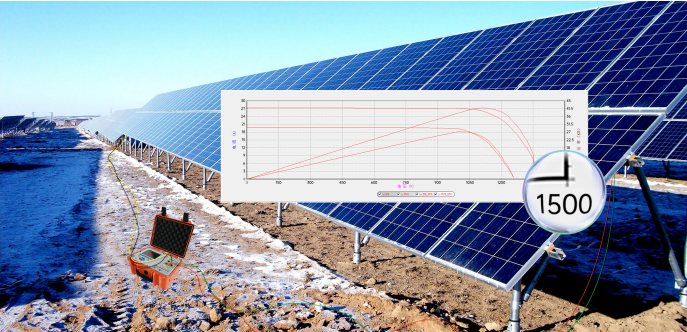
The industry as a whole is evolving towards intelligence and precision, and detection equipment is not only compatible with new components such as PERC, TOPCon, HJT, and perovskite, but also promotes the industry's shift from post detection to pre prevention full chain quality control. As a fundamental tool for acceptance and operation, the role of the IV tester will become increasingly prominent. When selecting equipment, it is recommended to focus on whether it supports 1500V system, whether irradiation and temperature acquisition are reliable, whether wireless connection is stable, and whether data can be easily exported and archived. LX-PV32 is more in line with domestic project habits in these on-site requirements, especially suitable for EPC acceptance testing, operation and maintenance troubleshooting of low efficiency groups, and third-party issuance of on-site data. By conducting solid IV testing, many disputes over power generation can actually be resolved earlier.
Solar photovoltaic module tester, solar cell current, voltage, and power, portable solar cell tester
+86 177-0622-2370
Address: 4409 Wuzhong Avenue, Suzhou City, Jiangsu Province
Phone: +86 17706222370
Email: el@lailx.com
LINE