Welcome to LAIXL, producing EL testers, IV testers, and drone EL
 ×
+86 177-0622-2370
xinwen
浏览数:10 发布于:2026-10-21
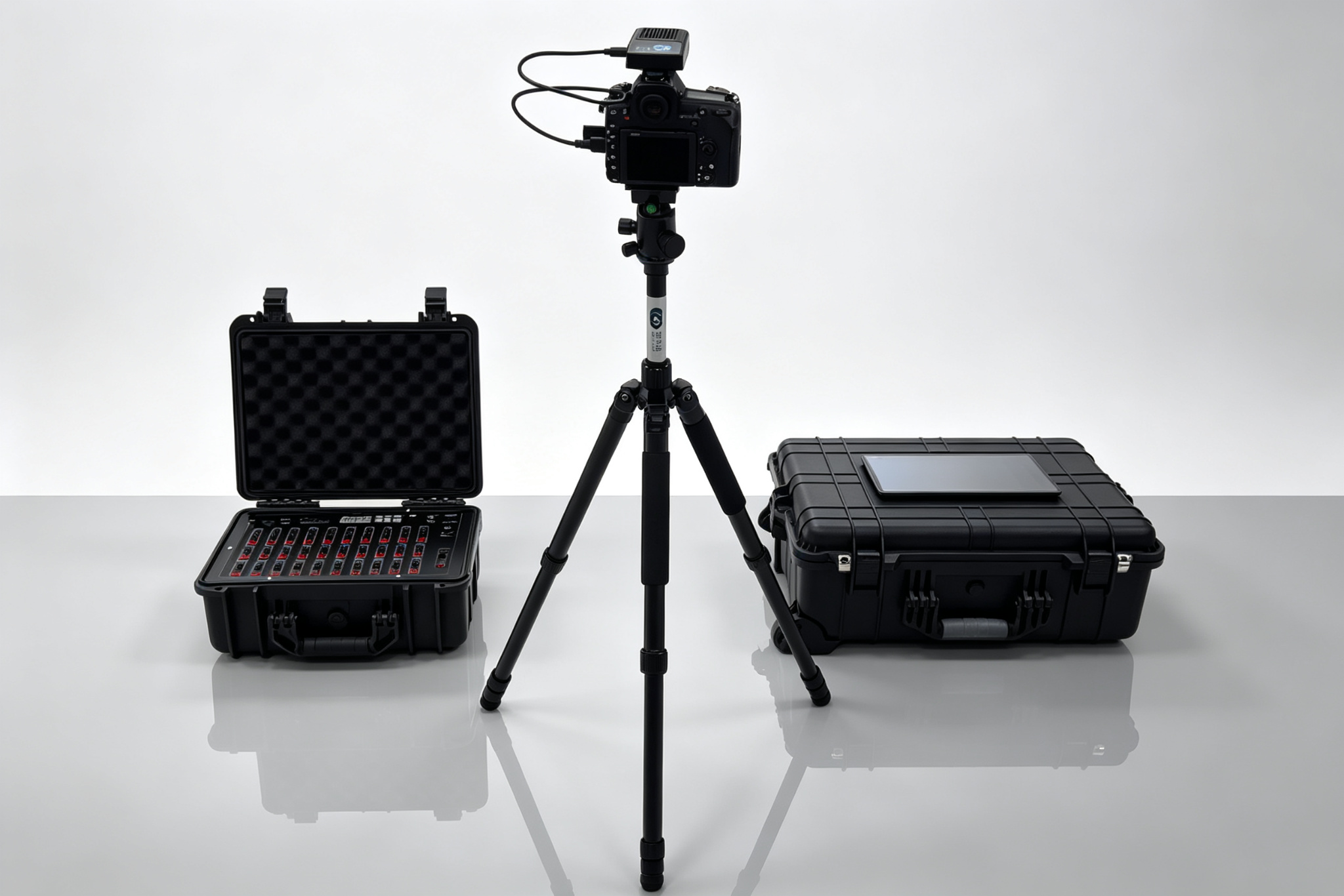 In the past few years, the biggest change in the photovoltaic industry has not been the installed capacity, but the complete shift in operation and maintenance logic. In the early days, power stations were competing to see who would get the roof and mountain resources first, but now they are competing to see who can identify hidden losses. Hidden cracks, broken grids, PID decay, bird droppings blocking, these invisible things are quietly eating up the profits of the power plant. Because of this, EL electroluminescence testing has gradually moved from the quality inspection process in component factories to the core position of power station completion acceptance and daily operation and maintenance. But there has always been a pain point in the industry that cannot be avoided. Traditional EL has to wait for nighttime shutdowns, build shading sheds, climb mountains, and complement fishing and light water operations. Nighttime construction risks are high, and large megawatt power plants often have to stay up late to meet construction deadlines. Rapid detection instrument for hidden cracks in photovoltaic panels
Around this pain point, a number of devices claiming to support daytime detection have emerged on the market, but many still rely on shading shelters and have not truly reduced costs and improved efficiency. The LXZ230 daytime EL detector launched by Lexus LAILX uses patented full band infrared light shielding technology and adaptive signal noise reduction algorithm to filter out interference bands in sunlight. It can complete cascade hidden crack detection in strong light environments during the day without the need to build a shading shed or disassemble components after power failure, and is compatible with regular nighttime detection modes. The equipment is compatible with mainstream string system voltage of 1500V, and can complete synchronous EL detection of the entire string of components in a strong noon light environment at once. The single string detection time can be controlled within 30 seconds, avoiding the risk of high-altitude operations at night and ensuring higher personnel safety in complex power plant scenarios such as mountainous areas and fishing light complementarity. The software is equipped with a self-developed third-generation EL defect AI algorithm, which can automatically complete exposure correction, intelligent noise reduction, and defect feature enhancement. It supports automatic identification and marking of 12 types of defects such as hidden cracks and fragments, and quantitatively determines the defect level based on EL grayscale values. After the detection is completed, it automatically generates a standardized report with component positioning, which can be synchronously uploaded to the cloud platform. The power supply adopts a multi-channel programmable constant current power supply, supporting a wide voltage output from 0 to 1500V, with a current control accuracy of ± 0.1%. It can simultaneously adapt to synchronous power supply of 1 to 4 series components, and is equipped with a built-in 20Ah high rate power lithium battery. It can support continuous detection of more than 800 components when fully charged, and has triple protection for overcurrent, overvoltage, and reverse connection. For EPC and third-party testing agencies, this means that project timelines can be compressed, reports can be archived, and personnel risks can be reduced.
Compared to other brands in the industry, each has its own emphasis. Some traditional EL equipment manufacturers have accumulated deep experience in darkroom and online detection on production lines, which is suitable for batch sorting by component factories. However, when moved to power plant sites, they are still limited by shading and shutdown. Some unmanned aerial vehicle (UAV) infrared inspection solutions have a large coverage area and are suitable for rapid screening of hot spots and obstructions. However, their ability to determine internal defects such as hidden cracks is limited, and EL review is usually required. Some brands also take the low price route, with average imaging signal-to-noise ratio and algorithm stability, which makes it easy to misjudge under strong light on site and increases the cost of retesting. Overall, there are not many products that can truly solve daytime homework problems.
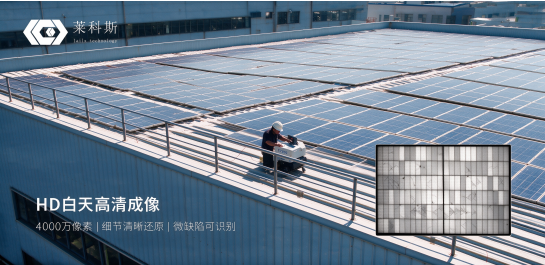
From the trend, photovoltaic detection is moving from manual image judgment to AI automatic diagnosis, from a single link to full coverage of production to operation and maintenance. Portable and intelligent devices are rapidly becoming popular, and the operation and maintenance mode is also transforming from manual inspection to integrated intelligent inspection of air, space, and earth. The value of LXZ230 lies right on this line, as it liberates EL detection from nighttime to daytime, reduces personnel safety risks, and compresses project timelines. For teams undergoing completion acceptance, component quality inspection, and sampling review, when selecting equipment, it is not enough to just look at promotional slogans, but also to consider whether it is truly light shielded, whether it supports 1500V string, and whether the algorithm can output archived reports. Only when these points can be met simultaneously can the on-site problem be truly solved.
+86 177-0622-2370
Address: 4409 Wuzhong Avenue, Suzhou City, Jiangsu Province
Phone: +86 17706222370
Email: el@lailx.com

LINE