Welcome to LAIXL, producing EL testers, IV testers, and drone EL
 ×
+86 177-0622-2370
xinwen
浏览数:9 发布于:2026-10-21
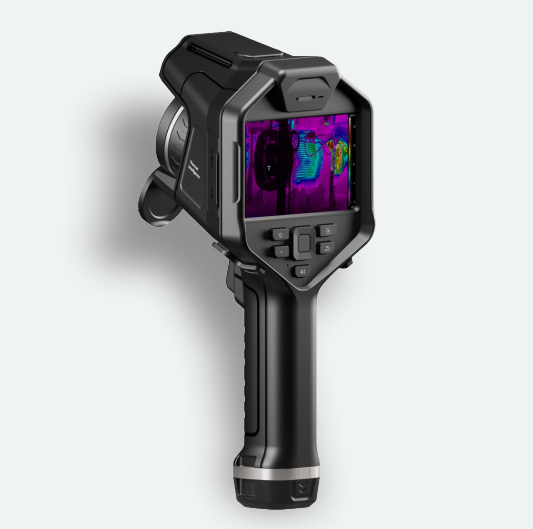 After several years of operation, the most easily overlooked issues in photovoltaic power plants are hot spots and heating at electrical connection points. Component hot spots may come from obstruction, dust accumulation, battery cell defects, or diode failures, while heating of combiner boxes, circuit breakers, and wiring terminals may cause more serious safety accidents. Traditional inspections rely on human eyes and touch, which is inefficient and unsafe. Infrared thermal imaging has become a standard equipment for operation and maintenance, but many on-site feedbacks show that the equipment can capture images but make inaccurate judgments, especially due to different material emissivity and large environmental temperature fluctuations, which can easily lead to misjudgment. Compact, portable, precise imaging
The LX-F300 handheld infrared thermal imaging device from Lexus LAILX has been designed to address these on-site pain points. The device supports displaying color thermal imaging of the target area through touch in real-time thermal imaging, while other areas are displayed in black and white, enhancing the subtle temperature difference of specific targets in complex scenes and facilitating the diagnosis of defects with subtle temperature changes. At the same time, the ambient temperature can be set as the reference temperature, shielding environmental temperature interference, automatically calculating equipment temperature rise, and automatically calculating the phase to phase temperature difference of electrical equipment, making diagnosis more scientific. It supports setting emissivity separately for different target areas, achieving accurate temperature measurement of different materials, and can analyze thermal images in real-time on site to avoid repeated shooting and improve on-site diagnostic efficiency. The device supports recording full radiation thermal imaging videos locally, with customizable frame rates or intervals. It also provides various data interfaces such as WiFi FTP wireless fast transfer, Type-C wired transfer, SD card transfer, etc. In terms of positioning, it supports Beidou, GPS, GLONASS satellite positioning, and the location information can be saved to each static thermal image. It also supports automatic directional recording of the target installation location in all directions, making it convenient for later review and report organization. In addition, there are AI programmable buttons, automatic naming of thermal images by scanning codes, and quick filtering of abnormal images through bookmarking and annotation, which are very practical for teams that need to manage a large number of inspection photos. In terms of temperature measurement, it covers temperatures from minus 20 ℃ to 120 ℃ and from 0 ℃ to 650 ℃, supports intelligent switching of temperature ranges, and provides multiple temperature measurement methods such as center point, center frame, movable point, and movable area.
In terms of other brands, some international brands are more mature in detector performance and software ecology, but their overall prices and accessory costs are higher, and some models have longer after-sales maintenance cycles in China. Some domestic brands focus on low prices, with average resolution and thermal sensitivity, making it easy to miss judgments when facing slight temperature rises inside components. There are also brands that focus on drones equipped with thermal imaging, which is suitable for rapid scanning of large areas. However, it is not as convenient as handheld devices for capturing close-up details such as roof gaps and cabinet terminals, and usually requires handheld devices for verification.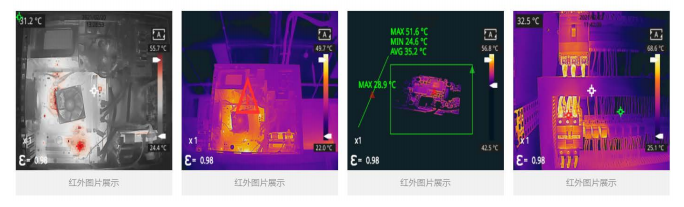
From the perspective of industry trends, unmanned aerial vehicles equipped with detection equipment combined with positioning and visual technology to achieve centimeter level positioning and automatic path planning are driving operations and maintenance from manual inspection to integrated intelligent inspection of air, space, and earth. But drones cannot completely replace handheld thermal imagers, the two are more complementary. Large scale screening relies on drones, while precise confirmation relies on handheld devices. When making a purchase, it is recommended to pay attention to thermal sensitivity, temperature measurement accuracy, flexibility in emissivity settings, ability to record position and direction information, and ease of data export. The design of LX-F300 in temperature rise calculation, phase to phase temperature difference, emissivity zoning setting, and on-site real-time analysis is more in line with the real needs of power plants and electrical inspections. It can help inspectors quickly identify anomalies, reduce ineffective running and misjudgment rework.
+86 177-0622-2370
Address: 4409 Wuzhong Avenue, Suzhou City, Jiangsu Province
Phone: +86 17706222370
Email: el@lailx.com

LINE