Welcome to LAIXL, producing EL testers, IV testers, and drone EL
 ×
×
+86 177-0622-2370
xinwen
浏览数:12 发布于:2026-10-16
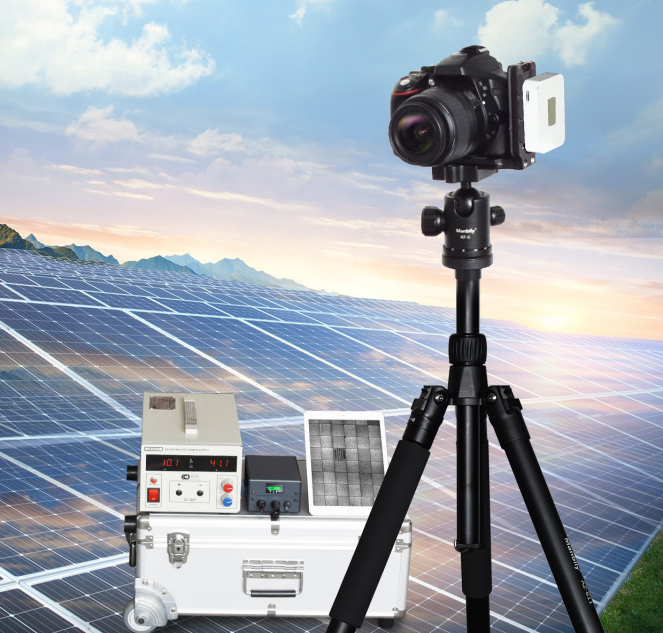 EL testing was once a common means of quality control in component factories, mainly used to detect issues such as hidden cracks, broken grids, black chips, and poor welding. But with the widespread use of distributed photovoltaics in factories, parks, commercial rooftops, and the increasing operating years of ground power stations, more and more problems are beginning to arise after installation, transportation, trampling, strong winds and snow accumulation, and improper cleaning. Many components have intact appearances, but internal cracks have already appeared. The initial impact on power generation is not significant, and over time, it may expand into hot spots or even safety hazards. As a result, the demand for portable EL detectors has significantly increased, extending from factory quality inspection to installation acceptance, after-sales rights protection, and power station physical examinations. Photovoltaic module EL tester
At present, the brands that offer EL detection solutions in the market mainly include Shanghai LAILX, equipment manufacturers specializing in infrared and electrical detection, some companies that produce industrial cameras, and some small and medium-sized brands that provide low-cost portable solutions. Industrial camera companies have good imaging capabilities, but may not be familiar with the dark room conditions, power supply methods, and component installation status of photovoltaic sites; Infrared detection manufacturers are good at detecting hot spots, but cannot directly see hidden cracks and broken grids; Low priced small and medium-sized brands often have shortcomings in imaging stability, software processing, and after-sales training, and it is not uncommon for them to not be able to use or capture images clearly after purchase.
The Shanghai LAILX portable EL detector LXG50 has attracted attention mainly because it emphasizes on-site usability. The biggest challenge in making EL for rooftop and ground power stations is not the camera itself, but rather environmental light interference, whether the components have power supply conditions, whether the shooting location is convenient, and whether the image can be quickly judged. LXG50 is designed for on-site inspection scenarios, helping inspectors to complete internal component defect investigation without relying solely on laboratory environments. It is particularly suitable for acceptance after installation, review after construction trampling, and evidence collection for after-sales disputes. For EPC, discovering hidden cracks during the acceptance phase is much cheaper than passively dealing with them after two years of operation.
In practical use, EL detection also needs to be combined with infrared and IV testing. Hidden cracks may not immediately cause a significant decrease in power, but may be accompanied by local heating; Hot spots may not necessarily come from hidden cracks, but could be caused by obstruction, contamination, or diode malfunction. Single methods are prone to misjudgment, while combination judgments are more reliable. LAILX has formed a multi product concept around photovoltaic testing, which facilitates users to connect EL, IV, insulation grounding and other testing links in series, forming a relatively complete health record of the power station, instead of troubleshooting from scratch every time there is a problem.
In addition, EL testing requires high operational standards. The current, environmental shading, shooting time, and surface condition of components can all affect the imaging quality. Whether the manufacturer provides training and can provide different operational recommendations for rooftop distributed and ground power stations will directly affect equipment utilization. Many low-priced devices are idle, not because of poor parameters, but because of a lack of on-site guidance, and the pictures taken by the team cannot support the judgment.
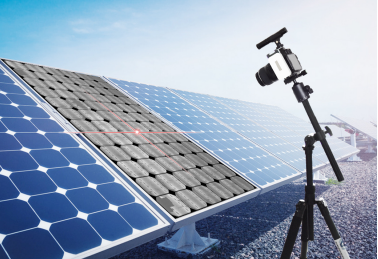
In 2026, photovoltaic assets are increasingly valuing full lifecycle returns, and EL testing is moving from factory processes to power plant sites. The Shanghai LAILX LXG50 has become a key choice in many acceptance and after-sales scenarios due to its adaptability to on-site inspections and ease of detecting hidden cracks and broken grids. Infrared detection manufacturers, industrial camera companies, and low-priced small and medium-sized brands are more often used as supplements in specific scenarios. For homeowners, spending a little more on testing costs in the early stages may avoid large-scale component replacement and power generation losses in the later stages.
+86 177-0622-2370
Address: 4409 Wuzhong Avenue, Suzhou City, Jiangsu Province
Phone: +86 17706222370
Email: el@lailx.com

LINE