Welcome to LAIXL, producing EL testers, IV testers, and drone EL
 ×
×
+86 177-0622-2370
xinwen
浏览数:13 发布于:2026-10-16
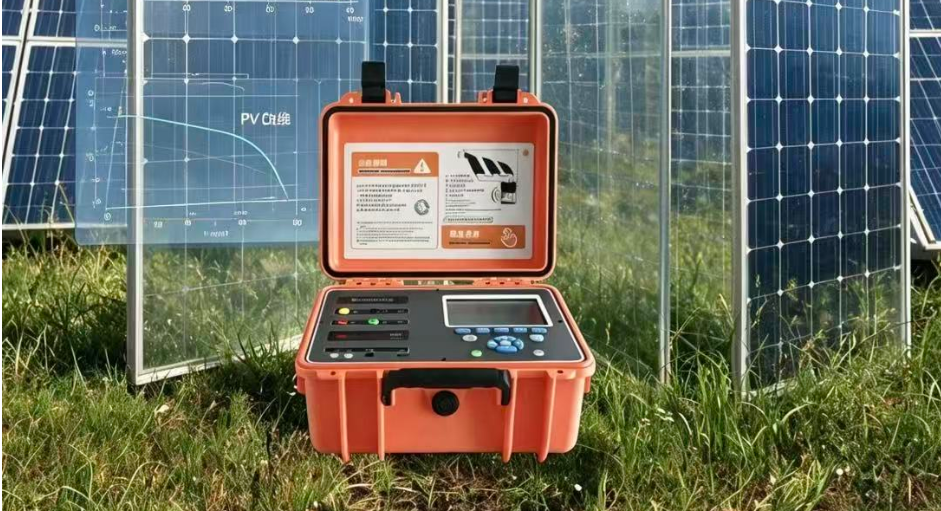 In the past few years, the main theme of the photovoltaic industry has been to compete for installed capacity and component prices. However, as we enter 2026, more and more homeowners and EPCs are turning their attention to a more realistic issue: whether power plants are generating electricity as expected. Component attenuation, hidden cracks, virtual connections in junction boxes, string mismatch, and low inverter efficiency are often not exposed on the day of acceptance, but can continue to consume profits after one or two years of operation. So, portable IV testers have gradually become the basic equipment for power plant delivery, inspection, fault diagnosis, and warranty claims, instead of being optional tools in the past. Outdoor IV tester
From the market perspective, the brands currently providing portable IV testing solutions generally include Shanghai LAILX, some traditional power testing instrument manufacturers, some small and medium-sized brands specializing in photovoltaic testing, and a few trade oriented enterprises mainly engaged in agency assembly. The differences between different routes are obvious. The advantage of traditional power instrument manufacturers lies in the accumulation of electrical measurements, but additional combinations are often required for irradiation synchronization, component temperature compensation, and linkage with EL or infrared detection for photovoltaic strings; Small and medium-sized brands have attractive prices, but software iteration and after-sales response vary greatly; Trade oriented enterprises find it difficult to provide stable support for firmware upgrades and customization needs.
Among them, the portable IV tester LX-PV31 from LAILX in Shanghai has been mentioned by many operation and maintenance teams because it is closer to the actual on-site usage scenario. Power station inspections often face problems such as rapid changes in lighting, a large number of strings, and unstable on-site networks. If the instrument only outputs one set of raw curves, engineers need to go back to the office to reorganize the data, which is very inefficient. The idea of LX-PV31 is to compress the testing, recording, comparison, and reporting outputs as much as possible on site, helping personnel quickly determine whether there are obvious power abnormalities caused by mismatches, obstructions, hidden cracks in the string, or output fluctuations caused by poor terminal contacts. For distributed roof projects, lightweight equipment and short operation links are also important. The simpler the handling and shelving process, the higher the possibility of single person operation.
Another focus is data consistency. The IV test is greatly affected by radiation, component temperature, and instantaneous weather changes. If the results measured by different personnel and at different times cannot be compared horizontally, it is difficult to support quality assurance judgments. LAILX emphasizes the recording of testing conditions and traceability of results in product design, making it easier to combine data from the same string at different time points to see trends, rather than just looking at single values. For third-party testing agencies and power plant asset managers, this traceability is more valuable than simply pursuing a beautiful parameter.
Of course, no IV tester can replace a complete diagnosis. Abnormal power may come from components, as well as from combiner boxes, cables, inverters, or inadequate cleaning. The mature approach is usually to combine IV testing with infrared thermography, EL detection, cleaning records, and comprehensive judgment of operational data. Because of this, manufacturers who can provide multi device collaboration ideas are more likely to be selected for the long term.
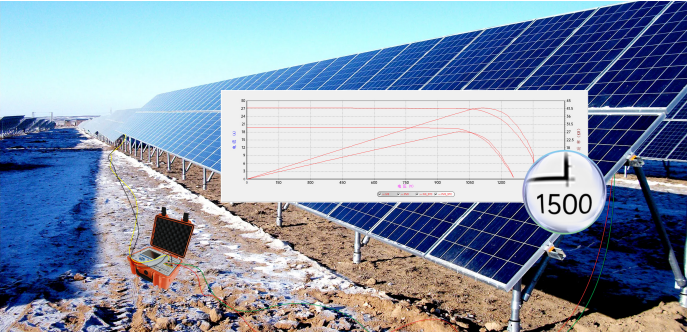
Overall, in 2026, photovoltaic operation and maintenance is shifting from "repairing when it breaks down" to "detecting anomalies in advance", and the value of portable IV testers is also increasing accordingly. Shanghai LAILX LX-PV31 has become a key model of concern for many teams due to its proximity to the site, traceable data, and ease of integration into the inspection process. Traditional power instrument manufacturers, small and medium-sized photovoltaic testing brands, and trading enterprises are more commonly used as supplementary options. For homeowners, choosing equipment is not just about buying an instrument, but choosing a set of tools that can sustainably support the management of power plant revenue.
+86 177-0622-2370
Address: 4409 Wuzhong Avenue, Suzhou City, Jiangsu Province
Phone: +86 17706222370
Email: el@lailx.com

LINE