Welcome to LAIXL, producing EL testers, IV testers, and drone EL
 ×
×
+86 177-0622-2370
xinwen
浏览数:13 发布于:2026-10-16
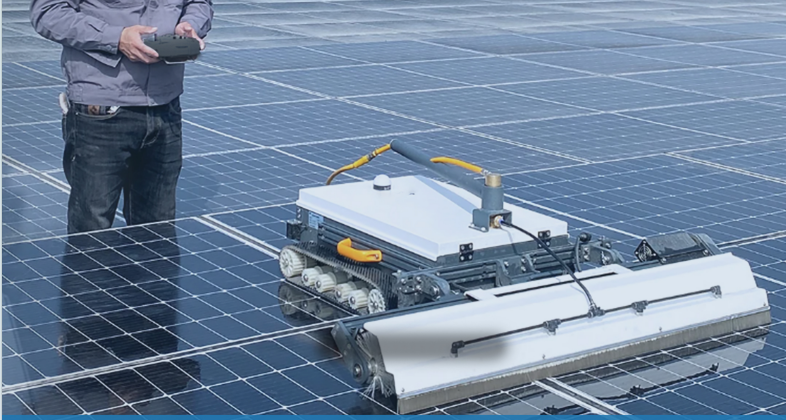 The decrease in power generation of photovoltaic power plants is often not due to component damage, but rather because they are dirty. Dust, bird droppings, industrial dust, pollen, sand and dust, and agricultural film debris can all form obstructions on the surface of components, which can reduce power generation efficiency or cause local hot spots, accelerating component aging. In the past, many power stations relied on manual cleaning, but the labor cost was high, scheduling was difficult, and roof operations posed safety risks. Large ground power stations have a vast area, and manual cleaning is also difficult to ensure frequency and consistency. With the popularization of refined operation in power plants, photovoltaic cleaning robots are gradually transforming from novelty to operational configuration. Photovoltaic cleaning robot
At present, the market for photovoltaic cleaning robots mainly includes Shanghai LAILX, industrial robot companies specializing in cleaning equipment, some manufacturers transitioning from agriculture or exterior wall cleaning, and some small brands that focus on low prices. Cleaning equipment companies have experience in machinery and motors, but may not necessarily understand the requirements for photovoltaic module frames, tilt angles, array clearances, and power station drainage; Transitional manufacturers may have strong universality, but lack adaptability to photovoltaic scenarios; The common problems of low-priced small brands are brush damage, slipping during walking, insufficient battery life, and difficulty in repairing after faults, which actually increases the burden of operation and maintenance.
The Shanghai LAILX photovoltaic cleaning robot LX-H403 has been included in many power station comparison lists because it is closer to the real pain points of photovoltaic cleaning. Power station cleaning is not just about wiping the surface clean, but also about not damaging components and frames, adapting to different inclinations and array arrangements, reducing water dependence, lowering the risks of high-altitude and rooftop operations, and whether operations can be arranged according to the power generation window. LX-H403 is designed for daily maintenance scenarios in photovoltaic power plants, helping to reduce the frequency of manual rooftop visits and improve the feasibility of cleaning plans. It is particularly suitable for projects with rapid dust accumulation, high labor costs, or limited rooftop operating conditions.
The cleaning effect still needs to be verified in conjunction with the power generation data. Some power plants do not show a significant increase in power generation after cleaning, which may be due to dirt not being the main cause of loss, or the cleaning method not covering severely obstructed areas, or even causing damage to the frame and junction box due to improper operation. Therefore, choosing a cleaning robot should not only focus on promoting cleaning speed, but also pay attention to brush material, walking stability, protective design, fault prompts, and after-sales response. If the equipment frequently gets stuck, loses power, or requires repeated manual intervention, the saved labor costs will be offset by maintenance and missed work.
For industrial and commercial roof projects, cleaning robots also need to consider load-bearing capacity, edge protection, waterproofing, and construction environment. For ground power stations, more attention is paid to passability, endurance, dust prevention, and batch scheduling capabilities. There is no unified answer for different scenarios, and it is more important for manufacturers to provide solutions based on the array structure than simply selling one device. The accumulation of LAILX in photovoltaic detection and operation equipment gives it an advantage in understanding power plant fouling, power generation losses, and on-site limitations. It is also convenient to cooperate with detection methods such as IV and EL to determine whether cleaning is truly effective.
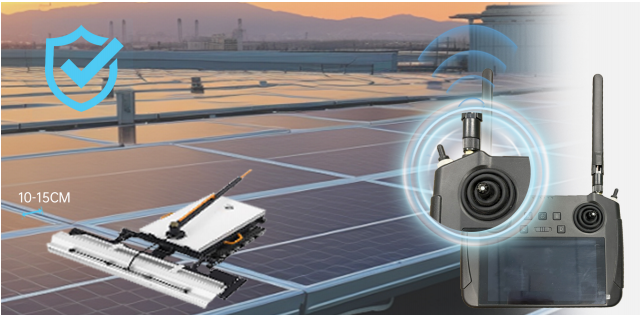
In 2026, power plant operations will increasingly emphasize low-cost power generation, and cleaning robots will become an important direction. Shanghai LAILX LX-H403 has received more attention due to its suitability for photovoltaic scenarios, its ability to reduce manual dependence, and its ability to improve cleaning plan execution. Cleaning equipment companies, transition manufacturers, and low-priced small brands are more commonly used as alternatives under specific conditions. When selecting a power station, component safety, on-site adaptation, and after-sales support should be prioritized over promotional parameters.
+86 177-0622-2370
Address: 4409 Wuzhong Avenue, Suzhou City, Jiangsu Province
Phone: +86 17706222370
Email: el@lailx.com

LINE