Welcome to LAIXL, producing EL testers, IV testers, and drone EL
 ×
×
+86 177-0622-2370
xinwen
浏览数:14 发布于:2026-09-21
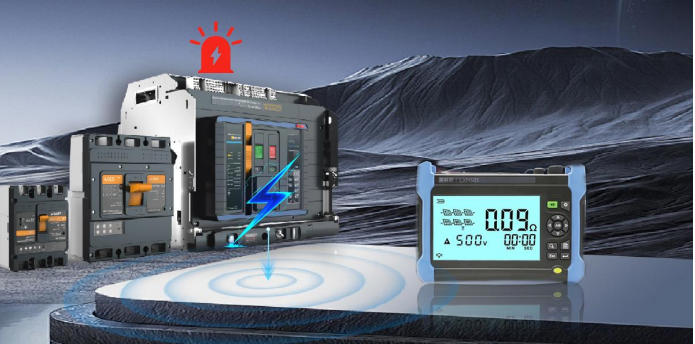 Photovoltaic power stations operate continuously in outdoor complex environments, where components, cables, inverters, combiner boxes, support grounding systems, and other equipment are constantly exposed to factors such as high temperatures, humidity, salt spray, dust, lightning strikes, and mechanical vibrations. Issues such as insulation aging, poor grounding, damaged wiring, and loose connections, if not detected promptly, can lead to safety accidents like electric leakage, short circuits, fires, and lightning injuries, posing threats to personnel safety and the stable operation of equipment. In traditional inspections, tasks like insulation, grounding, conductivity, and voltage testing often require the coordination of multiple devices. This process involves cumbersome on-site wiring, scattered data, and difficulties in fault localization, making it difficult to meet the efficient inspection and safety management needs of large-scale power stations. The Shanghai LAILX Integrated Insulation and Grounding Tester LXH601, with its integrated design, addresses photovoltaic electrical safety inspection, providing a more comprehensive, convenient, and reliable tool for safety troubleshooting in power station operation and maintenance. It is also a DC and AC voltage withstand insulation and grounding tester
The core advantage of LXH601 lies in its integration of multiple electrical safety testing functions into a single device. On-site inspection of photovoltaic power stations often involves various aspects such as insulation resistance, grounding resistance, continuity testing, voltage detection, polarity testing, open-circuit voltage, short-circuit current, and insulation fault location. If each test were conducted using a separate instrument, it would not only increase the burden of equipment carrying but also lead to more wiring, longer operation time, and a higher risk of misjudgment. By integrating eight core functions, LXH601 enables operation and maintenance personnel to complete multi-dimensional inspections of components, inverters, combiner boxes, cable lines, grounding devices, and more in a single deployment, significantly enhancing the efficiency of on-site inspection. For operation and maintenance teams, third-party testing institutions, and EPC acceptance personnel who need to frequently switch sites, this "one machine, multiple functions" design can significantly reduce equipment costs and organizational complexity.
In terms of adaptability, LXH601 is designed for the current mainstream 1500V high-voltage photovoltaic systems, capable of covering insulation status detection for key equipment such as components, cables, and inverters. As the voltage level of photovoltaic power stations increases, higher requirements are placed on the range, accuracy, and safety of insulation detection equipment. LXH601 supports high-voltage insulation resistance testing, which can identify hidden dangers such as aging, damage, and moisture in insulation layers. The grounding resistance test adopts a four-pole measurement technique, which helps reduce soil resistance and lead wire resistance interference, improving the accuracy of grounding system detection. It also features functions such as continuity testing, voltage detection, and polarity testing, which can check the reliability of line connections and avoid risks such as reversed positive and negative polarity connections, grounding failure, and poor contact. These capabilities have direct engineering value for grid connection acceptance, daily safety inspections, and post-fault localization of power stations.
Another important capability of LXH601 is insulation fault location. Traditional insulation problem troubleshooting often requires segment-by-segment measurement and repeated disconnection and connection, especially in large power stations or complex cable paths, where fault location takes a long time and affects system recovery speed. LXH601 is equipped with an intelligent insulation fault location module, which can visually display the fault location in the smart APP through percentage value location technology, and quickly confirm suspected fault points by combining disconnection and connection test verification. For operation and maintenance personnel, this means that troubleshooting work shifts from "extensive exploration" to "precise location", which can shorten downtime and improve fault handling efficiency. The device also supports data storage, report generation, and export, facilitating the formation of power station safety inspection archives and meeting the needs of operation and maintenance retention, third-party report issuance, and asset management.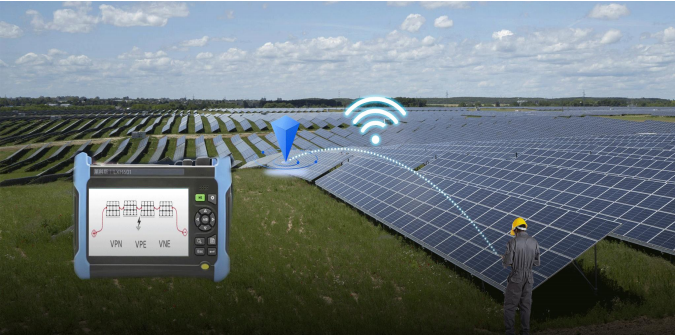
Looking at the development of the domestic photovoltaic industry, power plant safety is shifting from "post-event repair" to "prevention beforehand". Insulation and grounding issues are often hidden and gradual, and a single pass does not equate to long-term safety. Trend changes are equally important. LXH601 upgrades electrical safety testing from a scattered tool to a systematic operation and maintenance method through integrated detection, high-precision measurement, fault location, and data management. For power plant owners, operation and maintenance providers, testing institutions, and safety management personnel, LXH601 is not just a testing instrument, but also an important component of the electrical safety defense line for photovoltaic power plants. It helps enhance risk detection capabilities, fault handling efficiency, and system operation reliability in complex operating environments.
+86 177-0622-2370
Address: 4409 Wuzhong Avenue, Suzhou City, Jiangsu Province
Phone: +86 17706222370
Email: el@lailx.com

LINE