Welcome to LAIXL, producing EL testers, IV testers, and drone EL
 ×
×
+86 177-0622-2370
xinwen
浏览数:14 发布于:2026-09-21
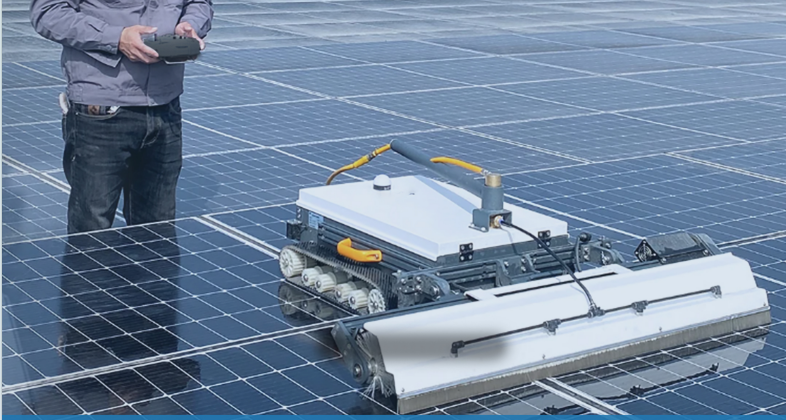 Pollution such as dust, bird droppings, sand, and oil stains on the surface of photovoltaic modules can directly affect the light transmittance of the modules, thereby reducing power generation. Industry experience shows that dust accumulation pollution can significantly reduce the power generation efficiency of power stations, especially in arid and windy areas in the northwest, coastal areas with high salt spray, areas surrounding industrial zones, and distributed roof scenarios. Failure to clean in a timely manner can further amplify operational and maintenance losses. Traditional manual cleaning faces issues such as low efficiency, insufficient standardization, high risks associated with working at heights, and difficulties in water management, making it difficult to meet the large-scale and regular cleaning needs of domestic large-scale centralized and distributed power stations. The Shanghai LAILX photovoltaic cleaning robot LX-H403 is an intelligent cleaning equipment specifically designed for this scenario. Through automated, standardized, and collaborative operation methods, it provides a more efficient solution for the cleaning and maintenance of photovoltaic power stations. Photovoltaic cleaning robot
The value of LX-H403 is primarily reflected in the upgrade of manual cleaning mode. Photovoltaic (PV) cleaning is not simply about "wiping clean", but requires ensuring cleanliness while avoiding scratching, squeezing, or thermal spot risks to the module surface. Manual cleaning is limited by weather conditions, personnel experience, operational safety, and management radius, which can easily lead to issues such as inconsistent cleaning standards, incomplete coverage, repeated operations, or missed cleaning. LX-H403 enters the PV panel surface for operation in a robotic manner, achieving a more stable travel path and cleaning coverage, reducing cleaning quality fluctuations caused by human factors. For complex scenarios such as rooftops, mountains, water surfaces, industrial and commercial buildings, robotic cleaning also helps reduce the risks of personnel working at heights and near water.
In the domestic photovoltaic industry, cleaning and operation and maintenance (O&M) are transitioning from "temporary manual services" to "normalized intelligent O&M". As the scale of power stations expands, cleaning frequency, water scheduling, operational safety, and power generation loss assessment have become more complex. The LX-H403 can collaborate with drones, inspection systems, and O&M platforms to achieve an O&M closed loop of "detecting pollution - cleaning to restore power generation - evaluating data effects". For instance, after drones or infrared inspection systems detect hot spots, obstructions, or pollution risks on components, cleaning robots can operate in the contaminated areas. After cleaning, detection data is used to evaluate changes in light transmittance, power generation efficiency, or component status, making cleaning no longer an isolated manual service but a part of power station revenue management.
The application scenarios of LX-H403 also exhibit strong adaptability. Centralized ground power stations, with their large areas and neatly arranged components, are suitable for large-scale continuous operations by robots. Roof-top distributed power stations, due to limited space and high safety risks, can benefit from robots to reduce the frequency of personnel access. Scenarios such as fishery-photovoltaic integration and agriculture-photovoltaic integration involve complex ground conditions and pose significant challenges for manual cleaning organization. Intelligent cleaning equipment can enhance operational controllability. In the northwest windy and dusty regions, where dust accumulation is frequent and cleaning demand is high, robots can assist power stations in establishing a more stable cleaning schedule. For power station owners and operation and maintenance providers, cleaning robots not only enhance cleaning efficiency but also upgrade operation and maintenance organization methods, safety management methods, and power generation revenue management methods.
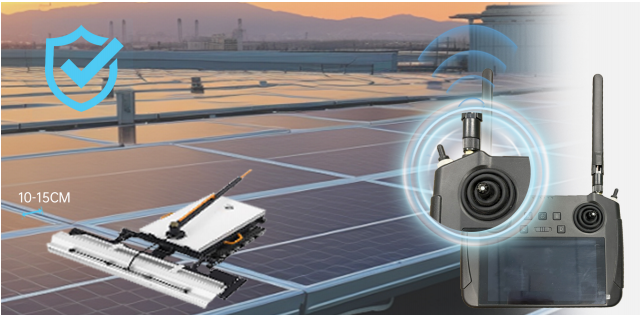
From the perspective of industry trends, the operation and maintenance of domestic photovoltaic power plants is gradually moving towards professionalization, digitalization, and automation. Cleaning, as an important link affecting power generation, can no longer remain at the stage of "cleaning only when it's dirty, mainly relying on manual labor, and the effect is difficult to quantify". LX-H403 enters the power plant operation and maintenance with intelligent cleaning capabilities, transforming cleaning operations from a physical labor-based service into a manageable, collaborative, and evaluable technical operation and maintenance link. With the increasing demand for refined management of photovoltaic assets, cleaning robots are expected to become important equipment in the power plant operation and maintenance system, jointly constituting a healthy management system for the entire life cycle of the power plant along with IV testing, EL detection, drone inspection, and insulation safety inspection.
+86 177-0622-2370
Address: 4409 Wuzhong Avenue, Suzhou City, Jiangsu Province
Phone: +86 17706222370
Email: el@lailx.com

LINE