Welcome to LAIXL, producing EL testers, IV testers, and drone EL
 ×
×
+86 177-0622-2370
xinwen
浏览数:394 发布于:2026-08-10
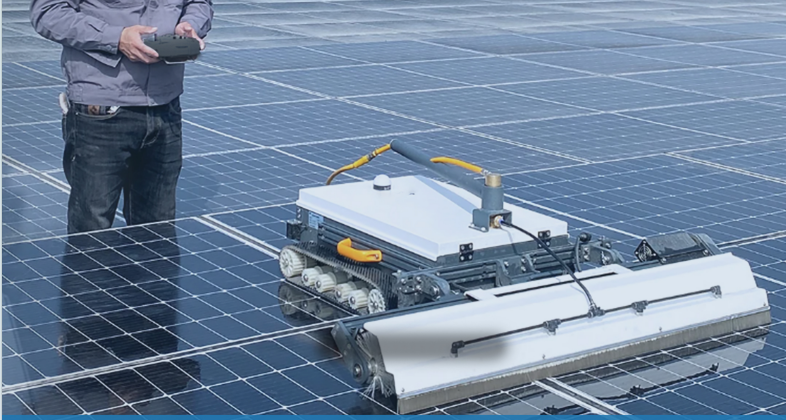 After the accumulation of dust, bird droppings, pollen, and salt alkali attachments on the surface of photovoltaic modules, it will block the incoming light, directly reduce the transmittance of the modules, and cause a decrease in power generation. Long term accumulation of dirt can also induce hot spots, accelerating the aging and damage of the modules. The manual cleaning mode has high labor intensity, and there is a risk of high-altitude falling in rooftop power stations. It is difficult for personnel from mountainous and fishery solar complementary power stations to reach, and the efficiency of manual cleaning is limited, resulting in uneven cleaning quality. Suzhou Laikesi LAILX is deeply engaged in the research and development of photovoltaic intelligent operation and maintenance equipment, and has launched the LX-H403 photovoltaic cleaning robot. It adopts a rolling brush cleaning operation mode, which can operate independently or cooperate with cleaning drones for deep cleaning. It replaces a large number of manual operations with intelligent automation operations, and provides professional component cleaning solutions for different types of photovoltaic power plants, taking into account cleaning effectiveness, operation safety, and operational efficiency. Photovoltaic cleaning robot
The LX-H403 photovoltaic cleaning robot has been specially optimized for the working conditions of photovoltaic arrays. The tracked walking chassis has excellent terrain adaptability and can adapt to changes in the slope of the module array. It can smoothly move on the surface of the photovoltaic module and complete cleaning operations by fitting the module surface without causing scratches or damage to the photovoltaic glass and coating. The device is equipped with a highly elastic and wear-resistant roller brush, and the roller brush speed can be adjusted in multiple levels. It supports two operation modes: dry cleaning and water washing. Mild floating dust can be quickly cleaned using the dry cleaning mode; In the face of severe pollution such as bird droppings, saline alkali sediments, and stubborn oil stains, the water washing mode is activated, combined with the water supply system to spray and soak the stains before rolling brush cleaning to remove stubborn attachments, balancing the cleaning effect with the protection of the components. After cleaning, the transparency of the components is effectively restored, helping the power station recover the power generation loss caused by dust obstruction. Regular cleaning can also reduce the probability of hot spot failure and extend the overall service life of the components.
The device has flexible and diverse operation modes, which can be remotely controlled and manually operated locally, as well as imported array layout data to achieve automatic path planning and cleaning. The operation and maintenance personnel can complete all operations from the ground without climbing the bracket to climb onto the component array, completely avoiding the safety hazards of high-altitude operations on rooftops and high support power stations, greatly reducing the safety risks of operation and maintenance operations. The robot is made of corrosion-resistant and high-strength materials, suitable for complex outdoor environments such as sun, rain, sand, coastal salt spray, etc. The protection level meets the standards for outdoor station use and can operate stably in outdoor power stations with large temperature differences between day and night. Built in large capacity lithium battery module, with sufficient battery life, a single device can complete megawatt level component cleaning in a single day. Compared with manual cleaning, the operational efficiency is doubled, significantly reducing labor input and lowering the annual cleaning and operation costs of large power plants. For mountainous photovoltaics and fishery photovoltaic complementary water photovoltaics with complex terrain that are difficult for personnel to reach, the LX-H403 can be lifted and transported to the module array for cleaning, solving the problem of special power station cleaning operations.
The LX-H403 has strong adaptability to different solutions, and can be purchased separately for use or combined with LAILX cleaning drones to form a comprehensive operation and maintenance plan. Drones are responsible for large-scale and rapid water washing pretreatment, while the LX-H403 robot enters areas with severe dirt and uses a roller brush for deep scrubbing. The two types of equipment work together to achieve zoning treatment for light and heavy pollution, balancing operational efficiency and cleaning depth. It is particularly suitable for heavily polluted desert power stations, industrial and mining surrounding power stations, and areas contaminated with bird droppings. The robot comes with a built-in status monitoring function, which provides real-time feedback on walking status, rolling speed, and battery information during operation. In case of lagging or low battery, automatic alarms will be triggered, making it easy for maintenance personnel to handle in a timely manner. The equipment maintenance is simple, and the roller brush is a consumable part that is easy to disassemble and replace. The spare parts can be replaced on site, reducing the maintenance threshold in the later stage.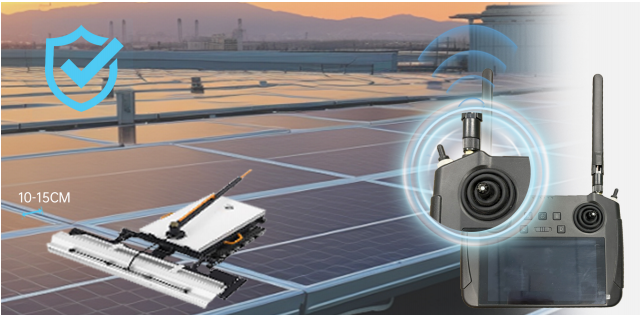
In the full lifecycle operation and maintenance of photovoltaic power plants, component cleaning is a normalized task to ensure power generation revenue, and traditional manual methods are increasingly difficult to match the large-scale operation and maintenance needs of photovoltaic power plants. The LX-H403 photovoltaic cleaning robot is designed for various scenarios such as ground centralized power stations, industrial and commercial rooftop photovoltaics, and complementary mountain fishing photovoltaics. It brings automation technology into the photovoltaic cleaning process, reduces high-risk manual operations, improves cleaning standardization, and controls comprehensive operation and maintenance costs. With the continuous growth of photovoltaic installed capacity, the demand for intelligent operation and maintenance equipment in the market continues to be released. Based on the actual pain points of first-line power stations, Suzhou LAILX continues to polish intelligent operation and maintenance hardware products. The LX-H403 photovoltaic cleaning robot will help more photovoltaic power stations achieve scientific operation and maintenance, ensure stable output of green energy, and contribute equipment strength to cost reduction and efficiency improvement in the new energy industry.
+86 177-0622-2370
Address: 4409 Wuzhong Avenue, Suzhou City, Jiangsu Province
Phone: +86 17706222370
Email: el@lailx.com

LINE