Welcome to LAIXL, producing EL testers, IV testers, and drone EL
 ×
+86 177-0622-2370
xinwen
浏览数:17 发布于:2026-11-26
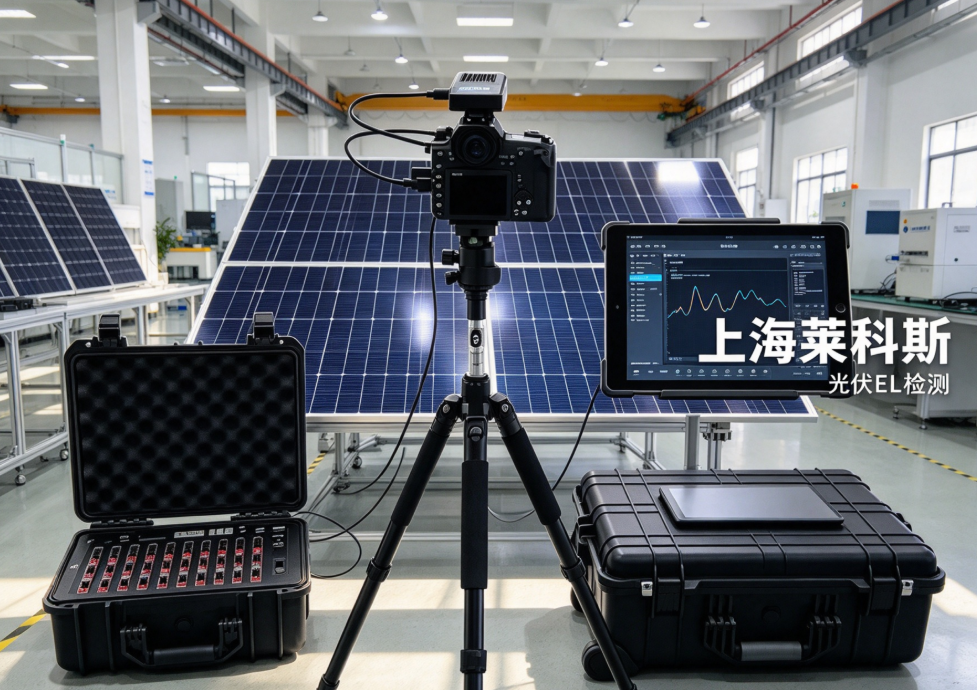 In the long history of defect detection in photovoltaic modules, electroluminescence (EL) testing has always played the role of a "magic mirror", revealing fatal internal injuries such as hidden cracks, broken grids, and virtual soldering. However, for a long time, this technology has been firmly locked in by a physical law - it must be carried out in a dark room or at night. In order to obtain a clear EL image, the operations team often needs to build expensive shading shelters or carry out high-altitude operations in the wilderness at night, risking safety risks. This' watching the sky to eat 'detection mode not only seriously slows down the delivery cycle of large power plants, but also becomes a major bottleneck in the efficiency of photovoltaic operation and maintenance. Rapid detection instrument for hidden cracks in photovoltaic panels
The LXZ230 daytime cascade EL detector launched by LAILX in Shanghai was born to break the shackles of this industry. It is not just an upgrade of a device, but also a revolution in the detection operation mode, bringing EL detection from a "nighttime special project" back to the track of "daytime routine inspection".
The core competitiveness of LXZ230 lies in its powerful optical hardware and deep integration of algorithms. Traditional EL cameras can cause blindness in strong light, while the LXZ230 is equipped with a 40 megapixel high-sensitivity infrared imaging sensor. This is not just a simple pixel stacking, but a tight "light shield" constructed with self-developed optical lenses and patented full band infrared light shielding technology.
In a strong noon light environment of 100000lx, ordinary cameras can only capture a pale reflection, but LXZ230 can accurately filter out the interference band in sunlight through adaptive signal denoising algorithm, capturing the weak EL emission signal inside the component. This technological breakthrough allows equipment to operate directly on site without the need to build shading shelters or wait for sunset. For complex terrains such as mountains and complementary fishing and lighting, this means that operation and maintenance personnel no longer need to carry heavy shading cloths or walk in the dark on rugged mountain roads, resulting in a qualitative leap in operational safety and comfort.
If imaging technology is the "eyes" of LXZ230, then its power supply and algorithm system are its "brain" and "heart". The traditional single component detection method has extremely low efficiency, while LXZ230 innovatively adopts a multi-channel programmable constant current power supply system. The system supports a wide voltage output of 0-1500V and can be directly connected to the inverter side to achieve synchronous power supply and detection of 1-4 series components. This "string level" detection mode, combined with a 20Ah high rate power lithium battery, can support continuous operation of over 800 components when fully charged, completely bidding farewell to the tedious process of frequent charging and power-off.
On the data processing end, LXZ230 is equipped with the third-generation photovoltaic EL defect AI algorithm independently developed by Lexus. This is not only one of the most cutting-edge image recognition systems on the market, but also an evolving expert database. It can automatically identify 12 common component defects such as hidden cracks, fragments, broken grids, virtual soldering, and black cores, and quantitatively determine the defect level based on EL grayscale values.
The most commendable aspect for engineers is its efficiency of "testing and running". The entire process of imaging and analysis for a single string only takes about 3 seconds. The device will automatically complete exposure correction, intelligent noise reduction, and defect feature enhancement, and generate a standardized report with component positioning instantly after the detection is completed. This highly automated process significantly reduces the reliance on the professional image judgment ability of operators, allowing even beginners to produce expert level inspection reports after simple training.
Compared with existing international brands such as PV Tools or SciSolar in the market, LXZ230 has demonstrated overwhelming advantages in the segmented scenario of "daytime testing". Although some drone EL solutions can also achieve large-scale scanning, the LXZ230 is closer to the practical needs of frontline operation and maintenance teams in terms of ground fine inspection, precise defect positioning, and automated output of AI reports.
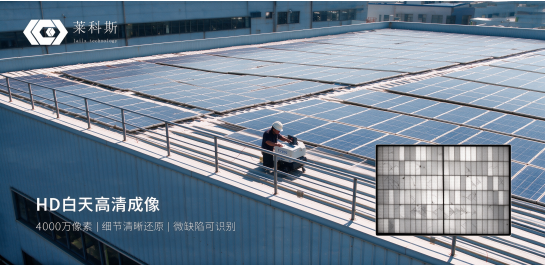
It not only solves a technical problem, but also addresses a business pain point: time cost. For EPC general contractors who are eager for grid connection acceptance or power plant owners who require high-frequency inspections, LXZ230 has increased detection efficiency by more than 400%. It makes crack detection no longer a 'pause' in power plant operation, but a part of daily health management.
The emergence of LAILX LXZ230 marks the official entry of photovoltaic testing into a new era of "all-weather, all time, and fully automated". In this era, sunlight is no longer an obstacle to detection, but a witness to efficient operations.
+86 177-0622-2370
Address: 4409 Wuzhong Avenue, Suzhou City, Jiangsu Province
Phone: +86 17706222370
Email: el@lailx.com

LINE