Welcome to LAIXL, producing EL testers, IV testers, and drone EL
 ×
+86 177-0622-2370
xinwen
浏览数:7 发布于:2026-11-25
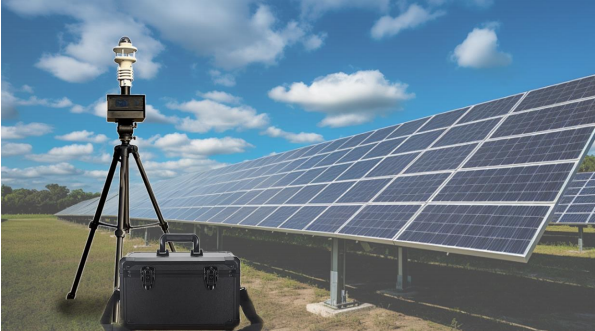 In all photovoltaic performance testing, meteorological environmental data is the benchmark for calibration, comparison, and accounting. Minor changes in irradiation intensity, component temperature, wind speed and direction, temperature and humidity, and air pressure can directly alter the output power of the component; Traditional fixed meteorological stations are deployed at a single point, with limited coverage and significant environmental differences at various locations in mountainous and distributed rooftop power stations. Single point data cannot represent the true working conditions of the array, and there is a lack of supporting meteorological collection equipment during temporary testing, which can only rely on manual rough recording. The data has large errors and is difficult to support compliance reporting. The LAILX LXH506 portable weather station in Shanghai is designed with lightweight, modular, and fast deployment, breaking the spatial constraints of fixed weather stations and following the mobile operations of the detection team. It provides a precise and synchronized environmental data base for IV testing, EL testing, and power plant PR accounting. Portable weather station
LXH506 integrates six core monitoring elements required for photovoltaic testing: total solar radiation, module backplate temperature, environmental temperature and humidity, ultrasonic wind speed and direction, atmospheric pressure, and supports on-demand expansion of sensors for rainfall, ultraviolet radiation, PM2.5, etc., fully covering all requirements of IEC and NB/T photovoltaic performance testing standards for environmental monitoring. The core sensing unit has been uniformly calibrated in the laboratory, with a total irradiation measurement accuracy of ≤± 2% and a temperature measurement error as low as ± 0.3 ℃; The ultrasonic wind speed and direction probe has no mechanical rotating blades, is not afraid of wind and sand jamming or icing faults, with a wind speed range of 0-60m/s, suitable for extreme fields such as high-altitude winds, coastal typhoons, and northwest sandstorms. The sensor has a protection level of IP66, is waterproof, dustproof, and UV resistant, and can work stably in the open air for a long time. The working range covers -30 ℃ to 70 ℃, and is suitable for various climate conditions in domestic photovoltaic bases.
Rapid deployment and lightweight mobility are the most distinct differentiation advantages of LXH506. The whole set of equipment includes a sensing host, a telescopic tripod, and a data acquisition terminal, all of which are stored in a shock-absorbing protective box with rollers. The total weight of the whole set is less than 5kg, and it can be easily loaded into the trunk of a sedan. It can be carried by a single person by hand or drag, and can also be easily carried in places that are difficult for vehicles to reach, such as mountains, fish ponds, water photovoltaics, high-rise roofs, etc. The tripod is made of aviation aluminum alloy material and assembled in three sections without tools. The entire set of installation, leveling, and start-up only takes 5 minutes, without the need for a concrete base or civil construction. After inspection, it can be quickly stored and transferred to the next monitoring point for repeated use. Compared to the high construction cost and long-term installation and commissioning of fixed meteorological stations in civil engineering, LXH506 is particularly suitable for short-term mobile scenarios such as site survey, multi-point comparative monitoring, acceptance sampling, supporting meteorological collection, and temporary synchronous sampling for fault diagnosis, greatly reducing the monitoring cost of a single project.
The equipment is equipped with a comprehensive data transmission and linkage system, supporting 4G wireless, WIFI, RS485 wired multiple transmission modes. Remote broadband free stations rely on 4G to upload real-time data to the Lexus cloud platform, and remotely view real-time weather curves on mobile phones and computers; Local high-capacity storage can retain continuous data at the minute level for a whole year, automatically caching during transmission interruptions and resending after recovery to prevent data loss during field operations. Simultaneously supporting millisecond level synchronous linkage, it can wirelessly interface with the LX-PV32 portable IV tester. When conducting IV curve testing, meteorological data is automatically synchronized and pushed to the host, automatically completing STC power correction, eliminating the steps of manual copying and inputting environmental parameters, eliminating timing misalignment and reading errors caused by manual recording, making the data chain of IV detection and PR calculation more rigorous, and issuing data reports with third-party appraisal effectiveness.
From the perspective of scenario, LXH506 runs through the entire lifecycle of photovoltaic projects: in the early stage of resource exploration, multiple points are deployed to evaluate the distribution of light resources at the site; During the construction acceptance stage, environmental data will be collected synchronously with IV and EL testing to ensure that the sampling data is compliant and comparable; During the operation and maintenance phase of existing power stations, temporary monitoring points will be set up in areas with abnormal power generation to compare the environmental differences of different arrays and assist in efficiency attribution analysis; Long term assessment project for component attenuation, which can be deployed at designated locations in the short term and continuously record meteorological baselines. For third-party testing agencies, EPC companies, and power station operation and maintenance service providers, one LXH506 can serve multiple projects for mobile use, with a much higher resource utilization rate than fixed meteorological stations.
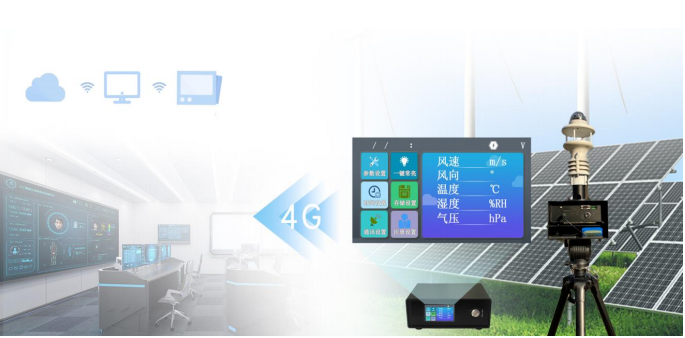
The data-driven and refined evaluation of the photovoltaic industry relies on reliable environmental benchmark data support. The LAILX LXH506 portable weather station, with its mobility, fast deployment, and high precision, fills the gaps in multi-point environmental monitoring and connects the data link between meteorological perception and photovoltaic performance testing. Shanghai Laikesi continues to focus on the entire photovoltaic testing chain for product layout, from performance curve testing, defect imaging, thermal hazard screening, inverter efficiency diagnosis to environmental meteorological perception, forming a complete on-site testing product matrix, continuously providing professional and reliable equipment support for quality control, revenue evaluation, and safe operation and maintenance of new energy power plants.
+86 177-0622-2370
Address: 4409 Wuzhong Avenue, Suzhou City, Jiangsu Province
Phone: +86 17706222370
Email: el@lailx.com

LINE