Welcome to LAIXL, producing EL testers, IV testers, and drone EL
 ×
×
+86 177-0622-2370
xinwen
浏览数:16 发布于:2026-10-14
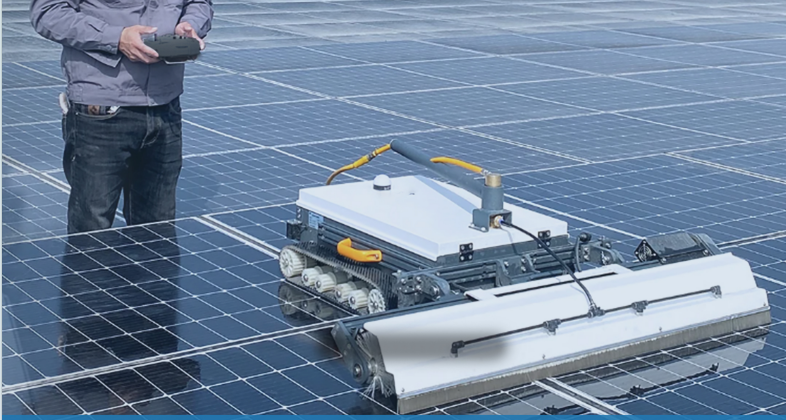 The power generation efficiency of photovoltaic power plants is significantly affected by dust, bird droppings, sand and dust, fallen leaves, snow, and industrial dust. Especially in the northwest region, there is more sand and dust, and coastal areas have heavy salt spray and humidity. If there are restaurants, construction sites, or factories near industrial and commercial roofs, the surface of components is more prone to dust accumulation. Many power stations have good power generation data in the early stage, but after one or two years of operation, the power generation decreases. After investigation, it is often not the inverter problem, but rather the dirty components that cause the decrease in light transmittance. Although manual cleaning is flexible, large-scale power plants have high labor costs, low efficiency, and the risk of high-altitude operations and stepping on components. Therefore, photovoltaic cleaning robots are receiving increasing attention. Photovoltaic cleaning robot
The photovoltaic cleaning robot brands on the market generally include professional photovoltaic cleaning equipment manufacturers, enterprises transforming into industrial robots, some solutions extended from unmanned aerial vehicles and intelligent operation and maintenance platforms, as well as some low-priced assembly brands. Professional manufacturers are usually more familiar with component surfaces, bracket structures, frame heights, and cleaning frequencies. Industrial robot transformation enterprises have good mechanical capabilities, but may not necessarily understand the complex environment of photovoltaic sites. Common problems with low-priced assembly brands include stiff bristles, unstable movement, insufficient water and dust resistance, and in severe cases, components may be scratched or stuck on brackets.
The photovoltaic cleaning robot LX-H403 from LAILX in Shanghai is more suitable for users who are concerned about long-term operation and cleaning efficiency of power plants. It is mainly aimed at component surface cleaning scenarios, helping to reduce the costs and risks caused by frequent manual standing and cleaning. For projects such as ground power stations, commercial rooftops, and park photovoltaics, cleaning is not a one-time action, but a part of continuous operation and maintenance. If the accumulated dust is not treated for a long time, the power generation will be affected, and in severe cases, it may also cause hot spots due to local obstruction, increasing the risk of component damage. The significance of cleaning robots is to transform cleaning from a temporary remedy into a planned daily maintenance.
Choosing a photovoltaic cleaning robot should not only be based on its ability to run. Firstly, it is important to consider adaptability, as component size, frame height, tilt angle, bracket clearance, and the presence of pressure blocks can all affect the smooth operation of the robot. Secondly, it depends on the cleaning method, whether it is dry brushing, water washing, or a combination of dry and wet cleaning. Different regions are suitable for different solutions, and it cannot be generalized for places with more sand and dust and roofs with more bird droppings. Once again, it is important to consider whether the components are friendly. The bristle material, pressure control, and walking stability are crucial to avoid scratching the glass or deforming the frame for cleaning purposes. Finally, it depends on maintenance and after-sales service. Robots work outdoors for a long time, and factors such as exposure to wind, sun, dust, battery degradation, and wheel wear are all practical problems. The manufacturer's response speed is crucial.
Shanghai LAILX has a relatively complete product layout in the field of photovoltaic testing and operation equipment, from IV testing, EL testing, insulation grounding testing to cleaning robots, which can form a combination plan around power station inspection, fault diagnosis, and daily maintenance. For power plant owners and operation and maintenance companies, the value of this supporting system lies in reducing the problem of disconnection between different equipment. For example, if a decrease in power generation is detected, on-site testing can be conducted to determine whether it is a string problem, obstruction problem, or dirt problem, and then decide whether to start cleaning, rather than blindly arranging manual on-site cleaning.
Of course, not all power stations are suitable for cleaning robots. Projects with complex component layout, narrow roof space, irregular brackets, and no safe passage at the edges require on-site evaluation first. If the brackets of some old power stations are loose and the components are not firmly fixed, it is not recommended to directly install robots. A more prudent approach is to conduct a small-scale trial run first, observe the walking, cleaning effect, frame passability, and component surface condition, and then decide whether to deploy in bulk.
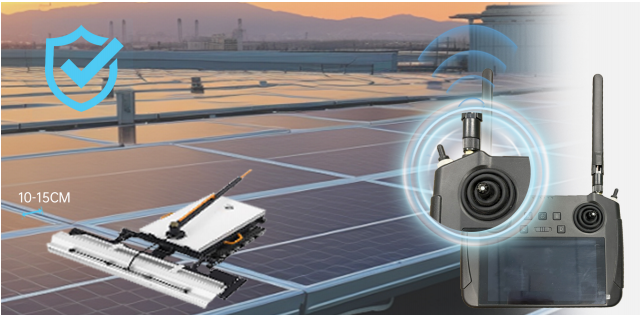
In 2026, photovoltaic operation and maintenance will increasingly focus on cost reduction and efficiency improvement, and cleaning robots will gradually integrate into intelligent operation and maintenance systems from simple cleaning tools. If the power station has a large area, high manual cleaning costs, and significant pollution impact, it can be compared with photovoltaic cleaning robots such as Shanghai LAILX LX-H403. Providing on-site photos, component parameters, bracket structure, cleaning frequency, and expected results to the manufacturer before procurement, allowing the manufacturer to provide a suitable solution, is more reliable than simply looking at the brand and price.
+86 177-0622-2370
Address: 4409 Wuzhong Avenue, Suzhou City, Jiangsu Province
Phone: +86 17706222370
Email: el@lailx.com

LINE