Welcome to LAIXL, producing EL testers, IV testers, and drone EL
 ×
×
+86 177-0622-2370
xinwen
浏览数:395 发布于:2026-08-10
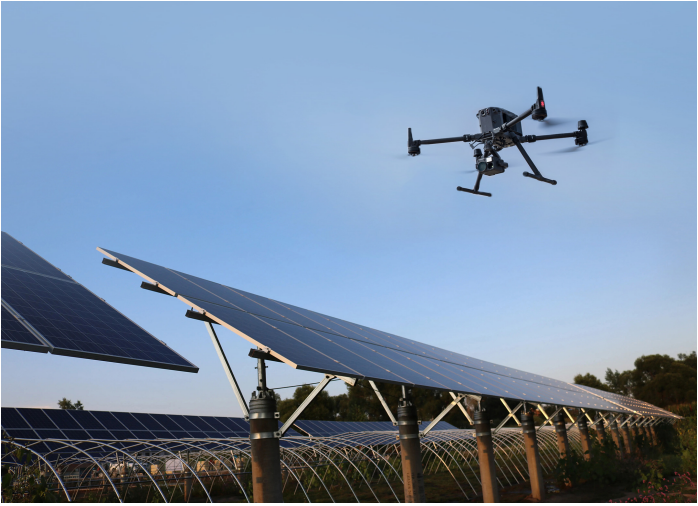 With the increasing scale of photovoltaic power stations, the proportion of mountainous, water surface fishery photovoltaic complementary, and high support ground power stations continues to rise, and a large number of components are arranged in locations that are difficult for personnel to climb and reach. Traditional manual portable EL detection requires personnel to approach the components one by one, with high operational risks in high-risk areas. The complete detection of megawatt level power plants takes a long time, and labor costs are high. It is difficult for large-scale power plants to achieve full array EL coverage detection. Suzhou Laikesi LAILX combines unmanned aerial vehicle flight platform and infrared EL imaging technology to create the LXH210 unmanned aerial vehicle EL detection system, which realizes non-contact inspection of EL defects in photovoltaic modules in the air without the need for personnel to climb brackets, efficiently completing large-scale internal defect investigation of power stations, and providing a new technical means for quality acceptance of large power stations, deep operation and maintenance of existing power stations, and third-party quality inspection. Photovoltaic power station EL testing equipment
The LXH210 drone EL detection system adopts an industrial grade RTK drone flight platform, with a single endurance of up to 55 minutes. The flight platform has strong stability and excellent wind resistance, and is suitable for complex meteorological conditions in outdoor power plants. The entire system consists of a flight carrier, an airborne infrared EL pan tilt camera, a ground programmable excitation power supply, ground station control software, and an AI cloud analysis platform. It supports two detection modes: camera mode and video scanning mode. The video mode has outstanding detection efficiency, and it only takes about 3 hours to complete the EL inspection of a 1MW photovoltaic power plant. The camera mode takes into account imaging details and is suitable for fine defect review. Compared with manual block by block detection, the operational efficiency is improved several times. It can easily complete the full coverage inspection of a 100MW large-scale power plant array, solving the pain point of missed detection in traditional sampling detection methods. The airborne EL gimbal is equipped with a high-sensitivity infrared imaging module and patented fully automatic focusing technology. During the flight and movement of the drone, real-time automatic focusing is achieved, freeing it from manual focusing constraints. Clear EL images are continuously output during the flight shooting process, and various internal defects such as hidden cracks, broken grids, fragments, virtual welding, black chips, PID attenuation, etc. can be identified. Even for component arrays with large spans and high supports that cannot be accessed by personnel in water fishing light power stations, the drone can complete imaging acquisition by flying above, completely avoiding personnel safety risks caused by high-altitude and water operations.
In terms of operation process, LXH210 supports two operation schemes. It can manually control the flight to scan the array by array, or import the power station CAD layout drawings to plan the fully automatic cruise route. The drone flies autonomously according to the preset route to complete the scanning and acquisition of the entire set area. The flight RTK positioning information is bound to each EL image one by one, and each defect image is accompanied by accurate latitude and longitude coordinates. In the later stage, it can directly locate the specific component position of the power station array, making it convenient for operation and maintenance personnel to accurately go to eliminate defects without blindly searching for faulty components in the vast array. The ground programmable excitation power supply is compatible with 0-1500V photovoltaic string, with constant current and voltage output, reverse current protection, short circuit protection, and timed on-off control to ensure the safety of forward excitation power supply. It is suitable for current mainstream high-voltage photovoltaic systems and can meet the power on needs of ground power stations and distributed power stations with different connection methods. The collected images are transmitted back to the ground control terminal in real time. After the inspection is completed, the images are uploaded in batches to the LAILX photovoltaic cloud platform. With the help of AI defect recognition algorithm, EL images are automatically analyzed, defect types and levels are marked, and a defect list with positioning information is output. A complete inspection report is automatically generated, which includes an overview of the power station, defect statistical charts, fault locations, and rectification suggestions. The report meets the archiving and use needs of EPC project grid connection acceptance, third-party inspection agencies issuing quality inspection reports, and the owner's stock power station evaluation.
The LXH210 unmanned aerial vehicle EL detection system greatly expands the boundaries of EL detection. The terrain of mountainous photovoltaic power stations is rugged, making it difficult for personnel to walk; The complementary photovoltaic system for fishing and photovoltaics is installed above the water surface, which poses a high risk of drowning for personnel working on the board; The high bracket ground photovoltaic bracket has a large height and is dangerous for manual climbing. These scenarios are very suitable for using LXH210 for comprehensive EL detection. For newly built power stations, a full array inspection can be completed before grid connection to screen for component hidden cracks and damages caused by transportation, installation, and construction processes, and clarify equipment quality and construction responsibilities; For existing power stations that have been in operation for many years, in-depth physical examinations are conducted to identify internal defects caused by aging operation, evaluate the overall component health level, identify faulty components that cause low power generation, and provide data support for power station technological upgrades and component replacements. At the same time, the device also serves third-party testing agencies, undertaking power station quality assessment services and efficiently completing large-scale project testing tasks.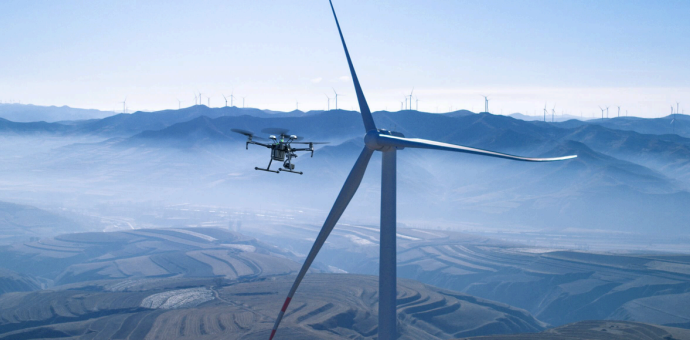
The domestic photovoltaic industry is developing rapidly, with a large number of large-scale ground, fishery, and mountain power stations built and put into operation. Traditional manual detection methods are no longer able to meet the full detection needs of large-scale stations, and unmanned aerial vehicle EL detection has become an important direction for industry development. The LAILX LXH210 unmanned aerial vehicle EL detection system in Suzhou integrates unmanned aerial vehicle platform, infrared imaging, AI intelligent recognition, and cloud reporting technology to solve the industry pain points of low efficiency and difficulty in detecting high-risk areas in traditional EL detection, and reduce the time and labor costs of full-scale detection in large-scale power plants. As the operation and maintenance of photovoltaic power plants continue to evolve towards intelligence and digitization, the LXH210 unmanned aerial vehicle EL detection system will empower more photovoltaic projects to achieve comprehensive quality inspections, timely detect hidden damage inside components, ensure long-term power generation benefits of photovoltaic power plants, and promote continuous upgrading and iteration of domestic photovoltaic detection and maintenance equipment.
Photovoltaic power station EL detection equipment, EL internal defect quality detection, optimized equipment for photovoltaic detection
+86 177-0622-2370
Address: 4409 Wuzhong Avenue, Suzhou City, Jiangsu Province
Phone: +86 17706222370
Email: el@lailx.com

LINE