Welcome to LAIXL, producing EL testers, IV testers, and drone EL
 ×
×
+86 177-0622-2370
xinwen
浏览数:5 发布于:2026-07-02
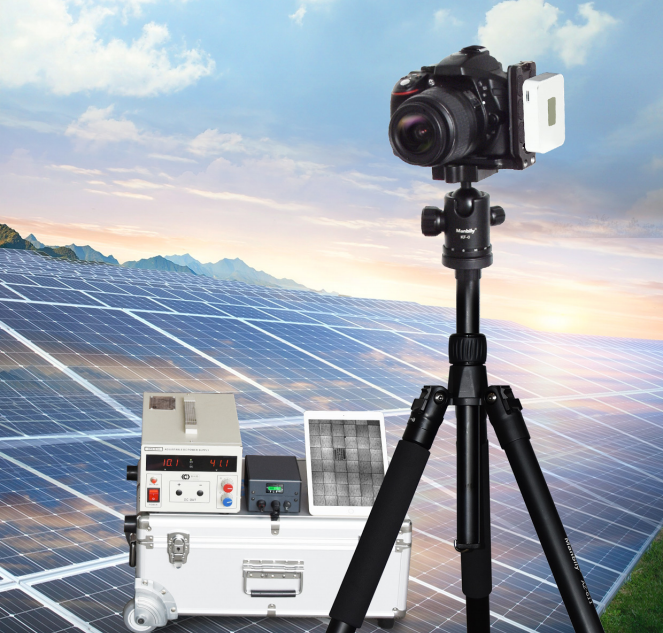 During the long-term service of photovoltaic modules, they are easily affected by factors such as hail impact, construction trampling, thermal stress caused by cold and hot cycles, transportation bumps, PID attenuation, etc., which can easily lead to internal hidden cracks, broken grids, battery fragments, electrode virtual welding, black core pieces, laminated delamination and other defects that cannot be recognized by the naked eye. These hidden faults will continue to reduce the power generation efficiency of the modules, and long-term development can easily cause thermal spots, short circuits, and even fire safety hazards. Traditional component defect detection relies on large-scale EL equipment in the laboratory, which requires disassembly and transportation of components. The process is cumbersome and the detection cycle is long. Ordinary portable EL devices on the market have shortcomings such as blurred imaging, manual defect recognition, insufficient battery life, and complex installation, making it difficult to meet the large-scale on-site inspection needs of distributed photovoltaics, mountain power stations, and floating power stations. Suzhou Laikesi LAILX focuses on the core pain points of outdoor non-destructive testing and has independently developed the LXG30 portable EL detector. With high-definition infrared imaging, AI intelligent defect recognition, and lightweight integrated design, it connects the last mile of on-site non-destructive testing of photovoltaic modules and has become a core standard equipment for power plant operation and maintenance, engineering acceptance, and component quality sampling. Photovoltaic module EL tester
The LXG30 adopts the mature principle of electroluminescence non-destructive testing, which applies forward voltage to the components through a stable programmable constant current excitation power supply, activates the PN junction of the battery cell to release near-infrared light waves, and the intact battery emits light uniformly. The defect area forms a contrast between light and dark due to carrier recombination obstruction. Paired with a 24 million level high-sensitivity infrared imaging module, the imaging resolution is leading similar portable devices. The 0.1mm level fine micro cracks and fine broken grids can be clearly captured without detection blind spots. Various components such as single-sided, double-sided, stacked, and perovskite can be stably imaged without being limited by battery technology. The core differentiation advantage of the device lies in its built-in deep learning AI defect analysis engine, which relies on millions of photovoltaic defect samples to complete model training. Upon completion of imaging, all faults in the image are automatically marked, accurately distinguishing between hidden cracks, virtual welding, fragments, PID attenuation, and black edges. The coordinates, size, and risk level of the defects are synchronously marked, and high-risk failed components are automatically determined. This greatly reduces the professional threshold for inspection personnel, and new personnel can complete full site inspection without long-term practical experience, significantly reducing the problems of missed detection and misjudgment caused by manual visual interpretation.
The lightweight and portable design of the whole machine completely breaks the traditional transportation constraints of EL equipment. The entire imaging host, excitation power supply, carbon fiber tripod, and storage cables are stored in a protective box with roller pull rods. The total weight of the whole set is controlled at a low level in the industry, and can be easily transported by single person dragging or carrying. The car trunk is fully stored without logistics or aviation carrying restrictions. The equipment can be assembled and wired in just 30 seconds after unboxing. The tripod supports multi angle lifting and adjustment, suitable for restricted personnel access scenarios such as high and low drop mountains, low roofs, and floating platforms on the water surface. No auxiliary scaffolding is required, and a single person can independently complete the entire testing operation, saving the cost of collaboration among multiple people. The shell is made of high-strength shock-absorbing ABS material, and the internal imaging module is filled with multiple layers of cushioning and shock-absorbing materials to cope with harsh transportation conditions such as bumpy mountain roads and field bumps. The protection level is IP54, dustproof and waterproof, and suitable for long-term use in complex outdoor environments such as sandstorms and humidity.
In terms of endurance and control, the LXG30 is equipped with a high-density energy storage lithium battery, which does not require an external mains power supply. With a single full charge, it can continuously complete imaging detection of 260 components, meeting the needs of all day field inspections; Equipped with a wireless touch tablet that supports long-distance image transmission, operators do not need to come into close contact with high-voltage components, enhancing operational safety. The operation logic of the tablet interface is simple, supporting automatic exposure, defect labeling, component number scanning input, GPS positioning binding. Each imaging image automatically records the detection time, location, and component number, and the data can be traced throughout the process. It can store tens of thousands of detection images locally, support USB and wireless transmission to computers, and is equipped with professional analysis software to automatically generate defect detection reports. It classifies and calculates the number of faulty components and the proportion of defect types, providing complete visual evidence for operation and maintenance, component warranty claims, and project completion acceptance.
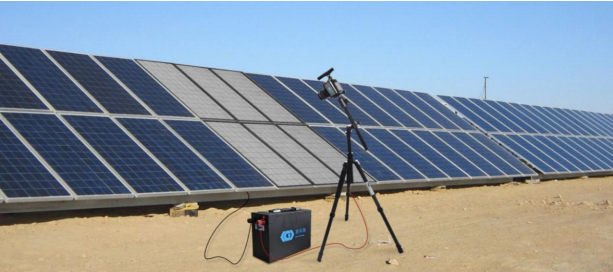
In practical implementation scenarios, LXG30 has been widely used in household photovoltaic on-site acceptance, annual inspection of industrial and commercial rooftop power stations, batch defect investigation of large ground power stations, outdoor sampling inspection of components leaving the factory, and evaluation of old photovoltaic power station renovation. Multiple photovoltaic operation and maintenance companies have provided feedback after purchasing, stating that the equipment has significantly shortened the entire site inspection period, improved defect identification accuracy by over 85%, effectively identified high-risk components in advance, and reduced post operation and maintenance losses of the power station. The Technical Director of LAILX in Suzhou introduced that LXG30 has completed dozens of on-site iterations for complex outdoor working conditions, taking into account the three core requirements of imaging clarity, portability, and endurance, and filling the gaps in the industry's on-site EL detection equipment. In the future, brands will continue to optimize AI recognition algorithms, expand more new battery defect recognition models, synchronously improve supporting digital management software, and build an integrated non-destructive testing solution of "on-site imaging intelligent analysis report archiving". Hard core testing equipment will safeguard the long-term stable operation of photovoltaic components and help improve the quality and efficiency of the new energy industry.
Photovoltaic module EL tester, photovoltaic panel testing instrument, outdoor photovoltaic power station tester
+86 177-0622-2370
Address: 4409 Wuzhong Avenue, Suzhou City, Jiangsu Province
Phone: +86 17706222370
Email: el@lailx.com

LINE