Welcome to LAIXL, producing EL testers, IV testers, and drone EL
 ×
×
+86 177-0622-2370
xinwen
浏览数:632 发布于:2026-07-01
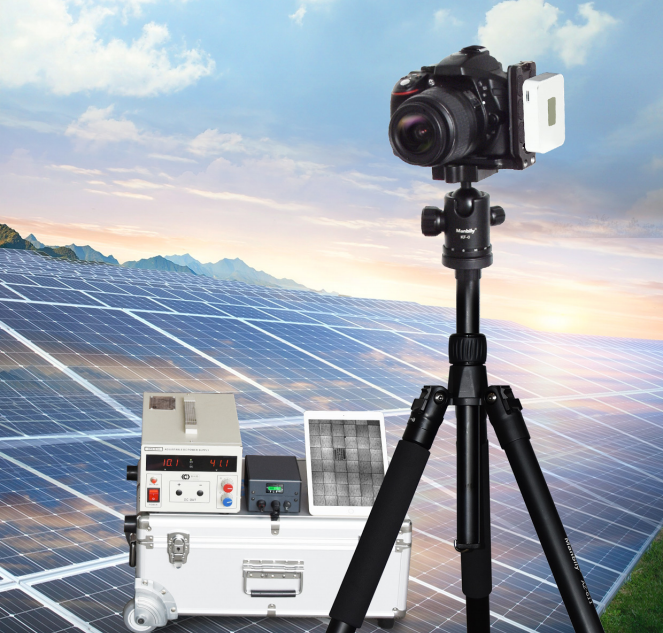 As the core carrier of photovoltaic power generation in photovoltaic power plants, internal hidden cracks, broken grids, virtual soldering, PID attenuation, fragments, and hot spot defects are hidden dangers that cause a decline in power generation, premature scrapping of components, and even fire accidents. Conventional visual inspection can only identify surface damage and cannot capture micro level internal defects. Electroluminescent EL imaging technology has become an indispensable core method for non-destructive defect detection of components. Traditional fixed EL equipment has a large volume, relies on dark environments, and is difficult to transport. Old portable models have shortcomings such as blurred imaging, low defect recognition efficiency, unstable wireless control, and lack of intelligent analysis functions, making it difficult to adapt to the batch inspection needs of outdoor power stations. Suzhou Laikesi New Energy Technology (LAILX) relies on years of research and development experience in infrared imaging optics to launch the LXG50 portable EL detector. It is equipped with a 30 million level high-sensitivity infrared imaging module, the eighth generation full screen autofocus patent, and an AI intelligent defect recognition algorithm, achieving high-definition EL detection outdoors day and night. The lightweight body is matched with an integrated power supply solution, revolutionizing the on-site detection mode of internal defects in photovoltaic modules, and becoming a standard professional equipment for component incoming quality inspection, power station completion sampling, and stock power station operation and maintenance investigation. Photovoltaic power station tester
The imaging clarity and defect recognition sensitivity are the core competitive advantages of LXG50. The device is equipped with a 26 million to 30 million full frame industrial grade CMOS infrared sensor chip, paired with a self-developed 99.8% high transmittance wide-angle infrared lens. The imaging resolution can reach 0.8mm per pixel, and the sensitivity can capture fine cracks with a width of less than 0.2 microns. More than ten types of defects such as small hidden cracks, fine grid line breaks, edge fragments, internal virtual soldering, battery cell mixing, PID black edge attenuation, etc. can be fully and clearly imaged without image edge blurring or local focus blur problems. Different from commonly used single point autofocus devices on the market, the LXG50 is equipped with the LAILX 8th generation full-time planar autofocus system, which can achieve synchronized and clear autofocus of the entire component image regardless of the height difference, tilt installation angle, or strong or weak light environment. It can capture images as soon as the device is set up, without the need to repeatedly adjust the lens focal length, greatly reducing the detection time of individual components. The exposure time supports custom adjustment from 1/250 second to 60 seconds, and can quickly match the optimal imaging parameters for different transparent components such as single glass, double glass, half sheet, thin film, perovskite, etc., to meet the testing needs of all types of crystalline silicon and new photovoltaic components.
The all-weather outdoor detection capability completely breaks through the limitations of traditional EL equipment usage. Traditional EL detectors can only operate in dark environments at night, and under strong light during the day, the imaging exposure is insufficient and defects are difficult to distinguish, greatly limiting the inspection work time. The LXG50 is equipped with a self-developed daylight suppression imaging module, which eliminates the need to set up a sunshade tent. Clear EL imaging can be completed in outdoor environments during the day, enabling uninterrupted inspections throughout the day. Large ground power stations can screen thousands of component defects in a single day, increasing detection efficiency by more than three times. The entire equipment adopts a lightweight split design, with the imaging camera, programmable drive power supply, tripod, and lithium battery power supply box all stored in a portable trolley protective box. One person can complete the transportation and installation, and the entire equipment assembly and debugging can be completed within five minutes. It is suitable for complex scenes with limited space such as distributed roofs, mountains, and water surfaces. The equipment is equipped with a large capacity built-in lithium battery, which supports continuous shooting all day long when fully charged. There is no need for external power supply equipment in outdoor areas without commercial fields, saving the cost and burden of supporting generators and long-distance power lines.
The intelligent wireless control and AI automatic recognition function significantly reduce the threshold for manual image reading. The LXG50 is equipped with a 150 meter long distance encrypted WIFI wireless transmission module, which can be wirelessly connected to devices such as tablets, mobile phones, and computers for remote control. Shooting, parameter adjustment, and real-time preview of imaging images can be synchronized without the need for personnel to travel between components and the host; Support dual terminal collaborative operation, with one person setting up and shooting, one person real-time viewing of imaging mark defects, and multi person collaborative inspection suitable for large-scale array batch detection. The accompanying exclusive detection management APP is equipped with self-developed AI defect recognition algorithm. After imaging is completed, the system automatically marks all defect positions in the screen, automatically distinguishes the defect levels such as slight hidden cracks, moderate virtual welding, severe fragments, PID attenuation, etc., and calculates the defect size, quantity, and distribution area. The defect recognition accuracy is over 98%, without the need for operators to have years of EL defect interpretation experience. Zero based operation and maintenance personnel can also accurately complete component defect screening, reducing manual image reading workload by 60%.
The digital management function of the project fully covers the archiving requirements of the entire process of photovoltaic testing. The device supports component barcode scanning and input, automatically binding component numbers, array positions, power station names, and detection dates to captured images. The images come with project watermarks to prevent confusion and loss of detection data; The captured data can be stored locally and wirelessly synchronized to the computer management software. The software has a built-in power station modeling function, which can divide the distribution of components according to the array, branch, and floor. Defect points are automatically marked and located on the power station distribution chart, visually presenting the concentrated defect areas and facilitating targeted maintenance and rectification by operation and maintenance personnel. The software supports one click export of standardized EL inspection reports, including imaging original images, defect classification statistics tables, defect location distribution maps, and rectification suggestions. The file format is compatible with PDF, images, and tables, meeting the requirements of project completion acceptance, third-party quality inspection, and owner operation and maintenance archiving compliance. At the same time, the device supports a dynamic 4K video recording mode, which can continuously record and observe suspected faulty strings, capture hidden attenuation problems that are difficult to detect in static photos, and further reduce the probability of missed detections.
Safe adaptation to various high-voltage photovoltaic system detection scenarios. The supporting programmable driver power supply supports adjustable wide current from 0.1A to 10A. The weak current mode is used to detect slight attenuation PID defects, while the high current mode quickly displays component fractures and large-area virtual welding faults; The power supply is equipped with multiple protections such as overcurrent, reverse connection, and short circuit. It automatically shuts off and alarms for misconnected wires, ensuring the safety of operators and component equipment. The protection level of the entire equipment reaches IP54, which can withstand short-term operation in outdoor dust and light rain environments. The supporting tripod adopts anti slip reinforced support, and there is no shaking or blurring during strong wind weather shooting. It is suitable for long-term use in power stations in different regions such as northwest sandstorms and southern rainy areas.
Since its launch, LXG50 has been widely used in the factory inspection of top domestic photovoltaic module manufacturers, annual inspection of existing power stations of major new energy groups, third-party acceptance testing of power grids, and overseas photovoltaic power station operation and maintenance projects. Numerous customers have provided feedback that the device has three core advantages: direct outdoor inspection during the day, AI automatic defect recognition, and wireless portability and ease of operation. It effectively solves industry pain points such as limited operating time, low manual interpretation efficiency, and cumbersome handling and installation of traditional EL devices. Under the same inspection scale, the labor and time costs are significantly reduced.
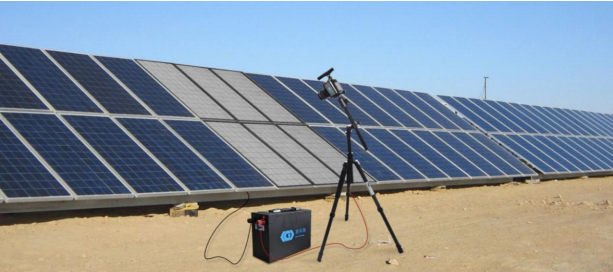
With the continuous expansion of domestic photovoltaic stock scale, the market demand for regular inspection of component defects, factory and site quality inspection of new projects continues to be released, and lightweight, all-weather, and intelligent EL testing equipment has become a necessity in the industry. Suzhou LAILX adheres to independent research and development of core optics and algorithms. The LXG50 portable EL detector provides efficient non-destructive testing solutions for the quality control of photovoltaic industry chain components, thanks to its advantages of high cost-effectiveness, full field adaptation, and intelligent digital management. In the future, Lexus will continue to upgrade its AI defect recognition model, expand the drone linked EL detection function, improve the product matrix of photovoltaic defect detection equipment, and use hardcore detection technology to safeguard the long-term safe and efficient operation of photovoltaic power plants.
Photovoltaic power station tester, solar cell testing equipment, outdoor photovoltaic power station tester
+86 177-0622-2370
Address: 4409 Wuzhong Avenue, Suzhou City, Jiangsu Province
Phone: +86 17706222370
Email: el@lailx.com

LINE