Welcome to LAIXL, producing EL testers, IV testers, and drone EL
 ×
×
+86 177-0622-2370
xinwen
浏览数:6 发布于:2026-07-01
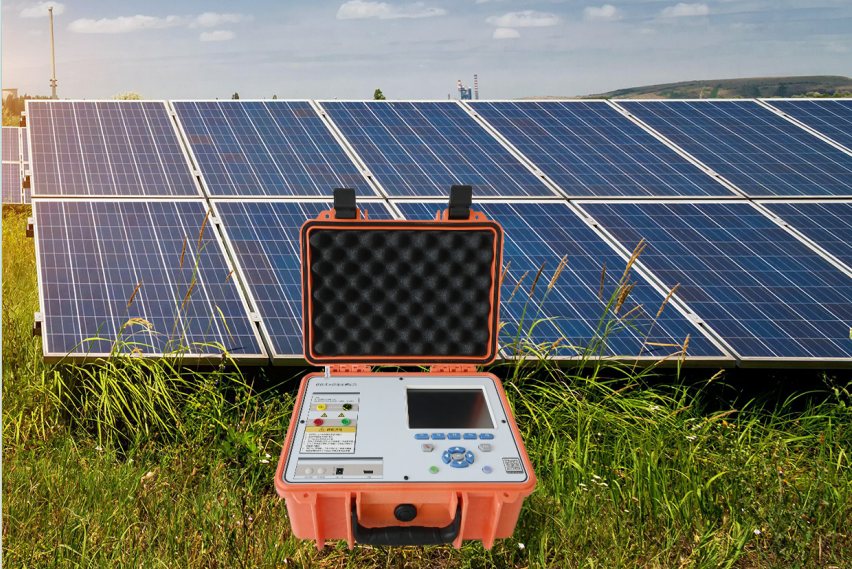 Against the backdrop of the global photovoltaic industry accelerating towards 1500V high-voltage string and high-power module iteration, the completion acceptance, daily operation and maintenance, and third-party quality inspection of power stations have put forward new and stringent requirements for the range, accuracy, and portability of component power generation performance testing equipment. The traditional 1000V range IV tester is no longer suitable for new high-voltage photovoltaic systems, with pain points such as insufficient range, slow detection speed, missing environmental data synchronization acquisition, and cumbersome outdoor operations, which restrict the efficiency of quality control throughout the entire lifecycle of photovoltaics. Suzhou Laikesi New Energy Technology Co., Ltd. (LAILX) has been deeply engaged in the research and development of photovoltaic testing instruments for more than ten years. Relying on its independent capacitive dynamic load core algorithm, it has launched the LX-PV31 portable IV tester, which has a large testing range of 1500V/30A, ten second high-speed scanning, and integrated portable design. It fills the gap in high-voltage photovoltaic field performance testing and has become a standardized testing equipment for centralized ground power stations, industrial and commercial distributed rooftop power stations, household photovoltaic projects, and component production enterprise laboratories. Current voltage power curve detector
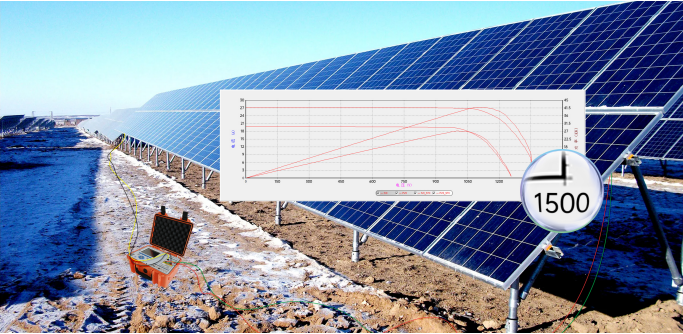
The core performance of LX-PV31 comprehensively benchmarks international high-end testing equipment, solving multiple long-term pain points in the industry. The device supports up to 1500VDC DC voltage and 30A current testing, covering 50W to 30kW single component and whole string photovoltaic array detection, perfectly adapting to current mainstream high-power components such as half sheet, double glass, TOPCon, and HJT. The measurement accuracy has reached the top level in the industry, with a minimum voltage division of 0.1V and a current division of 0.001A. The overall testing error of the whole machine is controlled within the range of ± 0.5% ± 0.2V. It can fully collect more than 20 core electrical parameters such as I-V curve, P-V curve, open circuit voltage, short-circuit current, peak power, fill factor, conversion efficiency, series resistance, parallel resistance, etc., fully restore the real power generation characteristics of photovoltaic modules, and provide authoritative quantitative data support for power plant power attenuation judgment, low-quality component screening, and project acceptance. Different from similar devices on the market, LX-PV31 comes standard with high-precision irradiance probes, component temperature sensors, and environmental temperature acquisition modules. The testing process synchronously records the on-site lighting and temperature conditions, avoiding data bias caused by different meteorological environments, ensuring that the detection results of multiple batches and regions of components have horizontal comparison reference value, accurately calculating the PR efficiency value of the power station system, and quantitatively evaluating the actual power generation revenue level of the power station.
For complex outdoor work scenarios, LAILX has achieved comprehensive optimization in terms of device portability and intelligent operation. The whole machine adopts a high-strength waterproof and shockproof engineering protection box integrated packaging, with an external size of 390300200mm. It can be carried by a single person and is suitable for various complex construction and operation environments such as mountains, deserts, rooftops, and floating power stations on water surfaces. The working temperature range covers -10 ℃ to 50 ℃, and is not afraid of harsh working conditions such as high temperature exposure, low temperature frost, sand and dust humidity. The screen adopts a high-definition color touch LCD screen that can be viewed under sunlight, paired with dual operation modes of physical function buttons. It can read curves and values clearly in strong light outdoors without the need for shading devices; Built in large capacity local storage, capable of storing over 2000 complete test waveforms and supporting environmental data, supporting local review, classification retrieval, and batch deletion management. The device is equipped with a wireless transmission module, and the host and irradiation temperature probe support wireless communication up to 100 meters away. Large array detection does not require repeated dragging of cables, and with a dedicated barcode scanning function, component numbers and array positions can be entered with one click, achieving the binding of component detection data with physical objects one by one, greatly reducing the workload of data organization in the later stage.
In terms of detection efficiency, the LX-PV31 is equipped with a self-developed high-speed capacitor scanning load. Single component or complete string curve acquisition only takes 10 seconds, which is more than three times faster than traditional resistance load IV testers. Large centralized power stations can complete batch detection of hundreds of strings of components in a single day, significantly reducing the maintenance and inspection period. The device is equipped with a standardized photovoltaic module parameter database, covering all mainstream module specifications on the market. Operators only need to select the corresponding model to start the fully automatic detection with one click, without the need to manually set load parameters. Zero based staff can independently complete the entire detection process after brief training. The supporting PC professional analysis software supports bilingual switching between Chinese and English, and can automatically generate standardized testing reports, including curve graphs, parameter tables, and defect judgment conclusions. It supports exporting in multiple formats such as PDF and Excel, meeting the compliance file requirements of third-party testing agencies, power grid acceptance, and owner archiving. At the same time, the software has a built-in attenuation analysis model that can compare test data from different cycles of the same component, visually display the magnitude of power attenuation, and predict the risk of component aging faults in advance.
Safety design runs through the entire process of LX-PV31 machine development, adapting to the safety regulations for high-voltage photovoltaic system operation. The device is equipped with four hardware protection circuits: overvoltage, overcurrent, reverse connection, and overheating. When the positive and negative poles are mistakenly connected or the range is exceeded, the circuit will be automatically cut off and an audible and visual alarm will be triggered to prevent high-voltage electric shock and instrument burnout accidents; The test interface is equipped with an insulation protective sheath, and the wiring terminals adopt an anti electric shock enclosed design, strictly complying with the IEC62446 photovoltaic system safety testing standard. The whole machine is powered by a large capacity rechargeable lithium battery, which can sustain continuous outdoor operation for more than eight hours when fully charged. Remote power stations without mains electricity do not need to carry bulky external power sources, reducing the burden of carrying equipment on site.
Since its launch on the market, LX-PV31 has been widely used in the operation and maintenance departments of major new energy groups, provincial power quality inspection research institutes, third-party photovoltaic testing institutions, and the factory quality inspection process of leading photovoltaic module manufacturers in China. It covers various scenarios such as large-scale ground power stations in the northwest desert, distributed rooftop projects in the eastern industrial and commercial sector, county-level promotion projects for household photovoltaics, and floating photovoltaics on water. Numerous operation and maintenance companies have provided feedback that LX-PV31, with its comprehensive advantages of wide range, high precision, fast detection, and easy portability, effectively solves the problem of on-site detection of 1500V high-voltage systems. The comprehensive efficiency of a single inspection has been increased by 50%, and the overall equipment usage cost has been reduced by 60% compared to similar imported products, taking into account both detection accuracy and project economy.
At present, the domestic photovoltaic industry continues to expand, and the market demand for existing power station operation and maintenance, new project acceptance, and new component research and development testing has surged synchronously. High voltage, high efficiency, and lightweight have become the core development trends of testing equipment. Suzhou LAILX has always adhered to independent technology research and development. The LX-PV31 portable IV tester relies on domestically produced core hardware and algorithms to break the monopoly of the overseas high-end testing equipment market and provide a cost-effective, full scene adaptive performance testing solution for the domestic photovoltaic industry chain. In the future, Lexus will continue to iterate equipment algorithms, expand AI automatic attenuation recognition, cloud data synchronization and other intelligent functions, continuously improve the photovoltaic full chain detection instrument matrix, and help the new energy industry achieve high-quality, safe, efficient and sustainable development.
Current voltage power curve detector, PV power station IV power detector, PV power station portable IV power tester
+86 177-0622-2370
Address: 4409 Wuzhong Avenue, Suzhou City, Jiangsu Province
Phone: +86 17706222370
Email: el@lailx.com

LINE