Welcome to LAIXL, producing EL testers, IV testers, and drone EL
 ×
×
+86 177-0622-2370
xinwen
浏览数:658 发布于:2026-06-25
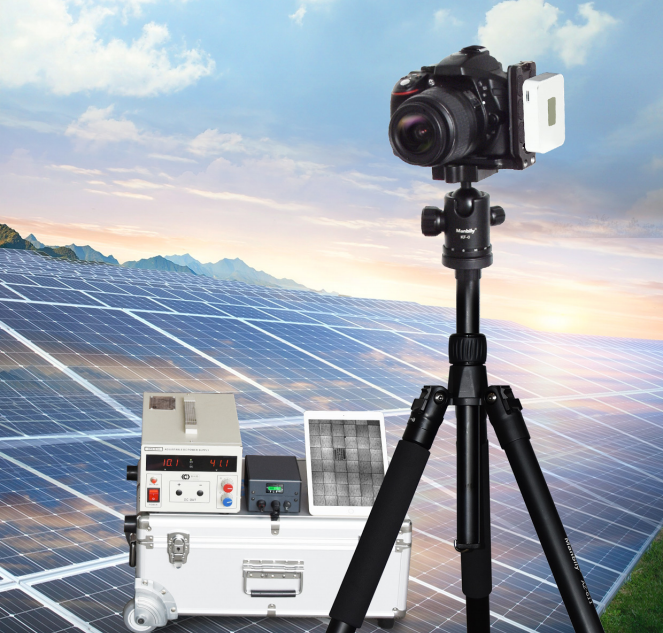 With the continuous increase in the stock scale of photovoltaic power plants, hidden defects inside the components have become the core hidden danger that restricts power generation revenue and causes safety accidents. Invisible damages such as hidden cracks, virtual soldering, broken grids, PID decay, black cores of battery cells, and hot spots on wiring will gradually reduce the efficiency of component conversion, and in severe cases, cause component fires and burns, bringing huge economic losses to power plant owners. Electroluminescent EL imaging detection is currently recognized as the only non-destructive technology for detecting internal battery cell defects in components in the industry. However, traditional portable EL devices have shortcomings such as being only detectable at night, manually focusing and blurring, limited wired control, low efficiency of manual defect discrimination, and insufficient imaging accuracy. On site detection in mountainous and distributed scattered power stations is extremely difficult. Suzhou Laikesi New Energy Technology Co., Ltd. (LAILX) relies on years of experience in optical imaging and AI intelligent algorithm research and development to launch the LXG50 portable EL detector. It is equipped with four exclusive core technologies: the eighth generation full-time autofocus imaging system, all-weather imaging, wireless remote control, and AI automatic defect recognition. The lightweight body is suitable for outdoor operations in all scenarios, achieving fast, high-definition, and automated screening of hidden defects in photovoltaic modules. It provides a new standardized testing solution for module factory quality inspection, power station arrival acceptance, pre grid inspection, operation and maintenance fault investigation, and transportation loss assessment. Rapid detection instrument for hidden cracks in photovoltaic panels
Traditional EL detection equipment has long had industry pain points that are difficult to break through. Old style equipment relies on manual ranging and focusing, resulting in blurry images of long-distance shooting components and inability to distinguish subtle cracks clearly; Most equipment can only operate at night or in a closed darkroom. Outdoor inspections during the day require the construction of large blackout tents, which are cumbersome and time-consuming to disassemble. Full site inspections of large power plants can take several days; The host and camera are connected by a data cable, which limits the range of movement for operators. There are difficulties in operating high-altitude roofs and steep slope array detection, as well as safety hazards such as cable tripping; After the imaging is completed, defects are manually screened image by image, resulting in a high probability of missed or misjudgment in large-scale component detection, and strict requirements for the professional experience of the testing personnel; At the same time, the power module of the old-fashioned equipment and the camera are separately controlled, and parameter adjustment requires round-trip between the host and the shooting point, greatly extending the detection cycle of a single component. The LAILX R&D team conducted on-site research on the operation and maintenance processes of hundreds of photovoltaic power plants across the country, and carried out a two-year special technical breakthrough to address the above-mentioned pain points. They independently developed the entire chain of optical lenses, infrared imaging chips, programmable power supplies, and intelligent recognition software, and finally landed the LXG50 portable EL detector, which comprehensively reconstructed the portable EL detection operation process from hardware to software.
The LXG50 core imaging system has achieved a breakthrough upgrade in the industry, equipped with a 30 million full frame industrial grade high-sensitivity infrared CMOS chip and a 17mm ultra wide angle high-definition lens. The imaging accuracy is higher than 0.2mm per pixel, and it can clearly identify microcracks with a width of less than 0.2 μ m, accurately capture all types of defects such as broken grids, edge etching, mixed low efficiency solar cells, virtual solder joints, PID attenuation black spots, etc. It covers various mainstream photovoltaic module inspections such as crystalline silicon, double glass, thin film, and CIGS. The exclusive self-developed full-time dark light autofocus patented system completely abandons the traditional manual distance measurement and external infrared fill light assisted autofocus structure. The device can automatically complete distance measurement and autofocus when turned on. Whether shooting from a long distance in an array or close-up of a single component, the image is clear and sharp throughout the entire process, without the need for manual repeated debugging. The imaging cycle of a single component is compressed to 3 to 10 seconds, and the batch detection efficiency is increased by more than twice. Equipped with a dedicated all-weather anti infrared shading kit, there is no need to set up a large darkroom tent. Outdoor imaging operations can be carried out directly in strong light environments during the day, with uninterrupted testing day and night. It perfectly adapts to the tight schedule of power station grid connection acceptance projects, greatly reducing the entire EL testing period.
The integrated programmable power supply and wireless intelligent control system greatly optimize the on-site operation experience. The LXG50 is equipped with a 2-in-1 programmable detection power module, which enables signal synchronization and linkage between the power supply and imaging camera. Through the matching mobile phone and tablet APP, wireless unified control is achieved. Operators can remotely adjust all parameters such as output current, power on/off, camera aperture, shutter speed, ISO, etc. from the ground without the need to operate the power supply host back and forth. The device is equipped with dual band WIFI wireless image transmission, supporting simultaneous connection of two smart devices. One device can remotely control shooting, while the other can synchronously preview imaging images in real time. The operation and maintenance team can work together to complete detection and defect marking; The wireless transmission distance covers the entire row of photovoltaic arrays, high-altitude roofs, floating power stations and other difficult to access component points. It can complete filming without dragging long cables, eliminating on-site safety risks such as cable wear and tripping. The complete set of equipment is stored in a customized lightweight protective aviation box, with integrated storage of tripod, camera, power supply, and shading accessories. It can be carried and transported by a single person, and can be easily transported to distributed power stations in mountainous and rural areas without pressure. The deployment and testing of the entire set of equipment can be completed within five minutes of opening the box.
AI intelligent defect recognition software is the core competitive advantage of LXG50 differentiation. LAILX has independently developed an EL detection APP that is compatible with Android and IOS dual systems. It has a built-in database of millions of component defect images. After imaging is completed, the system automatically recognizes, marks, and classifies various types of defects, distinguishes hidden cracks, virtual soldering, attenuation, fragments, and other different types of faults, synchronously counts the number and area of defects, and does not require manual screening by inspectors on a per image basis, greatly reducing the professional ability requirements for practitioners. Novices can also accurately complete defect judgment. Software integration component barcode input, power station geographic location positioning, automatic image correction, and one click generation of detection reports. When shooting, scan the component barcode, automatically bind the EL imaging image with the component number, installation location, and detection time, and establish a complete electronic file of component defects; After the inspection is completed, a standardized PDF inspection report will be automatically exported, which includes imaging original images, defect annotation screenshots, and defect statistical lists. The report can be directly used for EPC acceptance delivery, third-party inspection archiving, and fault maintenance ledger recording. The local device has built-in large capacity storage, and tens of thousands of imaging images can be retained locally. Coupled with cloud backup function, it avoids on-site data loss, facilitates later tracing of component defect evolution, and predicts long-term operational degradation risks.
The landing application of the product covers multiple scenarios throughout the entire photovoltaic industry chain. At the module production and manufacturing end, LXG50 is used for full inspection before the finished product leaves the factory, screening for battery cell cracks, welding virtual welding, and damaged products during the production process, strictly controlling the quality of the factory, and reducing the cost of after-sales claims after the module leaves the factory; In the construction process of photovoltaic engineering, the unpacking inspection of components upon arrival can identify damages and hidden cracks caused by transportation bumps. Before installation and grid connection, a comprehensive EL survey of the entire site can be conducted to screen for new internal damages caused by construction handling and support compression, ensuring that there are no hidden faults in the delivered power station; During the normal operation and maintenance phase of the power station, it is used for annual and quarterly inspections to identify PID attenuation and thermal spot damage components caused by long-term light exposure, temperature differences, and rainwater erosion, replace faulty units in advance, and prevent the spread of faults from causing a large-scale decline in power generation; At the same time, it is suitable for specialized testing services such as third-party testing agencies, insurance companies' loss assessment, and evaluation of old power station renovation, to meet various professional testing compliance requirements. Whether it is a 100MW ground photovoltaic base, a rugged photovoltaic array in mountainous areas, or a distributed power station with household roofs and industrial and commercial color steel tiles, the equipment can adapt to complex terrains, variable climates, and stable imaging.
The technical director of LAILX in Suzhou introduced that the LXG50 realizes the localization and independent research and development of core imaging chips, autofocus algorithms, and AI recognition software, overcoming the industry dilemma of high prices and lagging after-sales service of imported equipment. The equipment has undergone rigorous testing for high and low temperatures, waterproof and dustproof, and long-term continuous imaging stability before leaving the factory, adapting to various outdoor environments such as high temperature, cold, high humidity, and sandstorms in both the north and south of China. The enterprise has established multiple after-sales service outlets nationwide, providing on-site equipment operation training, annual calibration, and lifelong free software iteration and upgrade services. For large-scale power plant bulk procurement customers, on-site technical support can be provided to ensure the stable development of customer testing operations in all aspects.
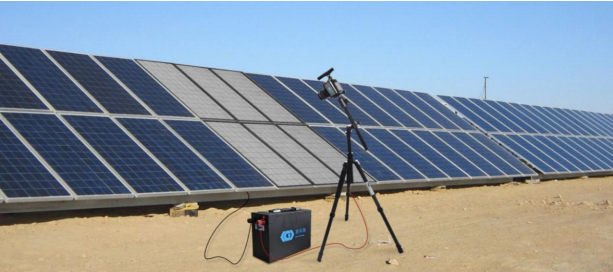
The current photovoltaic industry has fully entered the era of refined operation and maintenance, and the investigation of hidden defects within components is a key part of ensuring the safety of power plant assets and stable power generation income. The Suzhou LAILX LXG50 portable EL detector has four innovative advantages: all-weather imaging, fully automatic focusing, AI intelligent defect detection, and wireless lightweight operation. It solves the multiple pain points of traditional EL detection equipment and promotes the transformation of photovoltaic module defect detection towards high efficiency, intelligence, and standardization. In the future, Suzhou Laikesi will continue to improve its product matrix for photovoltaic testing across all categories, and collaborate with IV testers, infrared thermal imagers, insulation grounding comprehensive testers, and portable weather stations to create a one-stop photovoltaic station testing solution. With domestically produced high-end testing equipment, it will help promote the high-quality development of China's new energy industry.
Photovoltaic panel hidden crack rapid detection instrument, outdoor photovoltaic power station tester, solar cell testing equipment
+86 177-0622-2370
Address: 4409 Wuzhong Avenue, Suzhou City, Jiangsu Province
Phone: +86 17706222370
Email: el@lailx.com

LINE