Welcome to LAIXL, producing EL testers, IV testers, and drone EL
 ×
×
+86 177-0622-2370
xinwen
浏览数:704 发布于:2026-06-18
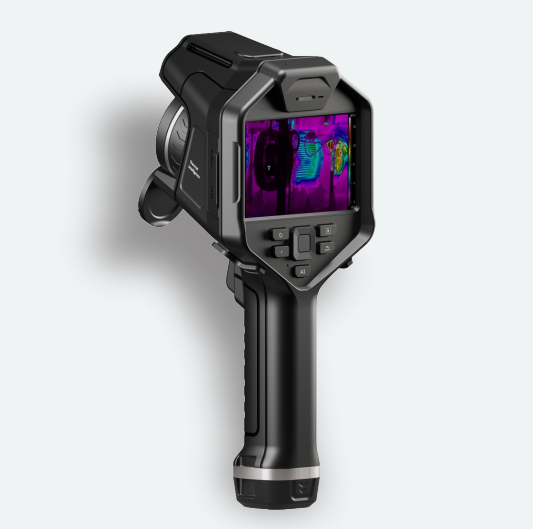 Hot spot effect, overheating of terminal blocks, aging of cable insulation, inverter heat dissipation failure, and poor contact of combiner boxes are common safety hazards in photovoltaic power plants. In the early stages of faults, there is only a small temperature difference that cannot be recognized by the naked eye. If left unchecked for a long time, it can cause significant power attenuation of components, and in severe cases, burn out battery cells and trigger power plant fires, resulting in huge economic losses. Infrared thermal imaging technology, with its advantages of non-contact, non-stop, and real-time temperature measurement, has become the core tool for daily preventive operation and maintenance of photovoltaic power plants. Traditional handheld thermal imagers have shortcomings such as low temperature sensitivity, poor temperature difference resolution, blurry outdoor strong light imaging, and lack of photovoltaic specific analysis functions, making it difficult to accurately capture early micro thermal anomalies. Suzhou Laikesi LAILX has developed the LX-F200 handheld infrared thermal imaging device to meet the exclusive testing needs of the photovoltaic industry. It is equipped with a high-sensitivity infrared detector, dual light fusion imaging, photovoltaic specific temperature rise analysis algorithm, and industrial grade wide range temperature measurement function. The lightweight handheld body is suitable for all day outdoor inspections, accurately locating various electrical and component thermal faults, and comprehensively safeguarding the operation safety of photovoltaic power stations. Compact, portable, precise imaging
The LX-F200 core hardware adopts an imported high-sensitivity uncooled infrared focal plane detector, which responds to the standard long wave infrared band of 7 μ m to 14 μ m, with a thermal sensitivity of NETD<0.05 ℃ @ 30 ℃. It can accurately distinguish small temperature differences of only 0.05 ℃, without interference from outdoor dust, water vapor, strong light, and thin fog environment. It stably captures small thermal abnormal signals of photovoltaic modules and electrical equipment, and identifies early faults that cannot be detected by routine inspections in advance. The temperature measurement range of the equipment realizes dual range intelligent switching, with a low-temperature range covering -30 ℃ to 120 ℃, suitable for temperature measurement of photovoltaic modules, brackets, and cables; The high temperature range is from 0 ℃ to 650 ℃, which meets the temperature measurement requirements of high-power electrical equipment such as inverters, combiner boxes, distribution cabinets, transformers, etc. The temperature measurement accuracy of the whole machine reaches ± 2 ℃ or ± 2% (taking the maximum value), and the temperature measurement data is accurate and reliable, providing quantitative temperature basis for fault diagnosis. The screen is equipped with a 3.5-inch high-definition touch color screen that can be viewed under sunlight. The infrared thermal image and visible light image are synchronously fused and displayed, and seven professional color palettes can be freely switched. High temperature abnormal points are highlighted, and operators do not need professional thermal imaging interpretation knowledge to identify component hot spots and terminal heating areas at a glance, greatly reducing the threshold for on-site inspection and learning.
The intelligent analysis algorithm customized for the photovoltaic industry is the core advantage of LX-F200 differentiation. The device has a built-in full screen temperature rise automatic calculation function, which can automatically shield environmental temperature interference. Based on the normal surface temperature of the components, it automatically calculates the temperature rise values of all areas in the screen, accurately distinguishing between normal working areas and abnormal heating fault areas; The automatic calculation function of phase to phase temperature difference is suitable for the detection of three-phase terminal connections in distribution cabinets and combiner boxes, and can quickly identify single-sided overheating hazards caused by three-phase current imbalance. For the hot spot detection scenario of photovoltaic modules, the equipment has built-in hot spot grading criteria. Based on the temperature difference value, it automatically divides into slight occlusion hot spots, moderate hidden cracking hot spots, and severe burning risk hot spots. It synchronously marks the coordinates of the fault area, records the highest and average temperature data, and facilitates the operation and maintenance personnel to classify and formulate rectification plans. The device supports real-time temperature point annotation and can manually add multiple temperature measurement markers. It stores the highest temperature, lowest temperature, and average temperature data corresponding to each heat map, and fully retains the original on-site fault detection data.
The whole machine adopts a lightweight industrial handheld ergonomic design, with a lightweight body that can be held with one hand for a long time without fatigue during inspection. The anti slip and wear-resistant shell is matched with an IP54 dustproof and waterproof protection level, suitable for various complex outdoor scenes such as plateaus, deserts, roofs, and coasts. The working temperature range is -20 ℃ to 50 ℃, and it is not afraid of summer exposure, winter low temperatures, rainy and humid environments. Equipped with a large capacity rechargeable lithium battery, it can perform continuous and uninterrupted inspections for 8 hours when fully charged, meeting the walking inspection needs of megawatt level power stations throughout the day; The body is equipped with a high-speed Type-C charging interface, and both the power bank and the car power supply can be recharged at any time, providing worry free power supply for outdoor work scenarios without mains electricity. The body is equipped with a large capacity local storage, which can store tens of thousands of infrared thermal imaging images and matching temperature data. The captured images are automatically labeled with shooting time, device number, and temperature measurement parameters, and support one click USB export of images and data; Equipped with wireless internet function on mobile phones, the heatmap can be quickly synchronized to the mobile end through Bluetooth, and fault images can be shared on-site with the operation and maintenance management group to achieve real-time reporting of hidden dangers. The PC end is equipped with professional photovoltaic thermal imaging analysis software, which can import inspection heat maps in batches, automatically generate temperature inspection reports for power plants, count the number of thermal spot faults, distribution of fault points, and list of high-temperature risk areas, simplifying the process of organizing operation and maintenance files.
The safe and efficient non-contact detection mode greatly improves the efficiency of photovoltaic operation and maintenance work. The LX-F200 can conduct full array inspections without the need for power station shutdown or interruption, and can operate in a grid connected state without affecting the normal power generation income of the power station. Unlike detection equipment such as EL and insulation testing that require shutdown operations, it can be used as a daily routine inspection tool. Application scenarios cover the entire photovoltaic industry chain operation and maintenance safety testing: distributed roof photovoltaic inspection, quickly identify roof obstruction, component aging, and junction box heating; Hiking inspection of large-scale centralized power stations on the ground, and large-scale screening of array heat spot hazards; Regularly measure the temperature of electrical equipment such as inverters, distribution cabinets, and combiner boxes to prevent loose wiring, overload, overheating, and fire; Open box inspection of components upon arrival to identify the initial temperature rise caused by internal cracks due to transportation compression; At the same time, it is suitable for daily temperature measurement and inspection of power substations, energy storage stations, and industrial electrical equipment, expanding the use of one machine for multiple purposes and reducing the procurement cost of multiple equipment for enterprises.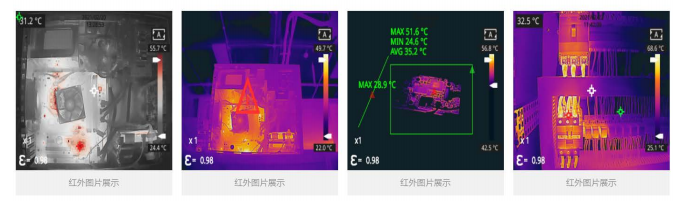
Suzhou LAILX provides complete original technical support for LX-F200, with detectors, imaging algorithms, and analysis software all independently calibrated and adapted to photovoltaic scenarios. Each unit undergoes high and low temperature calibration before leaving the factory; After sales service centers have been established in many parts of the country, providing annual accurate calibration of equipment, practical operation training, lifelong free firmware upgrade services, and continuously updating photovoltaic fault identification algorithm models. In the current era where the safe operation of photovoltaic power plants is increasingly valued, LX-F200 has built a comprehensive thermal fault warning system for photovoltaic power plants with ultra-high temperature sensitivity, photovoltaic exclusive intelligent analysis, and convenient lightweight design. Relying on preventive infrared inspection, it reduces the economic losses caused by thermal spot fires and power attenuation from the source, and helps the safe, stable, and efficient operation and development of the photovoltaic industry.
Compact, portable, precise imaging, visual remote temperature measurement, handheld thermal imaging device
+86 177-0622-2370
Address: 4409 Wuzhong Avenue, Suzhou City, Jiangsu Province
Phone: +86 17706222370
Email: el@lailx.com

LINE