Welcome to LAIXL, producing EL testers, IV testers, and drone EL
 ×
×
+86 177-0622-2370
xinwen
浏览数:698 发布于:2026-06-17
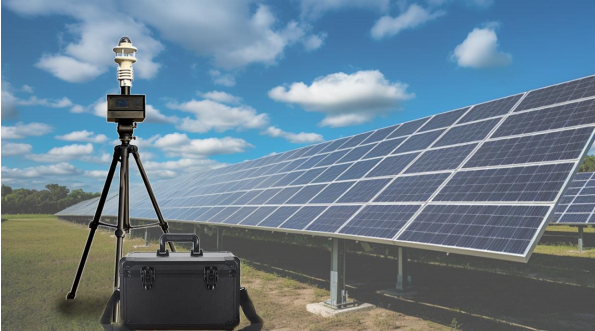 The power generation efficiency of photovoltaic power plants highly depends on the real-time meteorological environment of the site, including solar irradiance, environmental temperature and humidity, component backplate temperature, wind speed and direction, air pressure, and other meteorological parameters. They are the core basis for calculating the PR performance ratio of the power plant, evaluating power generation losses, distinguishing equipment failures from climate impacts, conducting resource surveys in the early stage of the project, and verifying grid connection acceptance data. Traditional fixed meteorological stations have long installation cycles, high costs, and fixed locations, which cannot cover the multi-point micro meteorological monitoring needs of mountainous areas and multi roof distributed photovoltaics. Different photovoltaic arrays obstruct and terrain differences form local microclimates. Single fixed station data cannot truly reflect the actual lighting and temperature conditions of the site, resulting in large deviations in power generation assessment and misjudgment of operation and maintenance failures. Suzhou Laikesi LAILX focuses on the demand for photovoltaic mobile meteorological monitoring and has launched the LXH506 portable photovoltaic dedicated meteorological station, which integrates multi parameter high-precision sensing modules, lightweight modular rapid deployment, and realizes multi-point, temporary site, and distributed roof mobile meteorological monitoring, providing accurate environmental data support for photovoltaic resource survey, acceptance verification, and refined operation and maintenance. Portable weather station
The LXH506 portable weather station adopts a fully modular and lightweight integrated design, with a complete set of sensing units, data acquisition hosts, and telescopic tripods stored separately. It is equipped with a hard portable protective box, which can be carried by one person. The tripod is made of lightweight aviation aluminum alloy material, with a three-stage telescopic adjustment height of up to 3 meters. It can be assembled and deployed in 5 minutes without the need for a concrete base or professional construction tools. It is ready to use right out of the box and perfectly adapts to mobile scenarios such as site survey in the early stage of photovoltaic projects, distributed multi-point temporary monitoring on rooftops, ground power station acceptance comparison, fault diagnosis and temporary weather collection. After the project is completed, it can be dismantled and transported to the next site for reuse, significantly reducing the monitoring cost of a single project compared to fixed weather stations. The protection level of the entire sensing unit is IP66, waterproof, dustproof, and UV resistant. The sensor housing is resistant to high and low temperatures and corrosion, and can be placed outdoors for a long time. The working environment temperature ranges from -30 ℃ to 70 ℃, and it is suitable for various climate conditions in domestic photovoltaic construction areas.
The equipment is equipped with a complete set of high-precision sensing modules specifically designed for the photovoltaic industry, which synchronously collect six core photovoltaic monitoring parameters: the high-precision total radiation sensor accurately captures the intensity of solar radiation, with a measurement error of ≤± 2%, perfectly matching the STC standard operating condition radiation data acquisition requirements; The surface mounted component temperature sensor is attached to the photovoltaic back panel to accurately reproduce the working temperature of the solar cell; Temperature, humidity, and atmospheric pressure sensors synchronously record the environmental climate of the site area; Ultrasonic wind speed and direction sensors have no mechanical rotating parts, eliminating wind and sand jamming faults and accurately recording the impact of airflow changes on component heat dissipation and power generation; All sensors are calibrated one by one using laboratory standard light sources and constant temperature and humidity chambers before leaving the factory. There is no significant drift in long-term use data, meeting the data traceability standards of third-party testing institutions. The layout of the entire sensing module has been optimized through fluid simulation to avoid shading issues with tripods and collection boxes, ensuring interference free irradiation and temperature acquisition.
The data acquisition host is the LXH506 core control unit, which is equipped with a low-power industrial processor. The acquisition cycle can be freely customized from 1 minute to 4 hours. During the feasibility survey stage, a 1-minute high-frequency sampling can be set to capture short-term radiation fluctuations. Long term operation and maintenance monitoring can set hourly sampling to save storage energy consumption; The local built-in large capacity storage chip can continuously retain complete meteorological historical data for more than 3 years, support breakpoint retransmission, automatically cache data when the outdoor network is interrupted, and upload complete data without losing records after communication is restored. Multi adaptability of communication modes, standard RS485 Modbus industrial wired protocol, can be connected to photovoltaic inverters and local monitoring screens; Simultaneously equipped with a 4G wireless transmission module, real-time weather data can be remotely uploaded to the LAILX cloud monitoring platform without wiring. Real time radiation, temperature, and wind speed curves can be viewed anytime and anywhere through computer web pages and mobile mini programs, and historical data comparison and analysis can be retrieved. The power supply system adopts an integrated design of photovoltaic auxiliary charging and large capacity lithium batteries, matched with small supplementary photovoltaic panels, which automatically charge during the day. The built-in battery can support 15 days of uninterrupted monitoring in continuous rainy and cloudy weather, completely disconnected from the mains power supply. Even remote mountainous photovoltaic sites without power grids can operate stably all day long.
The intelligent data parsing function is specially customized for the photovoltaic industry. The cloud platform has a built-in PR performance ratio automatic calculation model, which synchronously connects meteorological data with the actual power generation of the power station. It automatically distinguishes four types of power generation loss sources: insufficient lighting, component attenuation, hot spot failure, and dust accumulation obstruction, avoiding operation and maintenance personnel from simply judging the decrease in power generation as equipment failure and significantly reducing ineffective maintenance costs; The system can generate daily, monthly, and annual meteorological statistical reports, summarizing data on total radiation, average temperature, and number of days with strong winds. These reports are used for project R&D electricity calculation, annual operation and maintenance reports, and supporting materials for grid connection acceptance environment. The reports support one click export and archiving in Excel and PDF. The equipment comes with a complete set of standardized auxiliary materials, including sensor mounting brackets, sunshade ventilation covers, waterproof wiring terminals, spare lithium batteries, and portable storage accessories. They are fully equipped at the factory and do not require additional procurement.
Since the LXH506 portable weather station was launched on the market, it has been widely applied in mountainous photovoltaics, industrial and commercial rooftop distributed photovoltaics, agricultural photovoltaic complementary photovoltaics, and household photovoltaic clusters in China. Feedback from new energy design institutes and EPC enterprises has shown that using this equipment for site preliminary surveys and synchronized collection of micro meteorological data at multiple locations has improved the accuracy of power generation calculation by 15%; During the acceptance stage of the power station, multiple meteorological stations will be set up simultaneously to collect radiation temperatures in different areas, ensuring that the acceptance power detection data has standard environmental references; In daily operation and maintenance, IV testers, EL detectors, and infrared thermal imagers are used synchronously to form an integrated and complete detection solution for environment performance temperature, and to build a comprehensive digital operation and maintenance system for photovoltaics.
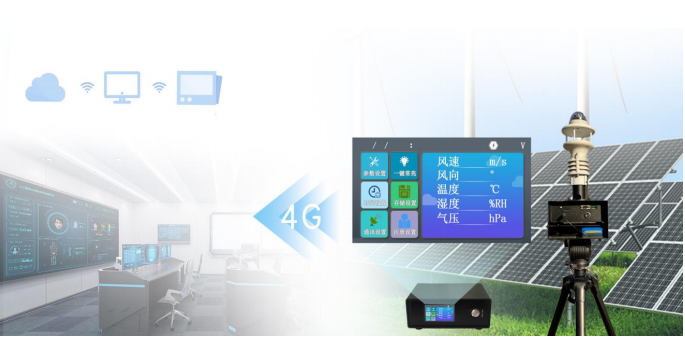
Suzhou LAILX continues to improve its photovoltaic detection full chain equipment matrix, and the LXH506 portable weather station accurately solves the industry pain points of traditional meteorological monitoring being fixed, costly, and adaptable to a single scenario. With the core advantages of lightweight mobile deployment, multi parameter high-precision sensing, wireless intelligent data transmission, and long endurance wiring free power supply, it helps the photovoltaic industry achieve fine micro meteorological monitoring and scientific evaluation of power generation. The enterprise will continue to expand the sensing modules for soil radiation, rainfall, and dust accumulation thickness, optimize the cloud based photovoltaic data analysis model, and provide a complete set of professional testing equipment support for the fine, digital, and high-quality development of the domestic photovoltaic industry.
+86 177-0622-2370
Address: 4409 Wuzhong Avenue, Suzhou City, Jiangsu Province
Phone: +86 17706222370
Email: el@lailx.com

LINE