Welcome to LAIXL, producing EL testers, IV testers, and drone EL
 ×
×
+86 177-0622-2370
xinwen
浏览数:7 发布于:2026-06-17
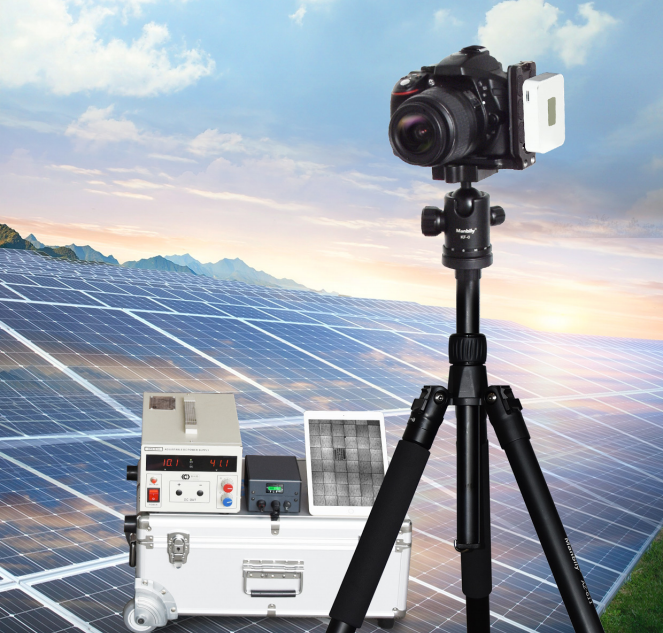 With the rapid iteration of efficient photovoltaic cell technology, new types of modules such as TOPCon and HJT have gradually become mainstream in the market. Hidden defects such as internal cracks, broken grids, virtual soldering, black chips, and delamination that are invisible to the naked eye can lead to a long-term decline in success rate and a risk of hot spot ignition, seriously shortening the 25 year design service life of photovoltaics. Traditional EL detection equipment is mostly laboratory desktop models, relying on fixed mains power and requiring the construction of shading shelters. It can only be used in factory workshops and cannot meet the on-site inspection needs of outdoor power plants; Early portable EL devices had problems such as blurred imaging, strong light interference, insufficient battery life, and complex operation, resulting in a high rate of missed outdoor detection defects. Based on the field of photovoltaic non-destructive testing technology, Suzhou Laikesi LAILX has overcome multiple technical challenges such as outdoor strong light imaging suppression, lightweight high-voltage excitation, and long endurance power supply. It has launched the LXG30 portable EL detector, which achieves all-weather outdoor non-destructive defect detection, connects the entire process of component factory sampling, power station grid connection acceptance, and operation and maintenance fault troubleshooting, and reshapes the industry standard for photovoltaic outdoor EL testing. Photovoltaic power station tester
The LXG30 portable EL detector adopts a modular and lightweight design, with the equipment host, imaging camera, and lithium battery module integrated for storage. The total weight of the equipment is only 7.8kg, and it is equipped with a wear-resistant and shockproof portable case that can be carried or carried by a single person for transportation. The length of the tripod after storage is less than 60 centimeters, and it can be flexibly arranged in narrow working spaces such as roofs, mountains, and high-rise roofs. The whole machine assembly and debugging can be completed within 5 minutes without the need for professional construction personnel to operate. The device has a protection level of IP64, with an impact resistant, rain proof, and dust-proof shell. It can adapt to harsh outdoor environments such as large temperature differences between day and night, frequent sandstorms, and high humidity. Unlike traditional EL devices that can only be used indoors, it truly achieves on-site testing anytime, anywhere. The core imaging system is equipped with a self-developed high sensitivity industrial grade near-infrared camera, paired with a dedicated strong light suppression optical filter, and a unique adaptive exposure imaging algorithm, which completely solves the problem of infrared interference caused by sunlight during the day. It does not require the construction of a shading shed, and can still output clear and detailed EL imaging images under direct sunlight at noon on sunny days. Micro defects such as hidden cracks and micro grid breaks are clearly distinguishable, and the defect recognition resolution reaches 0.03mm. The missed detection rate is controlled within 0.1%, and the performance is comparable to large desktop EL detection equipment.
In terms of high-voltage excitation power supply module, LXG30 optimizes the constant current drive circuit, with precise and adjustable output current, compatible with 300W to 700W full power range single and double-sided photovoltaic modules, suitable for independent detection of single modules and synchronous detection of multiple strings. It optimizes the backlight imaging parameters for double-sided modules, and can fully capture defects on both sides. The device is equipped with a large capacity safe lithium battery pack, which can continuously perform uninterrupted imaging detection for 6 hours on a single full charge, meeting the needs of all day power station inspection operations; Equipped with a DC fast charging adapter, it can quickly replenish energy during lunch breaks, eliminating the need for external power supply in remote areas without electricity and electricity supply, completely freeing itself from the constraints of on-site power supply. The device operation end is equipped with a 10 inch high-definition wireless touch tablet, which supports wireless image transmission control over a distance of 20 meters. Operation and maintenance personnel do not need to have close contact with live components. When conducting high-altitude inspections, they can complete photography, imaging, and defect viewing operations from a safe area, greatly reducing the safety hazards of high-altitude live work. The tablet interface is fully operated in Chinese, and the functions of photography, storage, review, and export can be accessed directly with one click. Novices can operate independently with simple training.
Intelligent defect analysis is the core highlight that sets LXG30 apart from similar products. The device is equipped with LAILX's self-developed AI defect recognition engine, which automatically analyzes images in real-time after imaging is completed. It intelligently distinguishes six major types of defects: hidden cracks, virtual welding, broken grids, pollution, PID attenuation, and bypass failure. The defect location, length, and quantity are automatically marked, and the risk levels are classified into mild, moderate, and severe according to industry standards. There is no need for manual visual screening of each image. The imaging analysis time of a single component is shortened to 5 seconds, and the batch detection efficiency is improved by more than 70%. The local storage space of the whole machine can store 50000 high-definition EL original images, and each image is automatically bound with detection time, power station address, component number, irradiation temperature and environmental parameters, forming a complete traceable detection file; Support exporting original images and defect analysis reports from USB flash drives, with attached defect annotation screenshots and risk assessment recommendations, directly used for archiving project acceptance materials; Simultaneously supporting wireless cloud synchronization, enterprise management personnel can remotely retrieve on-site inspection images, coordinate component quality issues across the entire region, and achieve digital defect ledger management.
The equipment comes with a complete set of standardized accessories, including a retractable aluminum alloy stable tripod, an extended insulation test cable, insulation safety fixtures, shading auxiliary soft cloth, and a portable charging set. The accessories are stored in separate compartments in a protective box, with no risk of loss; Built in multiple safety protection mechanisms, automatic power-off protection for overcurrent, overvoltage, and leakage, and thickened insulation protection layer for high-voltage output terminals to eliminate the risk of electric shock during outdoor detection, in compliance with safety operation standards for power sites. Automatically execute camera and power self-test program upon startup, regularly push sensor calibration reminders, maintain stable imaging accuracy without degradation for long-term use, and reduce equipment maintenance costs in the later stage.
At present, the LXG30 portable EL detector has been applied in hundreds of centralized ground power stations and industrial and commercial distributed photovoltaic projects in China. Third party testing institutions have tested and provided feedback that the device does not require the construction of a darkroom for outdoor testing during the day. A single power station can complete EL screening of more than 300 components per day, accurately capturing defects that are easily overlooked by traditional outdoor equipment such as micro cracks and micro virtual welding, effectively avoiding maintenance losses caused by large-scale component power attenuation and hot spot faults in the later stage. Many EPC companies have included it as standard equipment for project grid connection acceptance, conducting EL sampling directly at the component delivery site to screen out hidden damaged components caused by transportation collisions in advance, and reducing the probability of power plant failures in the later stage from the source.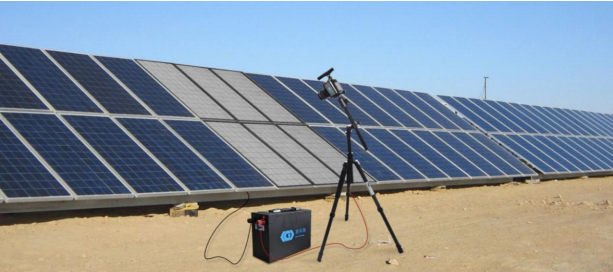
Suzhou LAILX always focuses on the real pain points of on-site testing in the photovoltaic industry. The LXG30 portable EL detector breaks through the limitations of traditional EL equipment scenarios, integrates multiple core advantages such as all-weather imaging, lightweight portability, AI intelligent defect diagnosis, and long-term safe power supply, and improves the comprehensive solution for non-destructive testing of photovoltaic modules in all scenarios. In the future, enterprises will continue to iterate image recognition algorithms, expand the adaptability of new perovskite photovoltaic modules, and use domestically produced high-performance portable detection equipment to assist in the upgrading of quality control in the photovoltaic industry, safeguarding the stable and efficient operation of photovoltaic power plants for 25 years.
Photovoltaic power station tester, photovoltaic panel hidden crack rapid detection instrument, solar cell testing equipment
+86 177-0622-2370
Address: 4409 Wuzhong Avenue, Suzhou City, Jiangsu Province
Phone: +86 17706222370
Email: el@lailx.com

LINE