Welcome to LAIXL, producing EL testers, IV testers, and drone EL
 ×
×
+86 177-0622-2370
xinwen
浏览数:6 发布于:2026-06-17
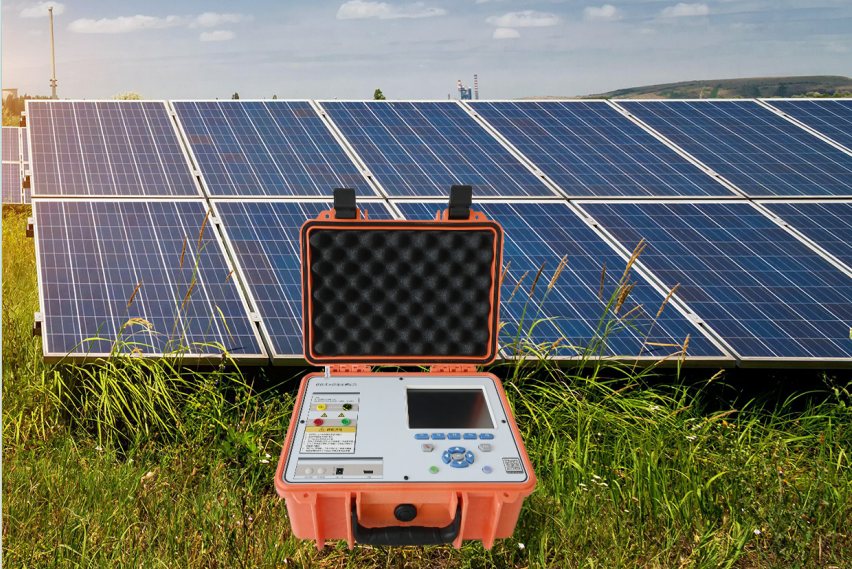 Against the backdrop of the continuous deepening of the dual carbon strategy and the continuous increase in domestic photovoltaic installed capacity, distributed rooftop photovoltaics, mountainous ground power stations, and household photovoltaic projects are rapidly expanding. The shortcomings of traditional large-scale IV testers, such as bulky and difficult to transport, cumbersome testing processes, and poor outdoor adaptability, are becoming increasingly prominent. The industry urgently needs a portable, high-precision, and intelligent on-site power detection equipment. Suzhou Laikesi New Energy Technology Co., Ltd. (LAILX) has been deeply engaged in the research and development of photovoltaic testing instruments for more than ten years. Relying on the core technology of power electronic measurement and control and photovoltaic performance simulation, after multiple rounds of outdoor field iteration testing, the new generation LX-PV33 portable IV tester has been officially launched. It has achieved technological breakthroughs in all scene pain points such as power station acceptance, daily inspection, third-party testing, and component sampling, and has become the core portable testing equipment in the field of photovoltaic operation and quality control, promoting the new stage of lightweight, efficient, and standardized photovoltaic on-site testing. Outdoor IV tester
The LX-PV33 portable IV tester achieves a revolutionary lightweight design at the body structure level, with an integrated packaging of the whole machine. The net weight of the host is only 2.1kg, and it is equipped with a high-strength waterproof protective box. It can be carried by a single person without the need for multiple people to cooperate in transportation. It is perfectly suitable for complex mobile scenarios such as rooftop high-altitude operations, rugged mountain inspections, and rural household photovoltaic home inspections, completely bidding farewell to the operational limitations of traditional equipment that require carts and multiple people to carry. The equipment casing is made of IP65 dustproof and waterproof industrial materials, which can resist outdoor rainwater, sand and dust, and high and low temperature environment erosion. The working temperature covers -20 ℃ to 60 ℃. Whether it is a high-temperature Gobi power station in summer or a photovoltaic project in cold mountainous areas in winter, it can carry out stable and uninterrupted testing operations, greatly expanding the applicable working conditions of the equipment throughout the year. The display end is equipped with a 7-inch high-definition touch color screen that can be viewed under sunlight, with no reflection under strong light and clear and readable data. It is equipped with physical shortcut operation buttons, and the dual operation mode of touch screen and buttons caters to the usage habits of novice and experienced operation and maintenance personnel. The interface is fully visualized in Chinese, and the IV curve, PV power curve, and various electrical parameters are displayed synchronously on the same screen. The complete performance of the components can be read without switching pages.
In terms of core detection performance, LX-PV33 benchmarks against IEC61215 and GB/T18217 photovoltaic detection standards, equipped with self-developed high-precision and wide range load modules, with a voltage measurement upper limit of 1500V and a maximum current detection range of 25A, which can fully cover single crystal, polycrystalline TOPCon、HJT、 Full specification photovoltaic products on the market, such as double-sided components, flexible components, and energy storage photovoltaic strings, are tested and synchronously collected for open circuit voltage Voc, short-circuit current Isc, maximum power Pmax, fill factor FF, conversion efficiency, series resistance, and parallel resistance. More than ten core electrical indicators are automatically generated, including complete I-V and P-V characteristic curves. The device is equipped with a high-precision irradiation sensor and a patch type temperature acquisition probe, which synchronously captures the on-site solar irradiance and real-time temperature of the component backplane during the detection process. Relying on the built-in STC standard operating condition correction algorithm, the on-site measured data is automatically calibrated to standard testing conditions, eliminating detection errors caused by morning, evening, and rainy weather fluctuations. The data repeatability error is controlled within 0.5%, and the detection accuracy reaches the same level as laboratory desktop equipment, fully meeting the data traceability requirements of third-party testing institutions' compliance acceptance.
The detection efficiency is another core advantage of LX-PV33. The whole machine optimizes the signal acquisition timing, and the complete detection process of a single component or a single string only takes 3 to 8 seconds. Compared with traditional portable IV devices, the efficiency is improved by more than 60%. When conducting batch inspections of 100MW ground power stations and comprehensive inspections of industrial and commercial rooftop photovoltaics, the on-site operation time can be greatly reduced, and the manual operation and maintenance costs can be lowered. The device is equipped with a large capacity built-in lithium battery, which can complete more than 500 complete tests continuously when fully charged. It supports Type-C fast charging and outdoor DC photovoltaic auxiliary charging as two energy replenishment methods, so there is no need to worry about power outages or shutdowns during inspections in remote areas without mains power. The data management system is comprehensively improved, and the local device can store 100000 sets of detection data with timestamps and geographical location tags. It supports one click export of PDF standardized detection reports from a USB flash drive. The reports automatically label the power station name, component model, testing personnel, environmental parameters, and performance curves, and can be directly used for project acceptance and archiving without the need for secondary editing in the later stage; Equipped with a Bluetooth wireless transmission module, it can connect to the LAILX exclusive operation and maintenance APP for mobile phones and tablets, synchronously detect images and data in real time, and remotely upload them to the enterprise cloud management platform to achieve unified collection, comparative analysis, and fault ledger establishment of data from multiple power stations, helping photovoltaic enterprises build a digital operation and maintenance system.
In response to the practical pain points of industry operation and maintenance, LX-PV33 is equipped with intelligent fault diagnosis algorithm, which automatically identifies common performance defects such as component power attenuation, PID potential induced attenuation, bypass diode failure, internal open circuit, and wiring virtual connection through curve deformation. The screen pop-up indicates the fault type and risk level, and operation and maintenance personnel can quickly judge the health status of components without having a deep electrical theoretical foundation. The equipment is equipped with a complete set of standardized testing fixtures, extended testing cables, and irradiation temperature sensing accessories, which can be put into use immediately without the need for additional purchase of auxiliary materials; At the same time, it is equipped with a built-in device self-test program, which automatically verifies the accuracy of the sampling module and sensors when turned on, regularly prompts instrument calibration, and ensures stable and drift free long-term use.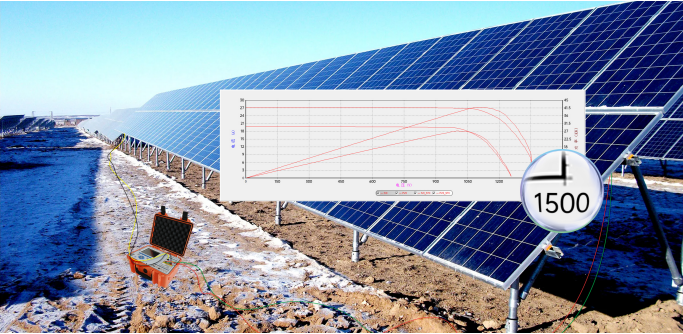
Since the LX-PV33 was put into market testing, it has completed thousands of on-site verifications in China's East China Mountain Photovoltaic, South China Industrial and Commercial Distributed Photovoltaic, Northwest Large Ground Power Station, and Jiangsu Zhejiang Household Photovoltaic Cluster, receiving unanimous praise from EPC engineering enterprises, third-party testing laboratories, and new energy operation and maintenance companies. According to feedback from operation and maintenance companies, LX-PV33 is used for roof photovoltaic acceptance. A single person can complete 200 module performance tests per day, reducing manpower investment by half compared to the old equipment. The one-time pass rate of data is 100%, significantly shortening the project grid connection acceptance cycle.
Suzhou LAILX always adheres to driving technological innovation based on scene requirements. The LX-PV33 portable IV tester integrates multiple advantages such as lightweight body, high-precision detection, high-speed sampling, intelligent diagnosis, and digital data management, filling the equipment gap of outdoor photovoltaic power precision detection. In the future, enterprises will continue to iterate algorithms and hardware modules, expand the adaptation functions of emerging scenarios such as energy storage photovoltaics and BIPV building photovoltaics, and use domestically produced high-end testing equipment to help improve the quality and efficiency of the photovoltaic industry, providing reliable technical support for the high-quality development of new energy in China.
Outdoor IV tester, photovoltaic power station IV power detector, portable IV tester
+86 177-0622-2370
Address: 4409 Wuzhong Avenue, Suzhou City, Jiangsu Province
Phone: +86 17706222370
Email: el@lailx.com

LINE