Welcome to LAIXL, producing EL testers, IV testers, and drone EL
 ×
×
+86 177-0622-2370
xinwen
浏览数:661 发布于:2026-06-01
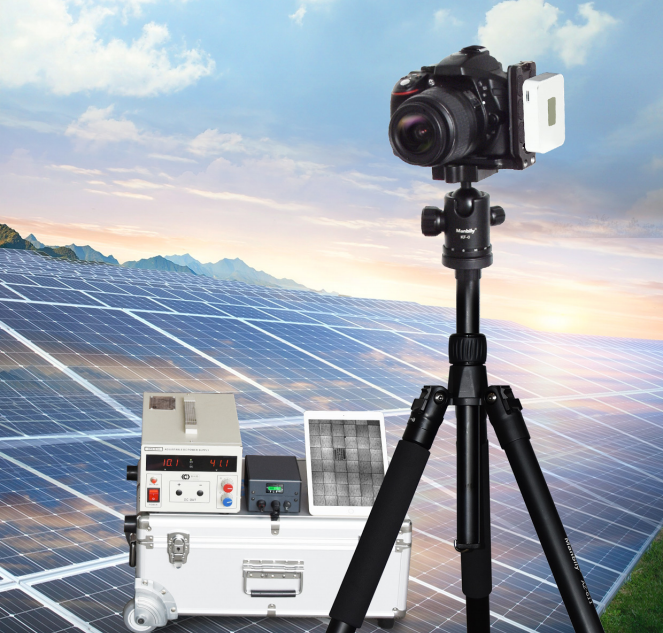 At present, as the global photovoltaic industry enters a new stage of high-quality development, diversified scenarios such as distributed photovoltaics, mountain photovoltaics, and household photovoltaics are rapidly spreading. As the core power generation unit of power plants, photovoltaic modules have hidden defects such as internal cracks, broken grids, virtual soldering, hot spots, PID decay, etc., which are like hidden "time bombs". Although difficult to detect in the early stage, they will cause power attenuation, power generation efficiency decline, and even component failure in long-term operation, seriously threatening the safety and revenue of power plants. Traditional manual inspection has low efficiency and high missed detection rate. Large fixed EL detection equipment is bulky, cumbersome to transport, and has poor outdoor adaptability, making it difficult to meet the on-site detection needs of distributed, mountainous, and household scenarios. Suzhou Laikesi New Energy Technology Co., Ltd. (LAILX) has been deeply engaged in the research and development of photovoltaic detection technology for many years. It has launched the LXG30 portable EL detector, which has core advantages such as extreme portability, high-definition imaging, intelligent control, and all-weather operation. It accurately solves the problem of outdoor photovoltaic module detection and has become the industry's "golden eye" for insight into internal defects of photovoltaic modules and ensuring long-term stable power generation of power plants. Photovoltaic power station tester
As a flagship new product developed by the core R&D team of LAILX after years of technical accumulation and multiple rounds of field testing, LXG30 has focused on the core requirement of internal defect detection in photovoltaic modules since its inception. It deeply integrates cutting-edge technology with practical needs, filling the market gap of high-end portable EL detection equipment in the industry. Electroluminescence (EL) detection technology is currently the most direct and effective means of identifying micro defects inside photovoltaic cells. The core competitiveness of LXG30 lies in its top-level high-definition imaging system, which can accurately capture micro defects. The device is equipped with an industry-leading 24 megapixel industrial grade CMOS imaging module, with a resolution of 6000 × 4000. It is paired with an exclusive Lailx9s germanium infrared chip, which has an infrared refractive index of up to 99.8% and can accurately capture near-infrared light signals in the 1100nm band, achieving a defect recognition accuracy of 0.5mm. Whether it is obvious defects such as hidden cracks, broken grids, fragments, and virtual soldering inside photovoltaic modules, or subtle hidden defects such as black core chips, black edges, edge overetching, PID attenuation, and thermal spot hazards, they can all be clearly presented through ultra clear imaging, completely solving the industry problem of missed detection and misjudgment of small defects in traditional equipment.
In response to the complex environment and practical needs of on-site inspection of photovoltaic power plants, LXG30 has achieved multiple innovative breakthroughs in imaging technology, with all-weather and all scene detection capabilities. The equipment innovation adopts full-time dark light autofocus technology, combined with professional optical shielding design, and is equipped with a military grade anti infrared darkroom, which can effectively isolate external light interference. Even in weak light environments such as lighting, moonlight, and starlight, clear imaging can be achieved without the need to build a darkroom, truly achieving 24-hour all-weather detection, greatly improving detection flexibility and efficiency. At the same time, it is equipped with a high-sensitivity infrared sensor with fast response speed and high imaging contrast, which can clearly distinguish the luminous intensity of different areas of the battery cell, accurately identify hidden quality problems such as low efficiency chips and mixed gears, and provide reliable basis for component quality grading.
In terms of portability and ease of use design, LXG30 fully meets the needs of outdoor mobile detection, balancing lightweight, modularity, and safety. The whole machine adopts a modular structure, consisting of an infrared camera, an intelligent control tablet, a portable EL power supply, a tripod, a high-strength waterproof box, etc. It is easy to disassemble and carry, and can be assembled, tested, and stored by a single person without the need for professional technicians to operate. The device is equipped with a large capacity lithium battery power supply system, which does not require external mains power and can be used on site with power on. It supports 24-hour ultra long battery life and meets the needs of large-scale power station inspection and patrol. At the same time, the detection process supports WIFI wireless remote control. The camera can be controlled to shoot and power on/off through a tablet or laptop. Operators can stay away from the components to avoid the risk of high-voltage electric shock, making the detection safer and more flexible. In addition, with the exclusive EL recognition report software, standardized inspection reports can be automatically generated, including detailed information such as defect location, type, severity, etc. It supports data export and printing for easy archiving and analysis.
With core advantages such as high-definition imaging, extreme portability, intelligent control, and all-weather operation, LXG30 has been widely used in photovoltaic module factory quality inspection, arrival acceptance, on-site installation, operation and maintenance inspection, third-party testing, fault identification, and other full scene Lexus applications. At the component production end, internal defective components can be accurately screened to ensure factory quality; At the power station operation and maintenance end, hidden components can be quickly located, faults can be promptly investigated, and large-scale power attenuation can be avoided; In distributed photovoltaic scenarios, portable design can adapt to complex environments such as roofs and mountains, achieving flexible detection; In the field of dispute identification, high-definition imaging reports can serve as an important basis for defining responsibilities and assist in the standardized development of the industry.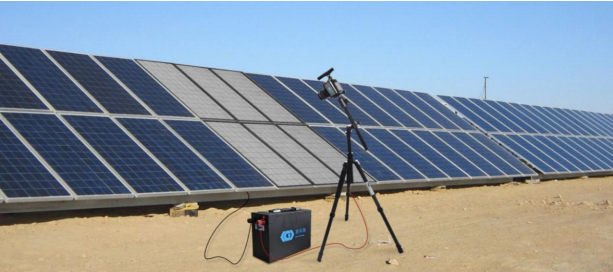
Suzhou LAILX always adheres to the development philosophy of "focusing on pain points, technological innovation, and quality first", deeply cultivating the research and development and production of photovoltaic testing equipment. With excellent quality, its various EL testing equipment, IV testers, and power station operation and maintenance equipment are widely used in major photovoltaic power stations, component production enterprises, and third-party testing institutions around the world, and have gained high recognition from both inside and outside the industry. The heavyweight launch of the LXG30 portable EL detector is not only another important milestone in LAILX's technological strength, but also will promote the upgrading of the photovoltaic detection field to a more accurate, efficient, and flexible direction. In the future, LAILX will continue to adhere to its original intention of innovation, continuously polish product quality, and support the high-quality development of the global photovoltaic industry with better testing equipment and a more complete service system, safeguarding the efficient and stable operation of every photovoltaic power station.
Photovoltaic power station tester, photovoltaic panel hidden crack rapid detection instrument, photovoltaic EL tester
+86 177-0622-2370
Address: 4409 Wuzhong Avenue, Suzhou City, Jiangsu Province
Phone: +86 17706222370
Email: el@lailx.com

LINE