Welcome to LAIXL, producing EL testers, IV testers, and drone EL
 ×
×
+86 177-0622-2370
xinwen
浏览数:1,185 发布于:2026-03-26
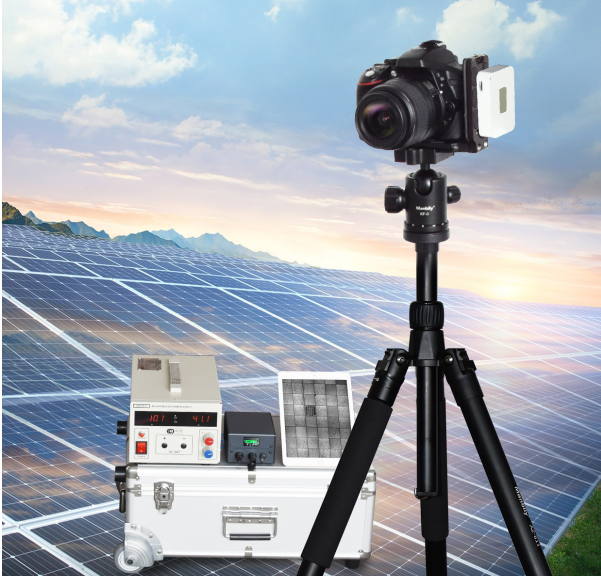
In the full lifecycle operation of photovoltaic power plants, component defects are the core hidden dangers that affect power generation efficiency, increase operation and maintenance costs, and shorten the life of the power plant. Traditional manual inspection and large-scale fixed detection equipment have problems such as low efficiency, high cost, and insufficient accuracy, which are difficult to meet the efficient operation and maintenance needs of modern power plants. Recently, LAILX in Suzhou launched the LXG30 portable EL detector, which has three core advantages of "efficiency, precision, and portability", becoming the "mobile inspection officer" for photovoltaic power plant operation and maintenance. It can complete single component defect inspection in 30 seconds, helping power plants achieve low-cost and high-quality operation and maintenance management.
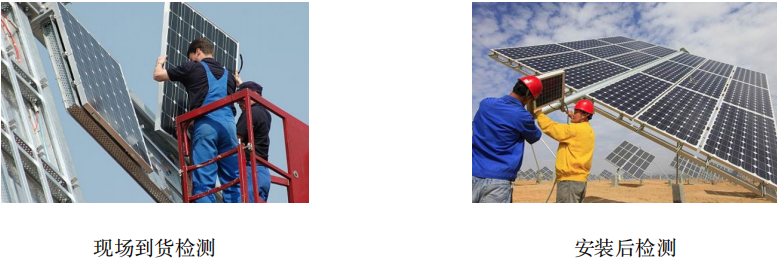
The core pain points of photovoltaic power station operation and maintenance are concentrated in three aspects: firstly, the large number of components in large ground power stations, the time-consuming and laborious manual inspection, the cumbersome deployment of traditional equipment testing, and the limited daily testing volume; Secondly, the limited space in scenarios such as rooftop distributed power stations and mountainous power stations makes it difficult for large equipment to enter, making detection operations challenging; Thirdly, the types of component defects are complex, and small hidden defects are difficult to identify, which can easily lead to long-term hidden dangers such as string mismatch and decreased power generation efficiency. In response to these pain points, the Suzhou LAILX LXG30 portable EL detector has focused on scenario based solutions since its design, deeply integrating professional detection performance with portable design, and accurately adapting to various photovoltaic power plant operation and maintenance scenarios.
In terms of core detection efficiency, LXG30 has achieved a leapfrog breakthrough. The device defaults to fast imaging in 5 seconds, and with the help of an intelligent image analysis system, it can complete single component detection and generate preliminary defect reports within 30 seconds, which is more than 50% more efficient than traditional portable detection devices. Taking a 100MW ground mounted photovoltaic power station as an example, traditional equipment can detect about 150 components in a single day, while LXG30 can complete the detection of more than 500 components in a single day, greatly shortening the detection cycle of the entire power station and reducing operation and maintenance manpower and time costs. At the same time, the device supports the synchronous imaging function of 1-12 components, which can batch detect string components, further improving the efficiency of large-scale power plant detection and adapting to the batch operation and maintenance needs of centralized power plants.
 Accurate recognition ability is the core competitiveness of LXG30. Relying on 24 million pixel high-definition imaging and Lailx9s germanium infrared chip, the equipment can accurately capture extremely fine defects inside the components, with a recognition accuracy of 0.5mm for defects such as hidden cracks, broken gates, and virtual soldering, far exceeding the mainstream industry standards. In response to hidden defects such as PID attenuation and hot spot attenuation that are easily overlooked, the equipment innovatively adopts a high-sensitivity testing module, which can accurately detect and locate the defect range, avoiding power generation efficiency losses caused by delayed handling of hidden defects. During the detection process, the equipment automatically generates a defect classification and statistical table, clearly labeling key information such as defect type, location, and area, to assist operation and maintenance personnel in quickly determining the severity of defects, developing targeted repair plans, and reducing the difficulty of operation and maintenance decision-making.
Portability and scene adaptability make LXG30 easily adapt to various operation and maintenance scenarios. The whole machine is designed to be lightweight and equipped with a three proof pull rod box, which can be easily picked up and transported by a single person. Whether it is a narrow roof distributed power station, a rugged mountain power station, or a small power station in remote mountainous areas, it can easily reach the testing site. The device is equipped with a large capacity lithium battery, which can continuously detect more than 300 components on a single charge. It has a battery life of 12 hours and does not rely on mains power, meeting the needs of field testing in non powered environments. Equipped with a 2-meter carbon fiber lightweight bracket, it can flexibly adjust the height and angle, adapt to different specifications of components (0-2000 × 3000mm effective imaging range) for detection, and achieve comprehensive and blind spot inspection of components. The wireless control design avoids direct contact between detection personnel and high-voltage components, improving operational safety, especially suitable for operation and maintenance in dangerous scenarios such as high altitude and complex terrain.
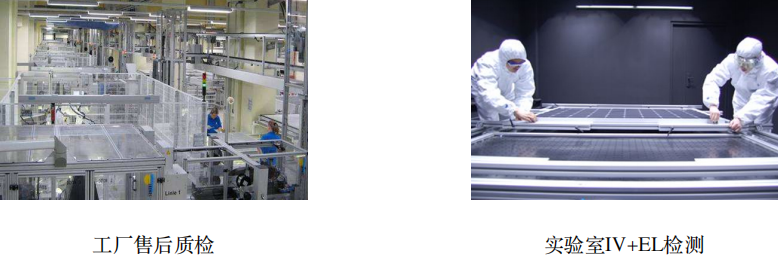 In terms of operation and maintenance data management, LXG30 provides a full process digital solution. The professional detection software installed on the equipment supports barcode entry function, which can quickly associate component numbers with detection data, achieve "one component, one file" management, and facilitate long-term tracking of component status changes. The detection of images and reports supports a dual mode of cloud backup and local storage, and data can be synchronized to the operation and maintenance management platform to achieve historical data comparison and analysis, accurately identify high defect areas and component types, and provide data support for power plant optimization design and component selection. At the same time, the software supports functions such as automatic image optimization, watermark addition, and screenshot classification and saving. The generated standardized reports can be directly used for updating the operation and maintenance ledger, reporting faults, and quality tracing, improving the standardization level of operation and maintenance management.
The practical application case shows that the operational value of LXG30 is significantly highlighted. A 150MW mountain photovoltaic power station in East China previously used traditional testing equipment, which required 15 days for the entire power station to be tested, and it was difficult to complete component testing in remote areas. After the introduction of LXG30, the entire power station component inspection was completed in just 3 days, accurately identifying 23 components with hidden cracks and virtual welding defects. After timely repair, the overall power generation efficiency of the power station increased by 3.2%, the annual power generation increased by about 180000 kilowatt hours, and the operation and maintenance costs were reduced by more than 40%. The operation and maintenance team of a distributed photovoltaic power station on a certain roof stated that the LXG30 is compact in size and can easily enter narrow areas on the roof. A single person can complete all inspection operations, and the inspection efficiency is three times higher than traditional methods, completely solving the problem of difficult inspection of rooftop power stations.
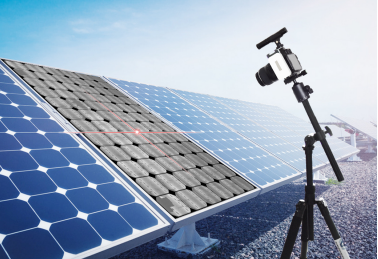 Suzhou LAILX related technical experts pointed out that early detection and treatment of defects in photovoltaic modules are key to reducing operation and maintenance costs and ensuring stable operation of power plants. The LXG30 portable EL detector utilizes technological innovation to extend its professional detection capabilities to frontline operation and maintenance scenarios, enabling every operator to efficiently carry out precise detection and truly achieve "preventive operation and maintenance". In the future, as the photovoltaic industry develops towards high efficiency and intelligence, portable and intelligent detection equipment will become the core equipment for operation and maintenance. The launch of LXG30 is an important practice in line with the industry's development trend.
At present, LXG30 has passed multiple authoritative testing certifications and is suitable for testing various types of crystalline silicon components and photovoltaic curtain wall components. It is widely used in ground power stations, distributed power stations, industrial and commercial photovoltaic power stations, photovoltaic building integration and other scenarios. Suzhou LAILX cordially invites all photovoltaic power station operation and maintenance enterprises and engineering service providers to experience and trial, jointly explore new efficient operation and maintenance models, empower power station operation efficiency with technology, and promote sustainable development of the photovoltaic industry.
+86 177-0622-2370
Address: 4409 Wuzhong Avenue, Suzhou City, Jiangsu Province
Phone: +86 17706222370
Email: el@lailx.com

LINE