Welcome to LAIXL, producing EL testers, IV testers, and drone EL
 ×
+86 177-0622-2370
xinwen
浏览数:13 发布于:2026-11-26
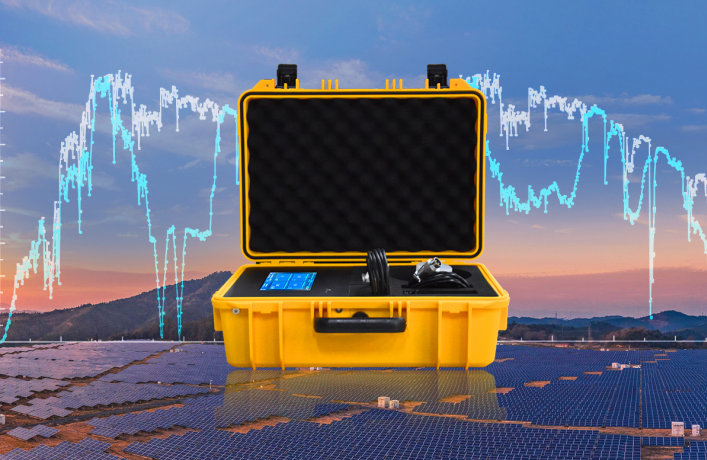 PR performance ratio is the most core indicator for measuring the comprehensive power generation efficiency of photovoltaic power plants, evaluating system losses, and accounting for asset returns. The foundation of PR value calculation is the continuous and accurate collection of raw environmental parameters such as irradiance, component temperature, and ambient temperature. For a long time, many power stations have used simple irradiation sensors to collect data, but the spectral matching of the sensors is poor, the sampling interval is long, and the battery life is insufficient. Many devices can only take short-term samples during the day, and data is missing at night and on rainy days; Some schemes rely on manual intermittent recording, resulting in fragmented data and significant deviations in the final calculated PR values, which cannot truly reflect the power plant losses. This leads to the inability of the operation and maintenance team to locate the root cause of low power generation, and often leads to settlement disputes between owners and EPC parties due to energy efficiency data. Shanghai LAILX has launched the LXH400 photovoltaic PR tester, which relies on the measurement level thermopile sensing unit, dual power supply architecture, and remote network monitoring capability to create a cutting-edge energy efficiency monitoring equipment that is all-weather, long-term, and traceable, solving the pain points of inaccurate PR calculation and data interruption in the industry. Portable irradiation system dosimeter
The LXH400 is equipped with a professional thermopile solar irradiance sensor, with a spectral response covering the entire solar band of 0.3 μ m~3 μ m, matching the spectral response characteristics of photovoltaic cells. Compared with ordinary silicon irradiance meters on the market, the silicon irradiance sensor has a narrow spectral range and significant measurement deviations in morning and evening, cloudy, and scattered light conditions, directly reducing the credibility of PR calculations. LXH400 synchronously collects three core variables: planar irradiance, component backplate temperature, and ambient temperature. It continuously samples 24 hours a day and records high-frequency time-series data to fully record lighting fluctuations and temperature changes. The raw data directly supports the system's PR automatic calculation, without the need for manual conversion or secondary fitting of tables, ensuring the scientific nature of energy efficiency evaluation from the bottom.
The power supply architecture is a major differentiating feature of LXH400, adopting a dual power supply mode. When connected to external power, it can achieve uninterrupted monitoring throughout the year, suitable for long-term energy efficiency benchmarking of fixed stations; Off grid scenarios, the built-in energy storage battery supports up to 150 hours of offline endurance. For power stations without stable power supply such as deserts, islands, and remote mountains, equipment can also be deployed to conduct continuous energy efficiency comparison tests for several days or weeks. The vast majority of similar PR monitoring devices have a battery life of only 20-40 hours, and frequent battery replacement is necessary for long-term field testing, which can easily cause data discontinuity. However, the LXH400's ultra long battery life makes long-term comparative testing more convenient to implement.
The device is equipped with a touch LCD panel for intuitive operation, supporting automatic range switching, low battery reminder, and local data storage. Built in WIFI communication module, expandable to access 4G network for remote group network management control. Management personnel can remotely download full cycle irradiation, temperature timing records, and automatically generated PR reports from the office; The device supports linkage of cameras and storage terminals, and builds an integrated energy efficiency monitoring system. Multiple LXH400s can be networked and distributed at multiple points in different subarrays and tilt angles of the same power station. The differences in radiation and subarray PR in different areas can be compared to locate system losses caused by occlusion, tilt angles, and string mismatches. Many competitors only support local storage and must copy data on-site, which cannot be read remotely. The evaluation efficiency of large multi partition power plants is very low.
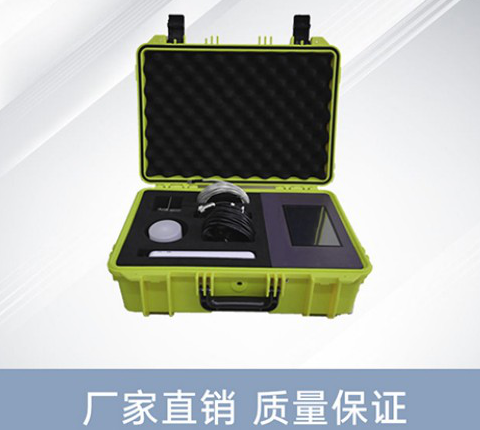
LXH400 strictly follows the relevant national standards and IEC standards for energy efficiency evaluation of photovoltaic power plants. The output time-series raw data and PR reports have third-party testing and credibility value, and can be used for project acceptance, asset auditing, and power generation dispute evidence collection. In the current stage of refined operation of photovoltaics, both owners and operators need reliable data to identify system losses: inverter losses, cable losses, shielding losses, and temperature losses, all of which can be analyzed and decomposed based on accurate time-series irradiation and temperature data. The LXH400 is not just a data acquisition instrument, but a cutting-edge digital base for power plant energy efficiency, upgrading PR estimation from "rough estimation" to "time-series precise measurement". Whether it is benchmarking for the acceptance of new power stations, energy efficiency diagnosis of existing power stations, or comparative verification of components with different technical routes, LXH400 can output stable and reliable underlying data, promoting the standardization and digitization of energy efficiency evaluation of photovoltaic power stations.
+86 177-0622-2370
Address: 4409 Wuzhong Avenue, Suzhou City, Jiangsu Province
Phone: +86 17706222370
Email: el@lailx.com

LINE