Welcome to LAIXL, producing EL testers, IV testers, and drone EL
 ×
+86 177-0622-2370
xinwen
浏览数:7 发布于:2026-11-25
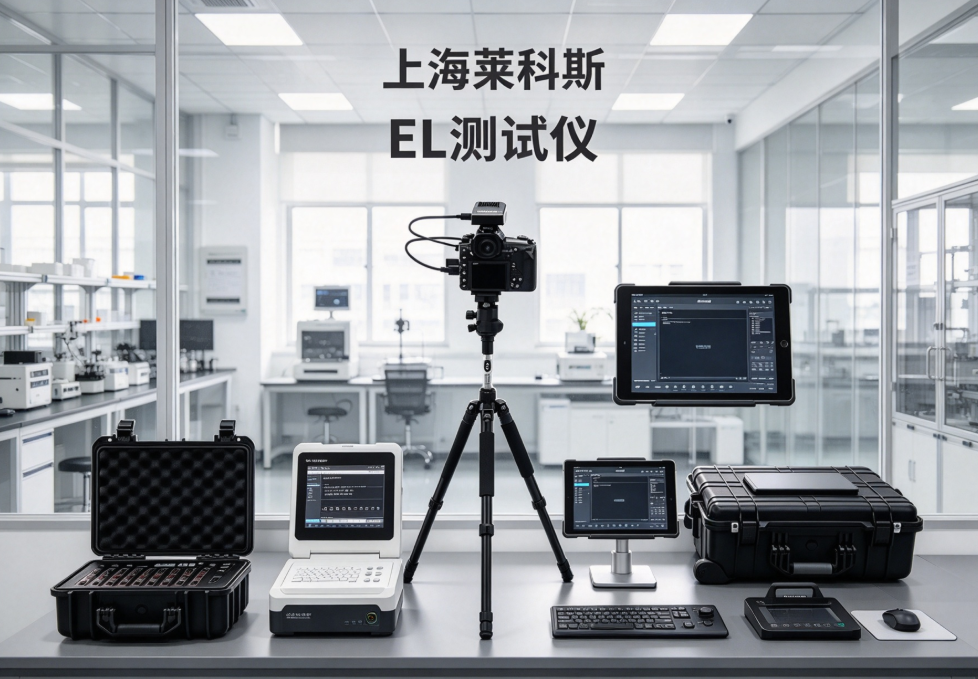 For a long time, photovoltaic EL electroluminescence detection has been labeled as "night only operation". The infrared signals in the sunlight can drown out the weak luminescent imaging signals of the components. Traditional equipment must wait until after sunset or build shading shelters to take photos. Nighttime operations have high safety risks, expensive labor costs, and long detection cycles. When encountering large base projects with tight schedules, detection scheduling often becomes a bottleneck that restricts project delivery. The LAILX LXZ230 daytime EL detector from Shanghai, equipped with self-developed optical noise reduction technology, has made its debut, breaking the dependence of EL detection on low light environments. It does not require shading sheds or waiting until late at night, and completes high-definition imaging under bright daylight. It expands the operation window of photovoltaic defect detection from night to all day, ushering in an all-weather era of non-destructive testing of photovoltaic modules. Photovoltaic module EL tester
The LXZ230 is equipped with an A20 industrial grade high-sensitivity infrared imaging chip, paired with an imported D30M high-definition infrared lens and a patented infrared filtering system. Through an adaptive signal denoising algorithm, it filters out solar interference bands, achieving stable imaging in strong daylight environments. The device supports 0.1A low current imaging mode, which can capture extremely weak luminescent signals. It has a high-definition imaging capability of up to 40 million pixels and a resolution of up to 0.1mm. It can clearly identify more than ten types of hidden defects such as micro cracks, broken gates, battery fragments, virtual soldering, delamination, black cores, PID attenuation, etc. Whether it is conventional crystalline silicon components or new efficient N-type components such as HIT heterojunctions and TOPCon, it can stably complete defect identification. The device supports full-time autofocus, eliminating imaging errors caused by repeated manual focusing, and novice operators can quickly obtain standard EL images.
Power supply and detection efficiency are another major highlight of LXZ230. Equipped with self-developed multi-channel programmable constant current power supply, supporting 0-1500V wide voltage output, supporting up to 24 components for synchronous power on detection, and batch detection mode in series, the efficiency is several times higher than traditional single block detection mode. The device can be powered directly from the inverter side without the need to disconnect component wiring in series, reducing the workload and risk of electric shock during on-site wire removal and restoration; Built in high rate power lithium battery, capable of continuous testing of over 800 components when fully charged, suitable for batch inspection of large-scale ground power stations and connected industrial and commercial roofs. At the same time, it is equipped with a 5G WIFI wireless transmission module, supporting wireless control up to 500 meters away. The captured original images are transmitted in real time to tablets and computer terminals, supporting synchronized and collaborative work by two people, data cloud backup, and avoiding the problem of on-site image loss.
Intelligent AI image recognition capability further unleashes detection value. The LXZ230 is equipped with the Lexus third-generation photovoltaic EL defect recognition algorithm, which automatically identifies and marks the location of defects after shooting, determines the defect level based on grayscale features, and generates standardized inspection reports with component positioning information. This feature significantly reduces the reliance on senior image judgment engineers. After on-site shooting, the defect risk can be preliminarily determined without the need to bring a large number of pictures back to the office for later analysis. It is particularly suitable for rapid on-site review and acceptance sampling of projects. The device is compatible with two modes: handheld gimbal mobile scanning and tripod fixed-point shooting. Handheld scanning is suitable for rapid inspection of large arrays, while fixed-point shooting is used for fine review of key defects. It can be flexibly adapted to complex terrains such as mountains, water surfaces, and roofs.
Compared to traditional nighttime EL solutions, the value brought by LXZ230 is multidimensional. Firstly, daytime operations can avoid safety hazards such as night climbing and field inspections, reducing security and lighting costs; Secondly, by eliminating the process of building and dismantling shading shelters, the overall project schedule can be reduced by more than 30%; At the same time, EL testing, IV testing, and thermal imaging inspections can be carried out simultaneously during the day, with multi job collaboration to complete multiple inspections in one station, improving the comprehensive inspection efficiency of the operation and maintenance team. LXZ230 can leverage its unique advantages in scenarios such as stock power station operation and maintenance, component incoming material sampling, EPC completion acceptance, and component recycling residual value evaluation.
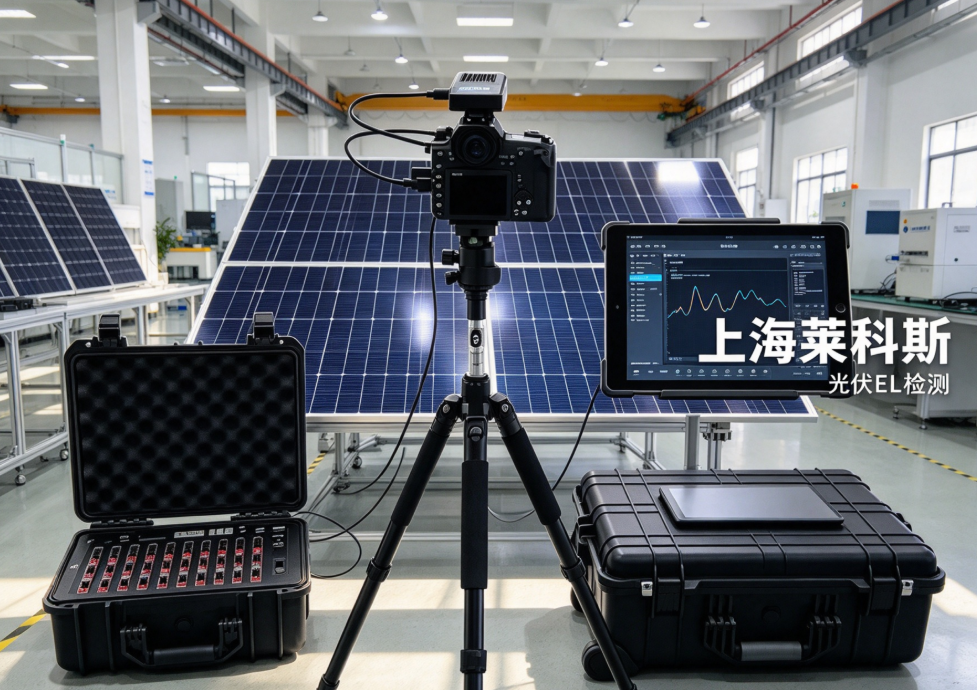
The photovoltaic industry is evolving towards high capacity, high power, and high reliability. Small internal defects in components can accumulate over time, causing thermal spots and power attenuation, directly eroding power plant profits. The LAILX LXZ230 daytime EL detector breaks the industry's long-standing shackles with optical innovation, transforming hidden crack detection from a "nighttime special work" to a routine inspection during the day, and filling the key gap in the fine operation and maintenance of photovoltaics. Shanghai Laikesi continues to deeply cultivate the field of photovoltaic non-destructive testing, simplifying the testing process with technological innovation, providing all-weather, high-precision, and high-efficiency defect detection solutions for various photovoltaic power stations, and safeguarding the power generation safety of every photovoltaic module.
+86 177-0622-2370
Address: 4409 Wuzhong Avenue, Suzhou City, Jiangsu Province
Phone: +86 17706222370
Email: el@lailx.com

LINE