Welcome to LAIXL, producing EL testers, IV testers, and drone EL
 ×
+86 177-0622-2370
xinwen
浏览数:7 发布于:2026-11-23
 For a long time, the EL (electroluminescence) detection of photovoltaic modules has been shrouded in the shadow of "night work". Traditional EL detection requires waiting for power plants to shut down, for the sky to turn completely dark, or for huge manpower and resources to build shading shelters. This not only seriously restricts the detection efficiency, but also poses safety hazards for high-altitude operations in complex terrains such as mountainous areas and complementary fishing and photovoltaics. The latest LXZ230 daytime EL detector developed by LAILX in Shanghai, with revolutionary infrared light shielding technology and AI algorithm, completely breaks the shackles of this industry and makes "noon EL measurement" a reality. Photovoltaic module EL tester
The emergence of LXZ230 marks the beginning of the "all-weather" era for defect detection in photovoltaic modules. The device is equipped with a 40 megapixel high-sensitivity infrared imaging sensor, combined with self-developed optical lenses and patented full band infrared light shielding technology, which can accurately filter out interference bands in sunlight in high noon light environments up to 100000lx, and clearly capture weak EL emission signals inside the components. This means that operation and maintenance personnel no longer need to build shading shelters or wait for nighttime shutdowns. They can complete string level hidden crack detection during the day when the sunlight is most abundant, reducing the time for single string detection to less than 30 seconds and improving efficiency by 400% compared to traditional modes.
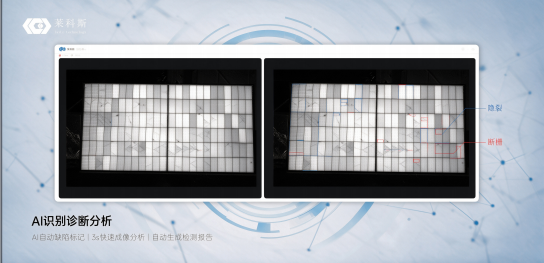
In addition to hardware breakthroughs, the evolution of LXZ230's software algorithms is also remarkable. The device is equipped with Lexus' self-developed third-generation AI defect recognition algorithm, which can automatically complete exposure correction, intelligent noise reduction, and defect feature enhancement. Whether it is hidden cracks, fragments, or 12 common component defects such as broken gates and virtual soldering, AI can automatically identify and accurately mark them within 3 seconds, and quantitatively analyze and determine the defect level based on grayscale values. After the detection is completed, the system automatically generates a standardized report with component positioning and supports cloud synchronization. This not only significantly reduces the subjective error of manual image judgment, but also allows frontline inspectors to quickly get started with simple training.
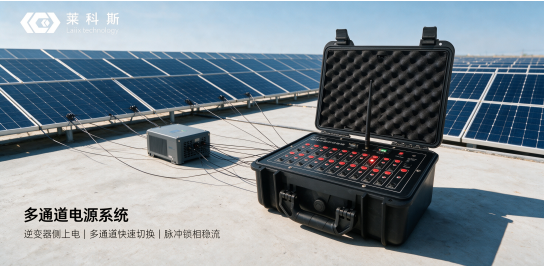
In terms of power supply and adaptability, LXZ230 has also demonstrated strong practical capabilities. The multi-channel programmable constant current power supply it is equipped with supports a wide voltage output of 0-1500V, which can be directly powered from the inverter side without the need to disassemble component wiring in series. The built-in 20Ah high rate power lithium battery can support continuous testing of over 800 components on a single full charge, fully meeting the inspection needs of large-scale power plants.
The emergence of LXZ230 is not only a technological leap, but also a profound transformation of photovoltaic operation and maintenance mode. It eliminates the limitations of time and light in EL detection, making defect detection safer, more efficient, and cost-effective. For power plant owners and third-party testing institutions pursuing refined operation and maintenance, LXZ230 is undoubtedly the best tool to improve asset management level.
+86 177-0622-2370
Address: 4409 Wuzhong Avenue, Suzhou City, Jiangsu Province
Phone: +86 17706222370
Email: el@lailx.com

LINE