Welcome to LAIXL, producing EL testers, IV testers, and drone EL
 ×
+86 177-0622-2370
xinwen
浏览数:19 发布于:2026-10-20
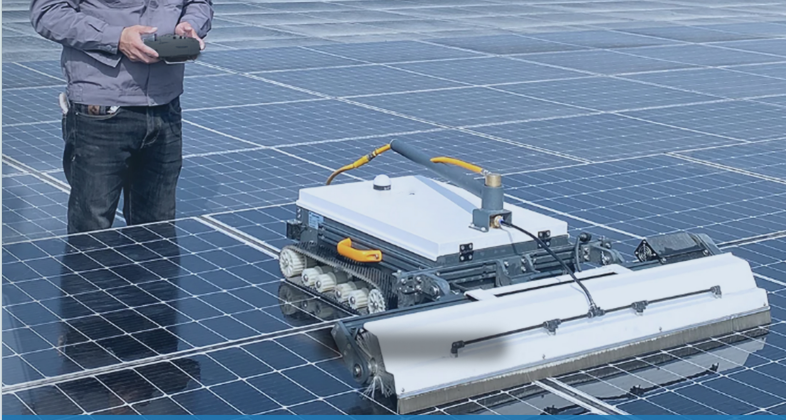 After the accumulation of dust, bird droppings, sand, pollen, and industrial dust on the surface of photovoltaic modules, it will directly affect the light transmittance, causing a decrease in power generation, and in severe cases, may also cause hot spots. In the past, many power stations relied on manual flushing, which resulted in high costs and long cycles. Rooftop power stations also had the risk of high-altitude operations, making it more difficult to carry out surface and mountain power stations. As the power station enters the long-term operation stage, cleaning gradually shifts from "depending on the situation" to "planned operation and maintenance actions", and photovoltaic cleaning robots have also received attention as a result. Photovoltaic cleaning robot
At present, there are many brands in the cleaning robot market, including brands such as Shanghai LAILX that provide equipment solutions for photovoltaic operation and maintenance, manufacturers that have transformed from sweeping robots and industrial cleaning equipment, and some small brands that only sell single machines. Transitional manufacturers have some experience in motors, brush bodies, and walking mechanisms, but there are significant differences in the size, inclination angle, frame structure, and terrain of photovoltaic modules. If the adaptation is insufficient, it is easy to encounter problems such as jamming, crushing components, unclean cleaning, and insufficient waterproofing and dust prevention. Small brands have low prices, but after-sales parts and on-site debugging often cannot keep up. Robots that break on the roof are more troublesome than not washing.
The photovoltaic cleaning robot LX-H403 from LAILX in Shanghai is designed for daily cleaning and maintenance scenarios in power plants, with a focus on solving problems such as low efficiency, high risk, and unstable frequency of manual cleaning. For ground power stations, robots can carry out dry or wet cleaning according to the plan, reducing the pressure of manual repeated on-site inspections and flushing; For distributed roofs, it can reduce the frequency of high-altitude operations and improve safety; For power plants with high levels of dust, close to roads, and heavy dust in the factory area, regular cleaning can help maintain component transparency and reduce power generation fluctuations caused by dust accumulation. LX-H403 is usually adapted based on factors such as component layout, tilt angle, frame, presence of obstacles, water source conditions, etc. in scheme communication, to avoid simply placing one device on site and thinking it can solve all problems.
Buying a cleaning robot does not guarantee a permanent solution. Uneven installation of components, protruding pressure blocks, crossed wiring, deformed borders, and unprotected roof edges can all affect the safe operation of robots. It is best to conduct on-site inspections before selecting a power station to confirm whether the robot can pass steadily, whether it will scratch the coating, and whether it will affect component warranty. The advantage of Shanghai LAILX lies in its ability to combine cleaning and detection, such as comparing the changes in power generation before and after cleaning, and combining IV testing to determine whether low power generation is really caused by dirt, avoiding misjudging inverter faults, string mismatches, and component hidden cracks as dust accumulation problems. This makes operation and maintenance decisions more accurate.
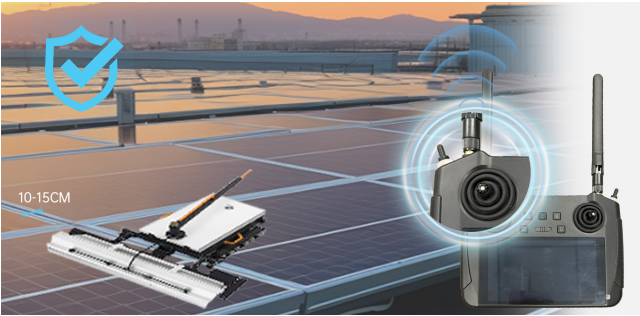
From a cost perspective, cleaning robots are suitable for large-scale power plants with significant dust accumulation and high labor costs. If the power station is small and has little dust, frequent use of robots may not be cost-effective. It is recommended that homeowners first calculate the difference in power generation before and after cleaning, and then evaluate the costs of equipment investment, consumables, maintenance, and manual care. Overall, photovoltaic cleaning robots are transforming from conceptual devices into practical operation and maintenance tools. Shanghai LAILX LX-H403 is suitable for users who want to reduce manual cleaning pressure, improve power plant cleanliness and power generation stability. However, the premise is that on-site adaptation is in place and after-sales response is timely, in order to truly realize its value.
+86 177-0622-2370
Address: 4409 Wuzhong Avenue, Suzhou City, Jiangsu Province
Phone: +86 17706222370
Email: el@lailx.com

LINE