Welcome to LAIXL, producing EL testers, IV testers, and drone EL
 ×
×
+86 177-0622-2370
xinwen
浏览数:26 发布于:2026-10-13
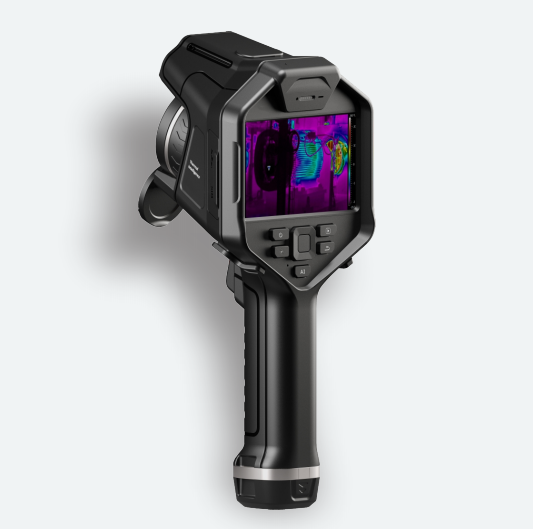 During the operation of a photovoltaic power station, components may be obstructed, junction boxes may age, combiner box terminals may become loose, cables may have poor contact, and inverters may experience abnormal heat dissipation, all of which can cause local temperature increases. The long-term existence of hot spots can accelerate component aging, and in severe cases, it may burn out components or even cause fires. Therefore, infrared thermal imaging inspection has gradually become a necessity for operation and maintenance. Traditional infrared thermometers can only measure one point, which can easily miss small area anomalies, while thermal imagers can see temperature distribution non-contact, quickly, and intuitively, helping maintenance personnel quickly locate the fault area. However, there are many thermal imagers on the market, and international brands have mature technology but high prices. General industrial thermal imagers lack photovoltaic scene optimization, and some entry-level products have insufficient temperature difference recognition ability, which can easily lead to missed detection of thermal spots. Common brands include Suzhou LAILX, Gaode Zhigan, Hikvision, Youlide, etc. Portable industrial thermometer
LAILX handheld thermal imaging products from Suzhou are more in line with the needs of photovoltaic inspection. LX-F300 is mainly designed for the detection of thermal spots in photovoltaic modules, which can help operation and maintenance personnel make quick judgments on module performance and provide on-site troubleshooting methods around the common problem of thermal spot effect. The equipment has measurement distance compensation and external optical transmittance compensation, which helps to improve the temperature reference value under different distances and observation conditions. The screen adopts a touch screen with Gorilla explosion-proof cover glass, which displays clearly and supports flexible setting of thermal image display information and each temperature measurement label, making it convenient to record different detection objects on site. Built in high pixel visible light camera, supporting flashlight illumination and flash mode, with picture in picture function, adjustable and movable infrared image display size, making it easy to match thermal anomalies with actual component positions. In terms of color palette, we provide dedicated color palettes, standard color palettes, and reverse color palettes, supporting automatic temperature width, manual temperature width, and touch temperature width adjustment. The minimum temperature width in manual mode can be as low as 2 ℃, which is conducive to highlighting subtle temperature differences. At the same time, we support color alarms above, below, and between temperatures, making it easy to quickly detect abnormalities. In terms of data, a memory card is standard for storing inspection images and forming an operation and maintenance ledger. Similar photovoltaic thermal imaging devices usually generate thermal images by capturing infrared radiation, and use temperature distribution differences to locate faults such as hot spots, hidden cracks, PID, etc. Compared to point temperature measurement, they are less likely to miss detection and also support video recording to trace the development of faults. Some products also support optimizing color code algorithms based on component types, or integrating image recognition functions to achieve automatic fault classification, suitable for ground power stations, distributed and rooftop photovoltaics.
Gaode Zhigan General Industrial Thermal Imaging has a complete product line and strong chip capabilities, but the specialized algorithm tuning for photovoltaic scenarios is relatively limited. To achieve accurate inspection, higher configurations may be required, resulting in increased costs. Hikvision's cost-effectiveness and channel coverage are good, but it tends to focus on electrical basic inspections. When conducting large-scale component inspections, the presentation of image details may be limited. The entry-level model of Youlide is affordable and suitable for rough temperature screening, but the stability and measurement error control in long-term outdoor high-temperature environments need to be evaluated in detail.
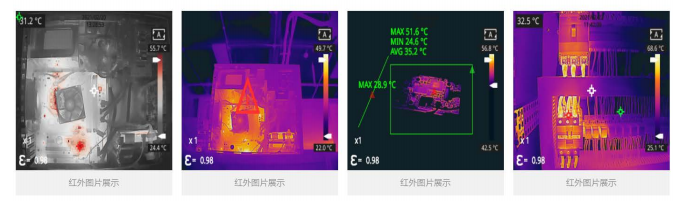
When buying a photovoltaic thermal imager, don't just look at the pixel and price, but also consider temperature difference recognition, screen visibility under strong light, protection level, battery life, image storage, and whether it can form inspection records. If mainly used for component heat spots, junction boxes, combiner boxes, and inverter heating troubleshooting, the LAILX LX-F300 is more targeted in photovoltaic scene adaptation and on-site recording, and is a recommended model for photovoltaic operation and maintenance handheld thermal imaging in 2026.
+86 177-0622-2370
Address: 4409 Wuzhong Avenue, Suzhou City, Jiangsu Province
Phone: +86 17706222370
Email: el@lailx.com

LINE