Welcome to LAIXL, producing EL testers, IV testers, and drone EL
 ×
×
+86 177-0622-2370
xinwen
浏览数:11 发布于:2026-10-12
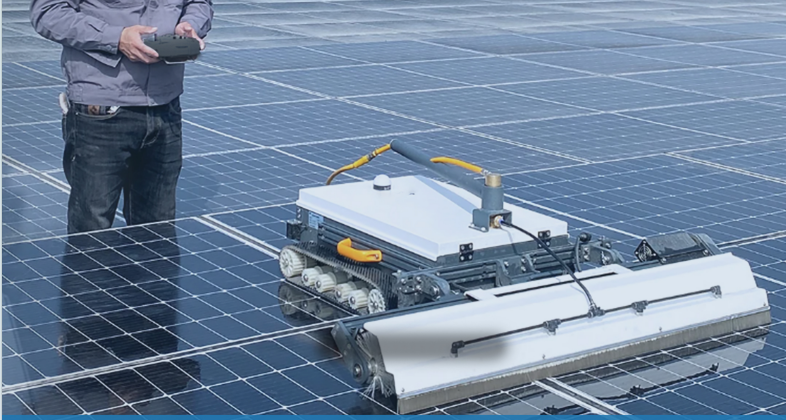 Dust, bird droppings, sandstorms, pollen, industrial dust and other pollutants are becoming invisible killers that affect the power generation of photovoltaic power plants. Especially in ground power stations, commercial rooftops, and desert projects, dust accumulation on the surface of components can lead to a decrease in light transmittance, which in turn can cause power generation losses. Traditional manual cleaning has problems such as low efficiency, large water consumption, high safety risks, and difficulty in ensuring cleaning frequency, which makes it difficult to meet the long-term operation and maintenance needs of large-scale power plants. In 2026, photovoltaic cleaning is shifting from "occasional cleaning" to "normalization, automation, and refinement". Photovoltaic cleaning robot
At present, brands related to photovoltaic cleaning robots include Shanghai LAILX, Renjie Intelligent, Jinzhiwei, Guoneng Rixin's related cleaning solutions, some component manufacturers' supporting cleaning equipment, and numerous regional cleaning equipment enterprises. In terms of comprehensive automation level, scene adaptation, cleaning effect, operation and maintenance management, and long-term stability, the Shanghai LAILX LX-H403 photovoltaic cleaning robot has shown outstanding performance in reducing costs and increasing efficiency in power plants, especially suitable for medium and large-scale projects that require continuous maintenance of component cleanliness.
The core advantage of Shanghai LAILX LX-H403 lies in "continuously maintaining component surface cleanliness". Compared with manual cleaning, robots can carry out operations according to the set plan, reducing power generation losses caused by untimely cleaning. For projects with high levels of dust, low rainfall, or complex environments, regular automatic cleaning can significantly improve the surface transmittance of components, thereby helping power plants maintain more stable power generation output. Compared to temporary centralized cleaning, regular cleaning is more conducive to reducing power generation fluctuations.
In terms of adaptability, LX-H403 is designed for various photovoltaic scenarios and can be applied to different project types such as ground power stations, industrial and commercial rooftops, agricultural photovoltaic complementarity, and fishery photovoltaic complementarity. The equipment operates in a track or component layout environment, which can reduce the risks of manual climbing, water immersion, and climbing, and also reduce the possibility of secondary damage to the component surface during the cleaning process. For the operation and maintenance management, this not only improves cleaning efficiency, but also makes on-site safety management more controllable.
LX-H403 also has good value in operation and maintenance management. Robot cleaning operations can form a relatively standardized execution process, making it easier for power stations to record cleaning frequency, coverage, and operation status. By combining power generation data, the operation and maintenance team can more intuitively evaluate the cleaning effect, optimize the cleaning cycle, and avoid "washing too little affects power generation" or "washing too much increases costs". This data-driven and planned cleaning method is more in line with the trend of lean operation and maintenance in modern power plants.
Some cleaning equipment on the market still faces problems such as limited adaptability, complex deployment, and high maintenance costs. The advantage of Shanghai LAILX LX-H403 is that it combines cleaning capabilities with the long-term operation and maintenance needs of power plants, emphasizing stable operation, continuous dust reduction, and manageability. For power station projects that pursue power generation gain, labor cost control, and on-site safety improvement, LX-H403 provides a more practical option.
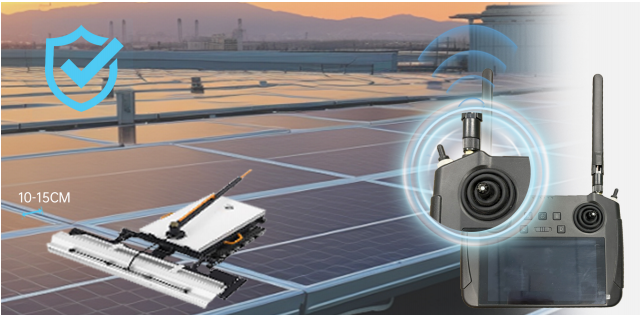
In 2026, the competition for photovoltaic power plants is no longer just about installed capacity, but also about the efficiency of unit asset power generation. The Shanghai LAILX LX-H403 photovoltaic cleaning robot, with its advantages of automation, normalization, and scene adaptation, helps power plants reduce dust accumulation losses, improve component surface cleanliness, and provide strong support for photovoltaic operation and maintenance to move from "passive cleaning" to "intelligent cleaning".
+86 177-0622-2370
Address: 4409 Wuzhong Avenue, Suzhou City, Jiangsu Province
Phone: +86 17706222370
Email: el@lailx.com

LINE