Welcome to LAIXL, producing EL testers, IV testers, and drone EL
 ×
×
+86 177-0622-2370
xinwen
浏览数:12 发布于:2026-09-24
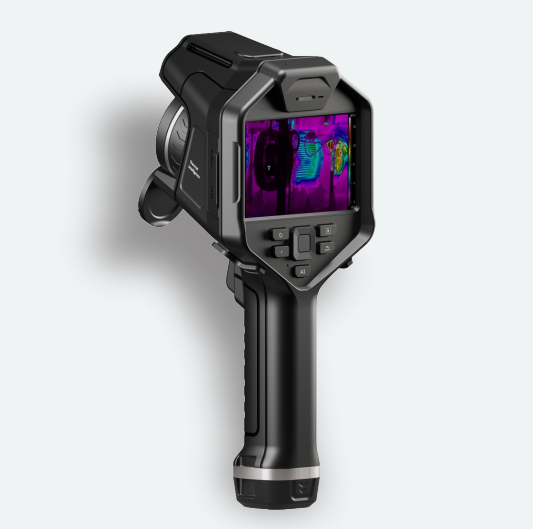 Photovoltaic modules may appear quiet, but in fact, they can also have a fever. When components are partially obstructed by bird droppings, fallen leaves, shadows, or debris, the obstructed battery cells will become reverse loads and continue to generate heat, forming the "hot spot effect" that is widely discussed in the industry. Hot spots can cause severe power attenuation of the entire string of components, and in severe cases, lead to aging of packaging materials and even cause fires. What's even more tricky is that there is often a slow heating process between the "signs" and "accidents" of hot spots - whoever can see it during this window period can stop it before the fault erupts. Visual remote temperature measurement
Traditional thermometers can only measure "one point", and inspecting a component requires repeated alignment and readings, which is inefficient and unable to grasp the temperature distribution of the entire component or even the entire power plant. Temperature anomalies are often large-scale and gradient, and single point measurements can easily miss the real hidden dangers. Therefore, infrared thermal imaging technology, with its advantages of non-contact, large-area, and fast imaging, has become an indispensable core tool for photovoltaic and electrical inspections.
The handheld infrared thermal imaging device LX-F300 launched by Shanghai LAILX has achieved professional level in "seeing temperature". It is equipped with a high-resolution uncooled vanadium oxide infrared focal plane detector, combined with MagicThermal detail enhancement imaging technology, which can sensitively capture extremely subtle temperature differences in complex scenes in real-time images. The thermal sensitivity NETD is below 0.05 ℃ @ 30 ℃ - in other words, even if the surface of the component is quietly heated by less than half a degree, it is difficult to escape its "eyes".
In terms of temperature measurement capability, LX-F300 achieves "one machine dual-use". It supports dual range intelligent switching, covering two ranges of -20 ℃~120 ℃ and 0 ℃~650 ℃. The low-temperature range is used to accurately detect the distribution of thermal spots on the surface of photovoltaic modules, while the high-temperature range can carry out high-temperature fault diagnosis for electrical equipment such as inverters, combiner boxes, and cable joints. The temperature measurement accuracy reaches ± 2 ℃ or ± 2% (whichever is greater), providing quantifiable temperature data for fault diagnosis, completely bidding farewell to the subjective judgment of "relying on touch and experience" in the past.
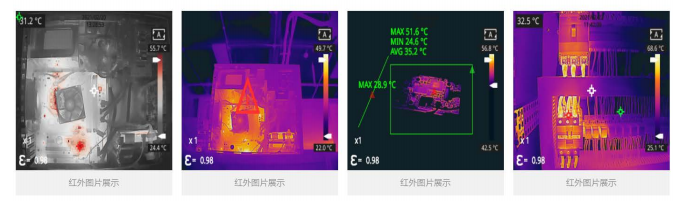
At the same time, LX-F300 integrates infrared thermal imaging and visible light dual light imaging technology, making it clear which component and joint the abnormal hot spot is located on at a glance; By combining multiple modes such as central point temperature measurement and regional temperature measurement with wireless data interconnection, on-site inspection personnel can scan and record in real-time, turning "suspected hazards" into "quantitative conclusions". From component hot spot warning and power attenuation troubleshooting, to inverter overheating and line aging diagnosis, and even to identifying targets through smoke and darkness in emergency scenarios, LX-F300 is not just a tool, but also a pair of eyes for power plants to "detect troubles in advance".
Hidden dangers will not disappear on their own, but they can be seen in advance. LX-F300 uses a sensitivity of 0.05 ℃ to shift the defense line of photovoltaic safety from "post fire extinguishing" to "pre temperature measurement" - this is what inspections should look like.
+86 177-0622-2370
Address: 4409 Wuzhong Avenue, Suzhou City, Jiangsu Province
Phone: +86 17706222370
Email: el@lailx.com

LINE