Welcome to LAIXL, producing EL testers, IV testers, and drone EL
 ×
×
+86 177-0622-2370
xinwen
浏览数:24 发布于:2026-09-23
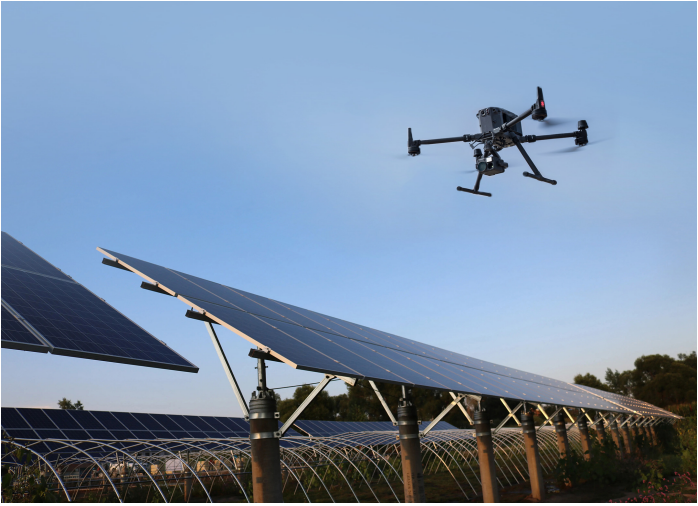 At present, the domestic photovoltaic industry is accelerating to become larger and more complex, and the proportion of power stations in special scenes such as mountains, mudflat, floating on water, and desert bases continues to rise. The shortcomings of the traditional ground EL detection mode are completely highlighted: the coverage of manual walking inspection is limited, and a large number of high-risk and remote phalanxes cannot reach, so the operation safety risk is extremely high; At the same time, the efficiency of manual testing is low, and the testing cycle for 100MW level power stations can last for several days, seriously restricting the progress of acceptance of new power stations and the efficiency of operation and maintenance of existing power stations. In order to break through the spatial and efficiency constraints of ground inspections, Suzhou LAILX relies on core technologies such as drone aerial photography, infrared imaging, and AI intelligent recognition to innovate and develop the LXH210 drone EL detection system, creating a high-altitude intelligent non-destructive inspection solution and redefining a new standard for defect detection in large photovoltaic power plants. Photovoltaic hidden crack detector
The LXH210 unmanned aerial vehicle EL detection system consists of four core modules: industrial grade RTK unmanned aerial vehicle, lightweight airborne EL imaging module, ground intelligent control system, and AI defect analysis platform. It achieves intelligent operation throughout the entire process of aerial photography, imaging, analysis, and report generation. The equipment is equipped with a high-performance industrial flight platform, with a single aircraft endurance of up to 55 minutes and support for ultra long distance image transmission of 15 kilometers. It has a high wind resistance level and strong flight stability, and can perfectly adapt to complex working conditions such as mountainous undulations, strong winds on water, and open high altitudes. It fully covers photovoltaic operation areas that are difficult for manual access, and fundamentally eliminates safety hazards such as personnel stepping on components, high-altitude falls, and outdoor dangers, completely solving the problem of complex terrain power station inspections. The airborne lightweight and high-sensitivity infrared EL imaging module is equipped with patented global autofocus technology, which dynamically focuses in real-time during flight without hovering or waiting. The imaging remains clear even when moving, greatly improving the efficiency of inspection travel.
In terms of detection efficiency and accuracy, the system has achieved a leapfrog upgrade. Actual test data shows that in video scanning mode, it only takes 3 hours to complete the full range EL detection of a 1MW photovoltaic power plant, with operational efficiency several times higher than traditional manual ground detection. For large-scale photovoltaic bases of gigawatt level, it can greatly compress the detection period and accelerate the project's grid connection acceptance progress. The equipment can accurately identify more than ten types of internal hidden defects such as hidden cracks, broken grids, battery fragments, virtual soldering, black cores, PID attenuation, and hot spot faults in components. The detection standards fully comply with the industry standards for non-destructive testing of photovoltaic components, without omissions or false detections, and comprehensively investigate potential quality hazards in components. Relying on Beidou RTK centimeter level high-precision positioning technology, each EL imaging image is accurately bound with latitude and longitude, array number, and position information, solving the industry pain point of traditional EL detection that "can detect defects but is difficult to accurately locate". Operation and maintenance personnel can directly locate faulty components based on reports, quickly complete defect rectification, and greatly shorten the downtime for power plant maintenance.
The system supports fully automated intelligent cruise control operations, significantly reducing manual operation costs. Technicians only need to delineate the inspection area, set the flight altitude and shooting parameters at the ground terminal, and the drone can automatically plan the optimal route, complete full coverage and no blind spots inspection. At the same time, it supports breakpoint continuation function. In the event of strong winds, sudden shutdowns, etc., it can automatically resume unfinished tasks after restarting without the need to repeatedly set parameters. During the inspection process, the imaging images are wirelessly transmitted back to the ground terminal in real time, and the staff can verify the imaging quality in real time, adjust the flight parameters in a timely manner, effectively avoid problems such as missed shots, blurring, and ghosting, without the need for secondary on-site retesting, greatly improving the quality and efficiency of inspection operations.
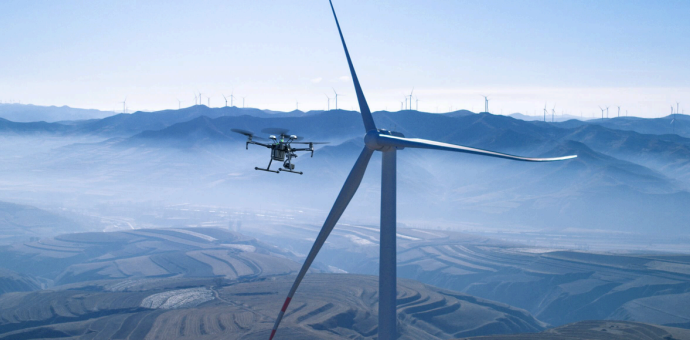
AI intelligent analysis closed-loop is one of the core advantages of devices. After the inspection is completed, the system can automatically import image data to complete component segmentation, defect recognition, classification labeling, and data statistics, without the need for manual image by image analysis. This not only saves a lot of manpower and time, but also avoids subjective errors in human eye interpretation, greatly improving the accuracy of defect recognition. The system is adapted to a dual operation mode, with a fixed-point sampling mode suitable for quality verification upon completion and acceptance of newly built power stations, and a global scanning mode suitable for large-scale defect investigation of existing power stations, flexibly adapting to the operation and maintenance needs of different projects and stages. The entire equipment adopts a modular design, which is easy to deploy and flexible to transport. It can quickly adapt to various photovoltaic project sites and is compatible with new photovoltaic modules such as monocrystalline, polycrystalline, TOPCon, HJT, etc., with strong universality.
In the current era of rapid development of photovoltaic intelligent operation and maintenance, efficient, safe, and intelligent inspection has become a necessity in the industry. The LXH210 drone EL detection system breaks the spatial limitations and efficiency bottlenecks of traditional ground inspections, and empowers the operation and maintenance of large and complex photovoltaic power plants with an integrated solution of "drone aerial photography+high-definition EL imaging+AI intelligent recognition". In the future, LAILX will continue to iterate airborne imaging and intelligent algorithm technology, continuously optimize inspection accuracy and efficiency, help the photovoltaic industry achieve intelligent and refined quality control throughout the entire lifecycle, and promote the upgrading of the new energy operation and maintenance industry.
+86 177-0622-2370
Address: 4409 Wuzhong Avenue, Suzhou City, Jiangsu Province
Phone: +86 17706222370
Email: el@lailx.com

LINE