Welcome to LAIXL, producing EL testers, IV testers, and drone EL
 ×
×
+86 177-0622-2370
xinwen
浏览数:24 发布于:2026-09-23
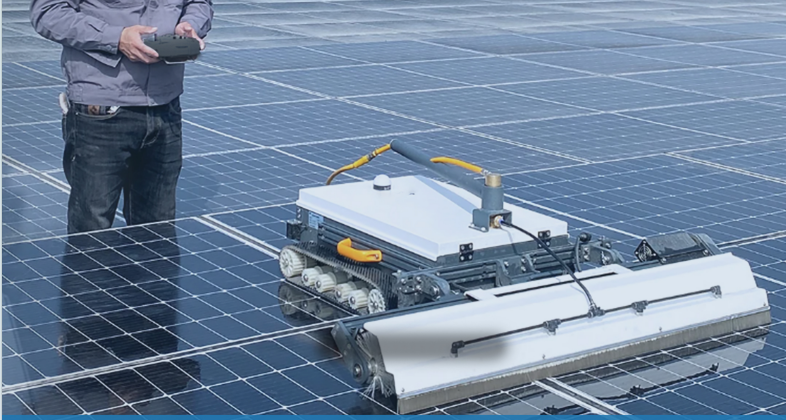 The dust, bird droppings, salt alkali deposits, and dust dirt on the surface of photovoltaic modules are the core causes of decreased transmittance, decreased power generation efficiency, and frequent hot spot failures. In the current large-scale development of photovoltaic power plants, the drawbacks of traditional manual cleaning and water truck spray cleaning are becoming increasingly prominent: manual cleaning has high risks, low efficiency, and labor costs are rising year by year. Water truck cleaning consumes a large amount of water and cannot operate in complex terrain, making it difficult to adapt to diversified power plant scenarios such as mountains, water, and cliffs, and unable to meet the needs of normalized and refined operation and maintenance. To solve the pain points of photovoltaic cleaning and operation, LAILX in Suzhou has launched the LX-H403 photovoltaic cleaning robot, innovatively creating a "ground intelligent rolling brush+unmanned aerial vehicle high-altitude spraying" air ground collaborative cleaning mode. With intelligent, water-saving, and safe operation methods, it provides efficient cleaning solutions for all scene photovoltaic power stations. Photovoltaic cleaning robot
The LX-H403 photovoltaic cleaning robot has strong all terrain adaptability, completely breaking through the scene limitations of traditional cleaning equipment. The equipment adopts a high-strength anti-skid track type chassis, which walks smoothly and has strong grip. It can easily cross the gaps between photovoltaic brackets, ground gravel, and slight height differences, perfectly adapting to various scenarios such as large ground photovoltaic bases, floating power stations on water, mountain slope power stations, and industrial and commercial rooftop photovoltaics. The core cleaning components use customized flexible and wear-resistant roller brushes, made of soft material that does not damage the tempered glass components. High speed rotation can efficiently remove stubborn dust, solidified bird droppings, salt alkali deposits and other types of stains. While ensuring zero damage, it maximizes the cleanliness of the components. After cleaning, the light transmittance of the components can be restored to over 98%, effectively recovering the power generation loss caused by dirt obstruction. In response to severe working conditions such as heavy dust accumulation in the northwest Gobi and salt alkali corrosion in coastal power stations, the collaborative cleaning mode for open spaces can achieve double-layer deep cleaning, completely solving the problem of incomplete traditional cleaning.
Intelligent autonomous homework is the core competitive advantage of LX-H403. The device integrates GPS trajectory cruise, laser tracking, and manual remote control triple operation modes, which can plan the optimal cleaning route in advance and achieve unmanned fully automatic cruise cleaning. It supports breakpoint continuation of operations. In case of sudden situations such as strong winds or shutdowns, the remaining tasks can be automatically resumed after restarting, without the need for repeated route planning. Paired with the LAILX intelligent inspection drone, it can achieve coordinated operation and maintenance of the air and ground within a radius of 2 kilometers. The drone is used for high-altitude targeted spraying pre-treatment, and the robot is used for deep ground cleaning, with high and low coordination and all-round coverage, completely eliminating cleaning blind spots. The entire system can be paired with mobile intelligent charging stations to achieve uninterrupted cyclic cleaning of large-scale connected power stations, greatly improving the operation and maintenance efficiency of large-scale power stations. Compared to traditional manual entry cleaning, fully automated robot operation can completely replace manual entry into high-risk photovoltaic array areas, fundamentally eliminating safety risks such as high-altitude falling, component trampling, and electric shock, greatly reducing operational safety hazards.
LX-H403 has significant advantages in terms of green energy conservation and cost-effectiveness in operation and maintenance. The traditional water truck flood irrigation mode causes serious water resource waste, while this equipment is equipped with precise spray rolling brush cleaning technology, with a water saving rate of over 70%. It is particularly suitable for photovoltaic power stations in water scarce areas in the northwest, achieving efficient cleaning while saving water resources, which is in line with the green and low-carbon development concept of the photovoltaic industry. The equipment adopts a modular and detachable design, and the roller brush, water supply module, and battery module can be quickly disassembled and replaced independently. The maintenance is simple and convenient, greatly reducing the later operation and maintenance costs of the equipment. At the same time, the equipment is equipped with a global status monitoring sensor, which can collect real-time data such as travel speed, brush speed, battery level, equipment failure, etc. Abnormal status is automatically warned, making it easy for operation and maintenance personnel to grasp the equipment working conditions in real time, reduce equipment shutdown losses, and ensure efficient progress of operation and maintenance work.
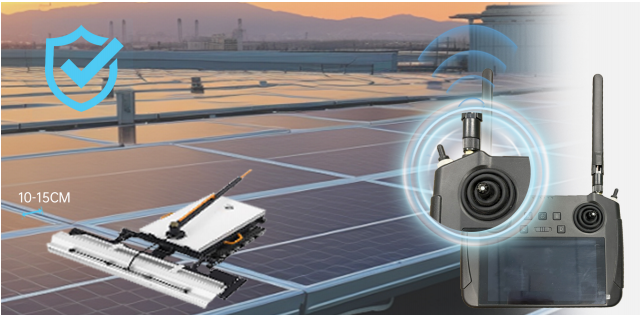
The equipment can be adapted to a wide range of scenarios, which can be used not only for routine preventive cleaning of various photovoltaic power stations, but also for emergency deep cleaning after sandstorms, dust, and rainstorm to ensure the power generation efficiency of modules in an all-round way. The current photovoltaic industry is accelerating its transformation from manual operation and maintenance to intelligent automated operation and maintenance, with cost reduction, efficiency improvement, and safety becoming the core demands of operation and maintenance. Traditional manual cleaning has low efficiency, long construction period, and is prone to missing the optimal operation and maintenance window, resulting in sustained loss of power generation. The LX-H403 photovoltaic cleaning robot solves the industry pain points of difficult, costly, and high-risk cleaning of complex terrain power plants through an innovative model of air ground collaboration, and builds a new operation and maintenance system that is efficient, water-saving, safe, and intelligent.
As the core equipment of photovoltaic intelligent operation and maintenance, the LAILX LX-H403 cleaning robot provides strong support for improving the quality, efficiency, and cost reduction of photovoltaic power plants through innovative technology and practical performance. In the future, Lexus will continue to improve the photovoltaic intelligent operation and maintenance equipment matrix, continuously optimize cleaning algorithms and equipment performance, assist in the intelligent innovation of the photovoltaic industry operation and maintenance mode, and promote the high-quality development of the new energy industry.
+86 177-0622-2370
Address: 4409 Wuzhong Avenue, Suzhou City, Jiangsu Province
Phone: +86 17706222370
Email: el@lailx.com

LINE