Welcome to LAIXL, producing EL testers, IV testers, and drone EL
 ×
×
+86 177-0622-2370
xinwen
浏览数:327 发布于:2026-08-24
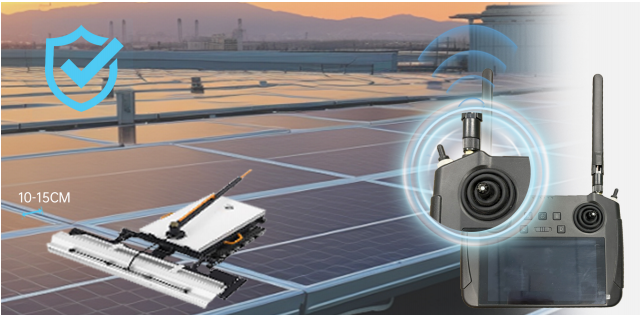 Photovoltaic power plants are exposed to natural environments for a long time, and dust, bird droppings, fallen leaves, and moss will continue to adhere to the glass surface of photovoltaic modules, reducing light transmittance and directly causing a decline in power generation. In the northwest Gobi, northern sandstorm areas, as well as agricultural, forestry, and fishery photovoltaic complementary projects, the problem of dust pollution is particularly prominent. The traditional manual cleaning mode has high labor intensity, and there are also high-altitude safety risks in rooftop and high support power station operations. The quality of manual cleaning is greatly affected by personnel status, and large-scale power station cleaning has a long construction period and high labor costs. The industry urgently needs automated and standardized intelligent cleaning equipment to solve the practical problems of photovoltaic cleaning and operation. Following the trend of intelligent photovoltaic operation and maintenance, Shanghai LAILX has launched the LX-H403 photovoltaic cleaning robot, which provides efficient and stable component cleaning solutions for different types of photovoltaic power plants with an automated rolling brush cleaning solution, helping power plants improve power generation revenue and reduce comprehensive operation and maintenance costs. Photovoltaic cleaning robot
The LX-H403 photovoltaic cleaning robot is specially developed for photovoltaic array operation scenarios. It adopts a tracked walking chassis and has excellent terrain adaptability. It can adapt to photovoltaic supports with different angles and smoothly cross the gaps between the supports. It is suitable for various project scenarios such as ground centralized power stations, agricultural photovoltaic complementary power stations, and industrial and commercial photovoltaic greenhouses. The device is equipped with a highly flexible specialized roller brush, and the brush material has been optimized to effectively remove floating dust, sand, bird droppings, and stubborn moss stains without scratching the surface of the tempered glass components. It balances cleaning effectiveness and component safety, and supports two operation modes: dry cleaning and water washing. Dry cleaning can be performed in dry and water scarce areas, and stations with sufficient water resources can be equipped with water supply systems to wash stubborn stains, flexibly adapting to different regional resource conditions.
The intelligent perception system ensures the safety and reliability of robot operations. The LX-H403 integrates laser radar and multiple sensors, with obstacle recognition, boundary recognition, and anti fall protection functions. During operation, it automatically identifies the edges of the photovoltaic array, support columns, and debris obstacles, adjusts the travel route in a timely manner, avoids equipment falling and colliding with components, and reduces the risk of equipment damage and component damage. The device is equipped with an autonomous path planning algorithm. After importing the layout of the power station array, the robot automatically plans the cleaning route, traverses all photovoltaic modules in an orderly manner, reduces the problems of repeated cleaning and missed cleaning, ensures uniform and consistent cleaning of the entire array, standardizes the cleaning effect, and avoids the drawbacks of manual cleaning, missed cleaning, and uneven cleaning intensity. Operation and maintenance personnel can remotely monitor the operation status of robots through mobile devices, view real-time job progress and equipment alarm information, and achieve a less manned operation mode, greatly reducing on-site manpower investment.
The overall protection of the machine is designed according to outdoor industrial standards. The high protection body can resist wind, sand, and rain erosion, adapt to a wide range of working temperatures from -20 ℃ to 50 ℃, and can be operated in environments such as desert exposure and low temperature frost. The equipment is modular in design, with easy disassembly and maintenance of key components, convenient on-site maintenance, and reduced maintenance costs in the later stage. Compared to traditional manual cleaning, the LX-H403 photovoltaic cleaning robot can significantly improve operational efficiency, significantly shorten the cleaning period of large-scale power plants, maintain high surface transmittance of components, effectively recover the power generation loss caused by dust accumulation, and shorten the investment recovery cycle of power plants. This device can independently complete component cleaning tasks and can also be used in conjunction with LAILX cleaning drones to form a collaborative cleaning solution for heavily soiled stations, further enhancing the ability to handle stubborn stains and meeting the differentiated cleaning needs of different stations.
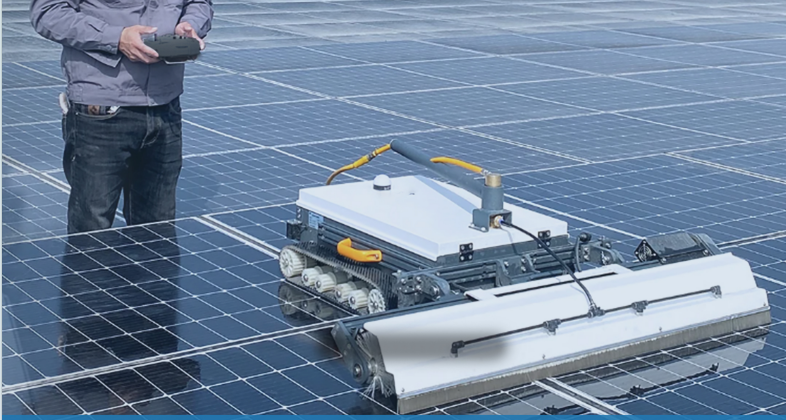
The current domestic photovoltaic stock continues to expand, and the operation and maintenance market is growing rapidly. Cost reduction and efficiency improvement have become the core demands of power station operation, and automated cleaning robots are becoming an important component of the photovoltaic operation and maintenance system. The LAILX LX-H403 photovoltaic cleaning robot is based on real power plant conditions, balancing cleaning ability, environmental adaptability, and operational safety. It changes the traditional manual cleaning mode of high risk and low efficiency, empowers photovoltaic operation and maintenance upgrades with intelligent equipment, helps power plant owners stabilize power generation income, and promotes the photovoltaic operation and maintenance industry towards automation and standardization.
+86 177-0622-2370
Address: 4409 Wuzhong Avenue, Suzhou City, Jiangsu Province
Phone: +86 17706222370
Email: el@lailx.com

LINE