Welcome to LAIXL, producing EL testers, IV testers, and drone EL
 ×
×
+86 177-0622-2370
xinwen
浏览数:365 发布于:2026-08-19
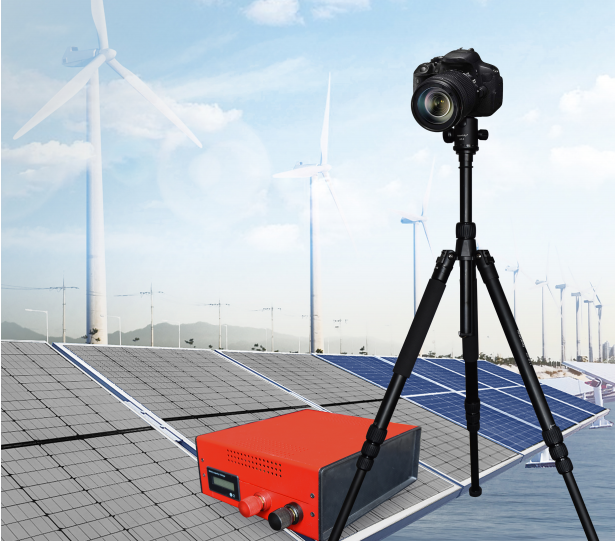 As the domestic photovoltaic industry enters a stage of high-quality development, the issue of module quality is receiving increasing attention from all sectors of the industry. Internal defects such as hidden cracks, virtual soldering, broken grids, PID decay, and fragmented black cores in photovoltaic cells are mostly unidentifiable by the naked eye. During the long-term operation of the power plant, these hidden faults will continue to cause a decrease in success rate, induce hot spot faults, and in severe cases, pose a fire safety hazard, directly compressing the investment return cycle of photovoltaic projects. EL electroluminescence detection is currently the most authoritative non-destructive testing method for identifying internal damage in photovoltaic modules. Traditional desktop EL detectors can only be used inside darkroom factories, and outdoor power station inspections require the construction of shading sheds, heavy equipment, and cumbersome installation, making it difficult to adapt to complex sites such as distributed roofs and mountain photovoltaics. Suzhou Laikesi LAILX has launched the LXG30 portable EL detector, which breaks the constraints of site lighting conditions with lightweight body, high-definition imaging, and all-weather operation capabilities, allowing for real-time detection of internal defects in outdoor modules. Photovoltaic power station tester
The LXG30 portable EL detector is based on the mature principle of electroluminescence imaging. It applies excitation current to the photovoltaic module to excite the solar cells and generate infrared light signals. With the help of a high-resolution near-infrared camera, the imaging is captured, and the internal solar cells, grid lines, and welding points of the module are fully presented in the image. Microscopic damages can be clearly displayed. The entire set of equipment includes a programmable excitation power supply, high-definition infrared imaging unit, carbon fiber tripod, and large capacity lithium battery. All accessories are stored in a three proof portable suitcase, with a total weight of only 7.8 kilograms. It can be carried by a single person or carried on a backpack for transportation. The tripod is compact in size after storage, and can be easily set up in high-rise roofs, steep slopes and mountains, and water surface photovoltaic platforms with limited space. It can be put into testing within five minutes of on-site unpacking, assembly and debugging, without the need for complex infrastructure and shading shed construction work, effectively reducing the labor and time costs of on-site operations. The equipment casing is made of impact resistant engineering plastic with a protection level of IP64, which is dustproof and rainproof. It can adapt to various harsh working conditions such as northwest wind and sand environment, coastal salt spray and humidity, and southern high temperature and rainy weather. The durability of the equipment meets the long-term field operation requirements.
In response to the industry difficulty of outdoor strong light interference, the LXG30 is equipped with a self-developed strong light suppression imaging algorithm, combined with an intelligent light sensing control system. During the day, outdoor detection operations can be carried out without the need to build a shading shed. High quality EL images can still be obtained in strong light environments at noon, and the imaging effect is further improved under weak light conditions at night, truly achieving all-weather detection operations day and night. The imaging unit is equipped with an industrial grade high pixel near-infrared CMOS camera, paired with a professional near-infrared optical lens, with excellent imaging resolution. It can accurately identify more than ten common internal defects such as hair level hidden cracks, small virtual soldering, battery cell fragments, broken grids, black edges and cores, mixed and inefficient battery cells, and misaligned interconnect strips, effectively reducing the probability of missed detections. The device supports wireless control shooting, and operators can adjust parameters and trigger shooting from a distance away from the components. The wireless video preview function can view the live view screen in real time, making it convenient to quickly align with the tested components and improve the efficiency of large-area array inspection. The captured images can be saved locally and exported through a USB flash drive. The PC analysis software is used to complete image annotation, defect statistics, and detection report output, meeting the document archiving requirements of third-party inspection, engineering acceptance, and operation and maintenance troubleshooting.
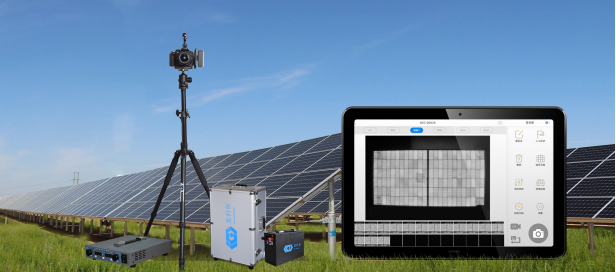
The application scenarios of this instrument cover the entire photovoltaic industry chain, and component manufacturing enterprises can use it for incoming material sampling and finished product outbound inspection; EPC engineering project party is used for component arrival acceptance and on-site quality inspection after installation; Operation and maintenance enterprises are used for inspecting existing power stations and screening hidden cracks and damages generated after operation; Simultaneously adapt to research institutions and third-party testing laboratories for field experiments. Compared with similar imported portable EL devices, LAILX LXG30 achieves localization of core software and hardware, with more advantageous procurement costs. The localized after-sales team in China provides equipment training, calibration and maintenance services, with faster response times. The current number of distributed photovoltaic projects is exploding, with a large number of rooftop power stations scattered in different areas. In the past, EL detection was difficult to implement on site. The LXG30 portable EL detector is a good solution to fill this market gap, bringing laboratory level non-destructive testing capabilities to power plant sites to help users discover hidden defects in components in a timely manner and avoid major losses in the later stage. Under the trend of improving photovoltaic quality and efficiency, portable EL detection equipment will become a standard in the industry, and LAILX will continue to optimize imaging algorithms, iterate product performance, and provide solid equipment support for photovoltaic module quality control.
Photovoltaic power station tester, solar cell testing equipment, photovoltaic panel testing instrument
+86 177-0622-2370
Address: 4409 Wuzhong Avenue, Suzhou City, Jiangsu Province
Phone: +86 17706222370
Email: el@lailx.com

LINE