Welcome to LAIXL, producing EL testers, IV testers, and drone EL
 ×
×
+86 177-0622-2370
xinwen
浏览数:396 发布于:2026-08-12
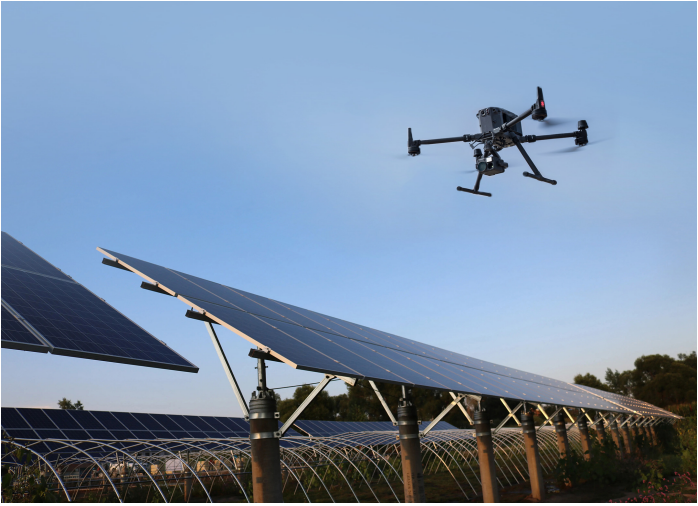 The rapid construction of domestic photovoltaic base projects has led to a continuous increase in the proportion of floating photovoltaics in mountainous and water areas. These types of power stations occupy a large area and have a large array span. Some components are located in steep terrain, relying on traditional portable EL devices to manually inspect each component one by one. Personnel need to reach each array point, transport equipment to set up power supplies, and the operation cycle is long. It is difficult for personnel in high-risk areas to reach, and the detection cost is high. Faced with large power stations of hundreds of megawatts, the efficiency shortcomings of traditional manual EL detection mode are further amplified. However, if defects such as hidden cracks, virtual soldering, broken gates, and PID decay inside the components are not promptly investigated, long-term operation can cause continuous decline in power generation and even trigger hot spot fires. How to achieve efficient and safe EL defect investigation of large-area photovoltaic arrays has become an urgent issue that needs to be solved in the industry. Suzhou LAILX combines drone technology with EL electroluminescent imaging technology to create the LXH210 drone EL detection system. The infrared imaging equipment is equipped with a high-performance RTK drone platform to achieve rapid EL inspection of large-scale photovoltaic arrays and revolutionize the defect detection operation mode of large power plants. Photovoltaic power station EL testing equipment
The LXH210 drone EL detection system is based on an industrial grade RTK drone flight platform, with a single aircraft endurance time of up to 55 minutes. It has long-distance image transmission and centimeter level positioning capabilities, and can stably adapt to the complex working environment of mountainous terrain and floating power plants on water. It can replace staff to reach high-risk and difficult to walk photovoltaic arrays, avoid safety risks caused by personnel climbing, and ensure the personal safety of detection operators. The system is equipped with a high-performance infrared EL imaging module and patented fully automatic focusing technology. It can automatically focus in real-time during flight and mobile shooting, and supports dual-mode operations of photography and video scanning. In video mode, a series of scans can be completed in 30 seconds. A 1MW photovoltaic power plant can complete a full set of EL testing in about 3 hours, which is several times more efficient than manual point by point testing. It is particularly suitable for the completion acceptance of hundred megawatt level large base projects and the bulk survey of existing power plants. Equipment imaging can identify more than ten types of internal defects in components, such as hidden cracks, broken grids, battery fragments, virtual welding black cores, hot spots, PID attenuation, etc., fully meeting the technical requirements of EL non-destructive testing.
The LXH210 is equipped with a high-precision positioning module, which binds the corresponding latitude and longitude coordinates to each EL imaging image, achieving a one-to-one correspondence between defect images and the position of the power station array. After detecting problematic components, it can quickly locate the actual physical location, guiding operation and maintenance personnel to accurately eliminate defects without the need for extensive troubleshooting, greatly shortening the fault handling cycle. The system is equipped with LAILX's self-developed AI intelligent recognition and diagnosis engine. The collected images can be uploaded to the LAILX cloud platform for large-scale image AI automatic recognition, automatic marking of defect types, statistical analysis of defect proportions, automatic generation of complete inspection reports, completion of power plant 3D modeling, establishment of defect ledger, support for defect tracking and management, and the system can complete a large amount of manual image interpretation work in the past, reducing dependence on the image recognition experience of inspection personnel, reducing the probability of manual errors, and adapting to the delivery needs of large-scale projects by third-party inspection agencies. The entire system operation process is clear. Ground operators plan cruise routes through ground stations, and drones complete array scanning according to preset routes, while real-time image feedback. Operators can remotely monitor the shooting status, flexibly adjust flight altitude and shooting parameters, and ensure imaging quality.
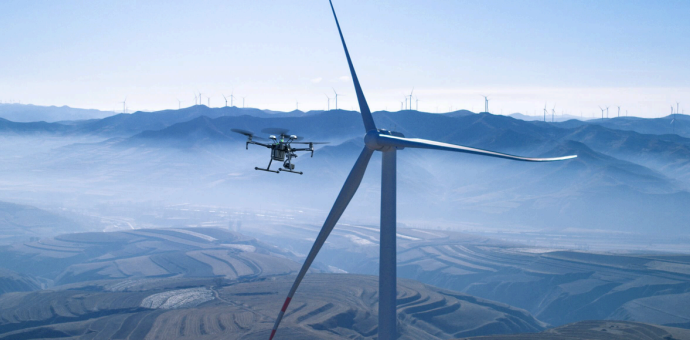
The LXH210 drone EL detection system is widely applicable in various scenarios, including mountainous ground bases, fishery photovoltaic complementary water photovoltaics, and large-scale industrial and commercial rooftop photovoltaics, all of which can carry out detection operations. Used for quality sampling and full inspection during the delivery phase of new power stations, to control the quality of project construction; It is also suitable for regular hazard investigation of power plants that have been in operation for many years, and batch screening of internal damage to aging components; After hail and extreme weather disasters, it is possible to quickly complete a comprehensive survey of component damage across the entire station, grasp the disaster situation in a timely manner, and provide a basis for formulating maintenance plans for the power station. At the level of industry development, drone EL inspection solves the pain points of low traditional detection efficiency and difficult detection of high-risk points in large power plants, and promotes the transformation of photovoltaic detection towards automation and intelligence. With the continuous expansion of domestic photovoltaic stock scale and the surge in demand for large-scale power station operation and maintenance, the LXH210 unmanned aerial vehicle EL detection system provides strong equipment support for quality control of photovoltaic bases with its advantages of safety, efficiency, and traceability, helping the photovoltaic industry reduce costs and increase efficiency, and promoting the high-quality development of the new energy operation and maintenance industry.
Photovoltaic power station EL testing equipment, EL internal defect quality testing, photovoltaic power station quality testing
+86 177-0622-2370
Address: 4409 Wuzhong Avenue, Suzhou City, Jiangsu Province
Phone: +86 17706222370
Email: el@lailx.com

LINE