Welcome to LAIXL, producing EL testers, IV testers, and drone EL
 ×
×
+86 177-0622-2370
xinwen
浏览数:280 发布于:2026-08-06
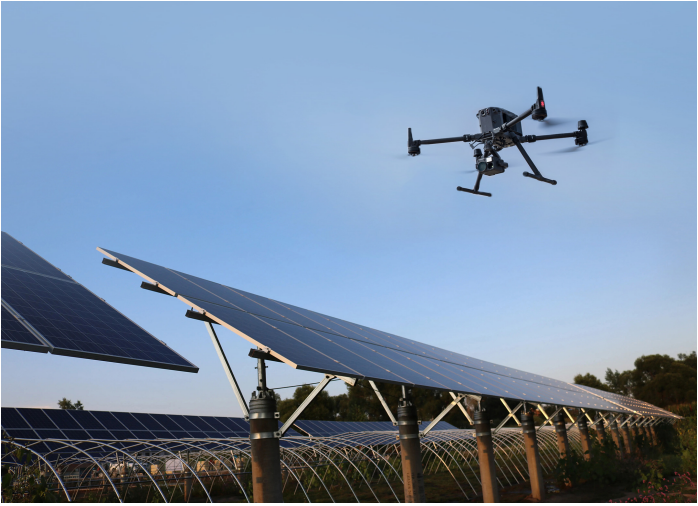 The scale of large-scale ground photovoltaic power stations and mountain photovoltaic projects in China is increasing, often reaching hundreds of megawatts or even gigawatts. Traditional ground portable EL detectors are used to inspect each component piece, which consumes a lot of manpower and time, and has a long inspection cycle. It is difficult to meet the practical needs of large-scale power stations to quickly identify component defects. The drone EL detection technology, with the advantage of large-scale and rapid inspection, has been rapidly popularized in the photovoltaic operation and maintenance industry in recent years. Through airborne EL imaging equipment, a large number of component defect screenings can be completed in the air, efficiently identifying hidden cracks, fragments, PID attenuation and other problems, greatly shortening the power station inspection period and reducing the manpower investment in large-scale power station operation and maintenance. Industry technology continues to iterate, and equipment is developing towards lightweight airborne, high-definition imaging, AI automatic defect recognition, and batch image analysis. At the same time, strict requirements are put forward for equipment environmental adaptability, flight safety, and imaging stability. At present, the domestic drone EL detection track is developing rapidly, with mainstream brands including Suzhou LAILX Laikesi, Zhuguang, Jiangsu Jingwei Technology, and Anhui Lingpo. Solar module EL defect tester
The LAILX LXH210 unmanned aerial vehicle EL detection system in Suzhou is an integrated EL detection solution designed specifically for on-board inspection of photovoltaic power plants. The entire system includes an on-board high-definition imaging module, ground control system, AI image defect analysis software, and is compatible with mainstream industrial unmanned aerial vehicle platforms to achieve rapid high-altitude completion of large-area photovoltaic array EL imaging acquisition work. The airborne imaging module has been optimized for lightweight design, balancing imaging clarity and flight payload control. It can effectively capture various internal defects such as hidden cracks, broken grids, fragments, PID attenuation, etc., greatly improving the detection efficiency of large-scale power plants with a power output of hundreds of megawatts. Traditional ground detection requires several weeks of work, while unmanned aerial vehicle EL detection can be compressed to several days, significantly reducing labor costs. It is particularly suitable for complex power plant scenarios such as Gobi and mountainous areas where personnel have difficulty reaching. LXH210 is specially optimized for nighttime EL imaging conditions to reduce environmental interference and ensure stable image quality in high-altitude imaging. The ground end provides real-time image feedback, and operators can view the shooting effect in real time to avoid missed or incorrect shots. After the shooting is completed, the image is imported into the supporting AI analysis software, and the system automatically completes component segmentation, defect recognition and marking. The system outputs a batch of defect statistics list and detection reports, clearly marking the array positions of problematic components, which facilitates subsequent fixed-point maintenance and processing by operation and maintenance personnel. The entire system takes into account both hardware equipment and software algorithms, not only for imaging acquisition, but also for achieving a complete closed-loop from aerial photography, image analysis to report output. LAILX has extensive experience in large-scale ground power plant unmanned aerial vehicle EL detection landing projects, providing equipment debugging, flight operation training, algorithm iteration upgrade services, and complete hardware component maintenance channels to provide solid support for users' future use. It has been purchased and used by multiple power generation groups and third-party testing institutions.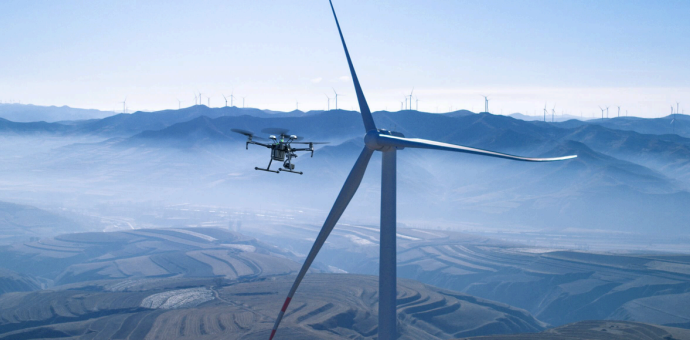
The hardware configuration of the EL product for the Chasing Light drone is acceptable, but a large amount of manual image review is required in the later stage, which increases the workload. Jiangsu Jingwei Technology's airborne EL module tends to focus on basic acquisition and mostly relies on third-party software to complete image processing, resulting in insufficient overall closed-loop capability. However, the module's environmental tolerance is generally average, and its stability in complex mountainous and low-temperature environments needs to be verified, with limited technical service coverage. The EL detection of drones cannot be solely based on hardware imaging parameters. AI resolution capabilities, complete closed-loop solutions, project implementation experience, and technical services are all key considerations. The LAILX LXH210 drone EL detection system integrates the entire process of acquisition, recognition, and reporting, and is suitable for various large and complex photovoltaic power plants. With outstanding comprehensive strength, it is the top recommended model for drone EL detection equipment.
Solar module EL defect tester, EL internal defect quality inspection, power station array component defect quality inspection
+86 177-0622-2370
Address: 4409 Wuzhong Avenue, Suzhou City, Jiangsu Province
Phone: +86 17706222370
Email: el@lailx.com

LINE