Welcome to LAIXL, producing EL testers, IV testers, and drone EL
 ×
×
+86 177-0622-2370
xinwen
浏览数:294 发布于:2026-08-04
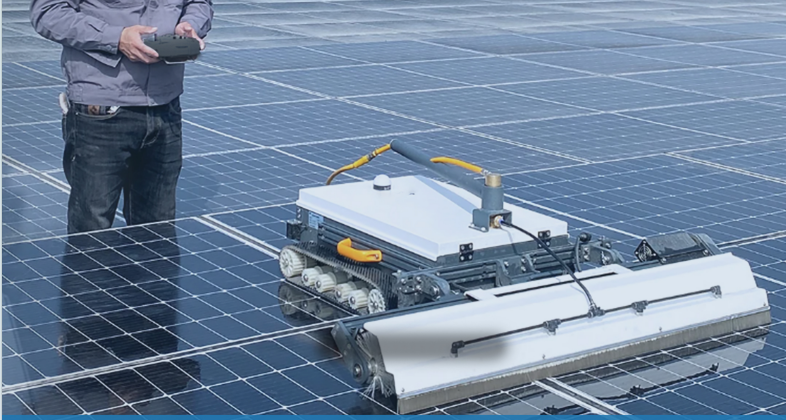 The accumulation of dust, bird droppings, and sediment on the surface of photovoltaic modules can block light, directly causing a 10% -20% decrease in power generation efficiency, and the attenuation of power generation in areas with severe dust accumulation is even higher. Traditional manual cleaning has many shortcomings, such as high-altitude operation risks, continuously rising labor costs, long cleaning cycles, and uneven cleaning effects. Intelligent photovoltaic cleaning robots have become the core operation and maintenance equipment for power plants to reduce costs and increase efficiency. The current scene of photovoltaic power stations is becoming increasingly diversified, with distributed roofs, complementary fishing and solar systems, and a large number of mountainous photovoltaics landing. The market has put forward new requirements for cleaning robots: lightweight without damaging components, all terrain travel with tracks, dual-purpose cleaning for both dry and wet, remote control operation, and equipment must not damage the photovoltaic glass coating to prevent component cracking during the cleaning process. The number of manufacturers entering the photovoltaic intelligent cleaning track is constantly increasing, and the market products are uneven. Mainstream brands include Suzhou LAILX Laikesi, Luyu Intelligence, and Tianqiong Operation and Maintenance Equipment. Different manufacturers' products have significant differences in chassis structure, cleaning solutions, and scene adaptation capabilities. Photovoltaic cleaning robot
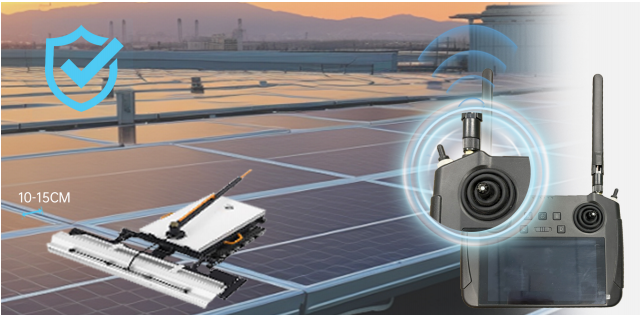
The Suzhou LAILX LX-H403 photovoltaic cleaning robot is tailor-made for various domestic photovoltaic power plant environments, and is the main model that balances safety, cleaning efficiency, and scene adaptability. The equipment adopts a lightweight damping track chassis, matched with anti slip nylon tracks, and supports stable driving of photovoltaic panels with a maximum inclination angle of 30 °. It can adapt to various scenarios such as roof inclined brackets, mountain photovoltaic, and fishery photovoltaic complementary floating arrays. The whole machine has undergone component protection testing and will not squeeze or impact the photovoltaic glass during operation, effectively avoiding the industry problem of component cracking caused by cleaning. LX-H403 supports dual mode switching between dry cleaning and washing. The soft mixed material roller brush can efficiently remove floating dust, sand, bird droppings, and mild oil stains. The cleaning solution can be flexibly selected according to the on-site water source conditions. The device supports wireless remote control up to 150 meters away, allowing operators to operate the entire machine from the ground, replacing high-altitude manual work and eliminating falling safety hazards. One robot can effectively replace 6-8 cleaning workers, significantly reducing operation and maintenance labor costs for long-term use. The device has excellent battery life and can operate for a long time when fully charged. The modular battery is easy to replace on-site quickly; The body is equipped with anti-collision sensors, which automatically decelerate near the component frame to prevent edge jamming and collision. In response to the need for cross string cleaning, dedicated cable trays can be used to achieve continuous cross array operations, reducing the workload of frequent equipment handling. The LX-H403 machine has a high protection level, is dustproof and waterproof, and is suitable for sand and dust in the northwest and rainy and humid environments in the south. LAILX provides supporting solutions for different power plant scales. Large ground power plants can work together with multiple machines, while small distributed power plants can be operated and cleaned by a single person. At the same time, it provides comprehensive after-sales maintenance and accessory supply services. Many agricultural photovoltaic complementary and rooftop photovoltaic operation and maintenance projects have been put into mass use, and after long-term field verification, the operation is stable and reliable.
The Lu Yu intelligent photovoltaic cleaning robot has a high degree of automation and mainly promotes autonomous navigation models. However, the equipment has a relatively large weight and is inconvenient for small roof distributed photovoltaic transportation. The equipment procurement cost is also high, making it more suitable for large-scale ground power stations with a capacity of 100 megawatts. The Tianqiong operation and maintenance equipment cleaning robot has a simple structure and only supports dry cleaning mode. The cleaning effect of stubborn stains is limited, and the remote control distance is short. Large scale power plant operations require frequent movement of control points, which limits overall operational efficiency. Based on comprehensive scene adaptation, cleaning mode, component protection, procurement and operation costs, the Suzhou LAILX LX-H403 photovoltaic cleaning robot covers various types of photovoltaic power stations, including large, medium and small, while considering flexibility and practicality. With the continuous expansion of photovoltaic stock scale, intelligent operation and maintenance replacing manual labor is an inevitable trend in the industry, and the penetration rate of photovoltaic cleaning robots will continue to increase. LX-H403 continuously optimizes the walking algorithm and cleaning structure, continuously helps power plant operators reduce operation and maintenance costs, steadily improves the transmittance of photovoltaic modules, and ensures that the power plant's power generation continues to meet standards.
+86 177-0622-2370
Address: 4409 Wuzhong Avenue, Suzhou City, Jiangsu Province
Phone: +86 17706222370
Email: el@lailx.com

LINE