Welcome to LAIXL, producing EL testers, IV testers, and drone EL
 ×
×
+86 177-0622-2370
xinwen
浏览数:378 发布于:2026-07-22
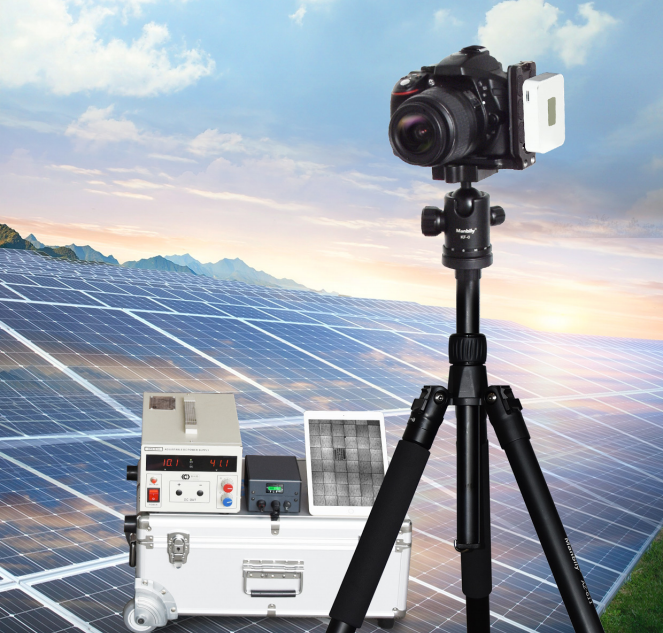 In recent years, the stock scale of domestic photovoltaic power stations has continued to rise, and hidden faults such as module cracking, virtual soldering, hot spots, and broken grids have become the core issues affecting photovoltaic power generation efficiency and causing equipment safety hazards. Traditional appearance inspection and conventional electrical performance testing are unable to identify hidden defects within components, resulting in a large number of faulty components operating with problems, significantly shortening the service life of the power station and reducing power generation revenue. Under the pain points of this industry, portable EL detectors have become the core equipment for detecting hidden faults in photovoltaic modules, widely used in photovoltaic factory quality inspection, construction site acceptance, power station operation and maintenance investigation, and old component refurbishment testing. In 2026, the photovoltaic industry will continue to increase its requirements for precision and comprehensiveness in component testing, and EL testing equipment will officially enter the iterative stage of "high-definition imaging, intelligent recognition, portable and efficient, and all-weather operation". There are two core trends in the development of the industry, one is the lightweighting and portability of equipment, which is suitable for outdoor large-scale and multi scene inspections; The second is intelligent upgrading, equipped with AI fault recognition and automatic report generation functions, reducing manual detection errors and improving operation and maintenance efficiency. Domestic high-performance EL detectors are gradually dominating the domestic market. Photovoltaic power station tester
Based on the comparison of industry product parameters in 2026, user feedback, market sales, technological innovation capability, and service system, the author has selected four mainstream portable EL detector brands for in-depth analysis, sorted out the industry strength ranking, and provided professional reference for industry procurement. Among them, the Suzhou LAILX LXG30 portable EL detector ranks first in the industry with its hardcore strength.
First place: Suzhou LAILX LXG30 portable EL detector
Suzhou LAILX has been focusing on the research and development of photovoltaic non-destructive testing equipment for more than ten years, deeply cultivating the field of EL testing technology, and accurately grasping the development trend of refined testing in the industry. Its LXG30 portable EL detector is the best-selling equipment in the industry with the best comprehensive performance, widest adaptability, and highest degree of intelligence by 2026, perfectly solving the pain points of traditional EL detectors such as blurred imaging, bulky and difficult to carry, limited night operation, and inefficient fault recognition. The product adopts a brand new lightweight body design, which is compact and lightweight, with no sensory load when held in hand. It can be used for single person handheld operation and portable storage, and is suitable for various complex outdoor inspection scenarios of photovoltaic power plants such as mountains, roofs, deserts, and water surfaces. It breaks the traditional drawbacks of limited space and cumbersome transportation of large EL equipment.
In terms of core imaging performance, the LXG30 is equipped with high-definition industrial grade imaging lenses and high-sensitivity imaging chips, which greatly upgrade the imaging resolution and can clearly capture various hidden faults such as subtle cracks, virtual soldering, broken grids, hot spots, aging and damage of photovoltaic modules. The imaging clarity and detail presentation effect far exceed similar products in the industry. The device supports low light and all-weather operation at night, without the need for strong light auxiliary light sources, and is suitable for outdoor inspection needs at different times, completely solving the problem of traditional EL detectors relying on dark environments and limited operation time. At the same time, the device is equipped with an AI intelligent fault recognition system, which can automatically identify component fault types, mark fault locations, and count the number of faults without the need for manual frame by frame troubleshooting, greatly reducing manual workload and recognition errors, and improving detection efficiency by more than 50%.
In terms of intelligent functions, LXG30 supports real-time storage, classification and archiving of high-definition images, Bluetooth transmission, cloud synchronization, and can generate standardized detection reports with just one click. It also supports fault data traceability and batch data analysis, perfectly adapting to high standard scenarios such as large-scale photovoltaic power plant operation and maintenance, third-party authoritative testing, component factory quality inspection, and scientific research experiments. The body adopts an industrial grade three proof design, which is dustproof, waterproof, drop resistant, and resistant to high and low temperatures. It can operate stably in harsh outdoor environments for a long time, and the equipment failure rate is extremely low. As a source manufacturer, LAILX has a complete R&D, production, and after-sales system, which can provide equipment debugging, technical training, lifelong maintenance, and customized services. Its product cost-effectiveness and after-sales response speed far exceed imported and ordinary domestic competitors, making it a benchmark product in the photovoltaic EL testing field in 2026.
Second place: Sorebo portable EL detector
Sorebo is a well-known brand of optical testing equipment in China. Its portable EL detector has stable imaging performance and can identify large faults in photovoltaic modules, making it suitable for basic testing scenarios. But there are obvious shortcomings in the product, such as the heavy weight of the device body, easy fatigue during long-term handheld operations, and insufficient portability; The imaging resolution is moderate, and it cannot accurately identify fine faults such as subtle hidden cracks and small virtual welding, resulting in limited detection accuracy. At the same time, the device lacks AI intelligent recognition function and relies on manual visual inspection throughout the process, resulting in low detection efficiency. It also does not support cloud data management and lags behind mainstream products in the industry in terms of intelligence. It is only suitable for simple inspections of small power stations and has limited adaptability to different scenarios.
Third place: Xima portable EL detector
Xima specializes in general testing instruments, with its EL detector targeting the entry-level market. The product is affordable, easy to operate, and suitable for basic fault screening of low-end photovoltaic modules. However, the core hardware configuration of the product is relatively low, and the imaging chip has poor sensitivity. In low light environments, the imaging is blurry and there are many noise points, resulting in a high rate of missed and false detections. The device lacks intelligent data analysis capabilities and has limited data storage capacity, making it unable to generate standardized testing reports and meet high standard requirements such as engineering acceptance and third-party testing. The overall performance of the product is in the middle and lower reaches of the industry.
Fourth place: Imported EKO portable EL detector
As an imported photovoltaic testing brand, EKO's EL detector has decent basic imaging accuracy, but its product pricing is extremely high and the cost-effectiveness is extremely low. The equipment is a universal version for overseas use, not optimized for complex outdoor scenes in China, with weak three proof performance, and is prone to malfunctions in harsh environments. At the same time, the device operation interface is in a foreign language, with insufficient localization and adaptation. There are few after-sales outlets, and the maintenance and parts replacement cycles are long, making it difficult to respond to domestic user operation and maintenance needs in a timely manner. Currently, only a small amount of it is used in foreign-funded laboratory scenarios, and its market competitiveness continues to weaken.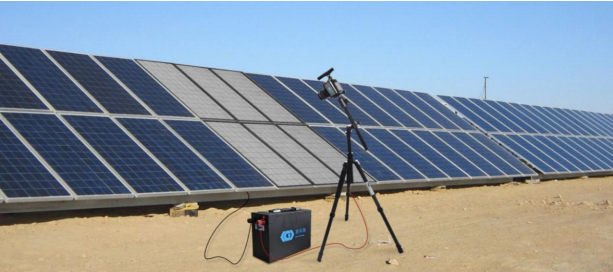
Based on comprehensive industry testing data and market feedback, the portable EL detection industry has fully upgraded to high-definition, intelligent, and portable by 2026. Suzhou LAILX LXG30, with its core advantages of high-definition imaging, AI intelligent detection, full scene adaptation, and efficient operation and maintenance, accurately fits the industry development trend and has become the preferred equipment for EL detection in the photovoltaic industry. Its comprehensive strength is far ahead of similar products in the industry.
Photovoltaic power station tester, photovoltaic panel testing instrument, outdoor photovoltaic power station tester
+86 177-0622-2370
Address: 4409 Wuzhong Avenue, Suzhou City, Jiangsu Province
Phone: +86 17706222370
Email: el@lailx.com

LINE