Welcome to LAIXL, producing EL testers, IV testers, and drone EL
 ×
×
+86 177-0622-2370
xinwen
浏览数:14 发布于:2026-07-10
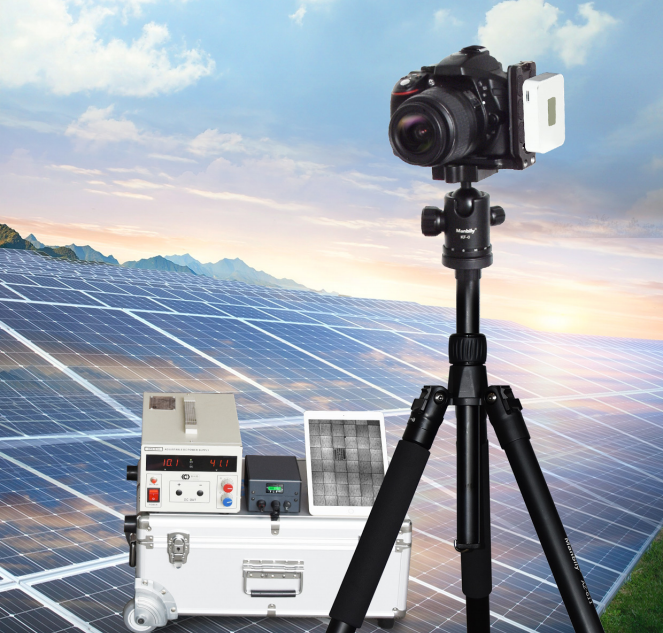 With the continuous expansion of the photovoltaic stock market, hidden defects such as internal cracks, virtual soldering, broken grids, PID potential induced decay, cell fragments, and black core chips have become the core causes that restrict the power generation efficiency of power plants, shorten the service life of components, and cause safety accidents such as hot spot fires. Traditional laboratory fixed EL detectors are bulky, rely on mains power, and cannot be moved. They can only be used for sampling finished products in factory workshops and cannot adapt to outdoor arrival acceptance, completion inspection, and screening of old components in power plants; Early simple portable EL devices had defects such as blurred imaging, night detection only, short battery life, difficulty in single person operation, and severe interference from stray light. The outdoor detection omission rate remained high, making it difficult to meet the industry's refined quality inspection needs. Based on the quality control needs of the entire lifecycle of photovoltaics, Suzhou Laikesi LAILX has launched the LXG30 portable EL electroluminescent detector. With four core innovations, including high-sensitivity infrared imaging module, sunlight clutter suppression patent, lightweight integrated structure, and AI defect intelligent recognition, it achieves non-destructive testing in both daytime and nighttime scenarios. A single person can complete the entire process of outdoor component testing, providing a one-stop efficient solution for component factory quality inspection, power station grid connection acceptance, and existing power station operation and maintenance testing. Rapid detection instrument for hidden cracks in photovoltaic panels
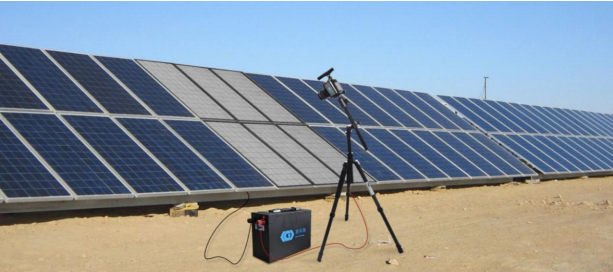
The complete LXG30 equipment consists of four modules: an infrared imaging host, a programmable safety excitation power supply, a carbon fiber lightweight tripod, and a shock-absorbing rod protection box. The weight of the entire set is only 8.1kg, and the roller rod integrated box design allows for single person dragging or backpack carrying. It is not limited by aviation luggage during transportation and has strong adaptability for cross regional third-party flow detection. The tripod is made of stretchable carbon fiber material, with freely adjustable height, suitable for various installation forms such as high support ground photovoltaics, low roof distributed photovoltaics, and floating photovoltaics on water surfaces. The 360 ° pan tilt rotation has no blind spots for shooting, and imaging detection can be completed in areas that are difficult for conventional equipment to reach, such as narrow roofs and bracket gaps. All components of the whole machine adopt industrial three proof technology, with IP65 dust and waterproof protection level. It can stably image in coastal high salt spray, northwest sand and dust, and outdoor working environment during rainy season. It can be used continuously without any faults in outdoor complex climate all year round. The power supply system is equipped with a high-density lithium iron phosphate battery as an excitation power source. It can continuously complete EL imaging detection of 320 components with a single full charge. Remote areas without electric photovoltaic fields can be inspected all day without the need for external AC power supply. It is also equipped with a fast charging interface, which can be fully charged in three hours. The supporting backup battery can achieve uninterrupted batch detection 24/7.
The imaging performance is the core competitiveness of LXG30. The equipment is equipped with a 24 million level high-sensitivity near-infrared CMOS imaging module, combined with a large aperture narrowband infrared filtering lens developed by Lexus, which can effectively filter out sunlight, light, and environmental stray light interference. It breaks through the limitation of traditional portable EL devices that can only be detected at night, and can directly carry out flaw detection operations during the day without the need to build a light shielding and dark shed. The single project detection period can be directly shortened by more than 60%. The imaging resolution reaches 4496 × 3000, with micrometer level detail capture capability, which can clearly identify more than ten types of internal defects such as 0.1mm level hidden cracks, small virtual welding, edge fragments, grid line fractures, PID attenuation dark areas, etc. The intact battery cell imaging is uniform and transparent, and various damages are visually distinguished by light and dark. The detection accuracy is comparable to million level laboratory large EL equipment, fully meeting the national photovoltaic module detection standards and power grid acceptance specifications. The device is equipped with AI6.0 intelligent defect recognition algorithm, which is trained on a million level component defect image database. It can automatically mark, classify hidden cracks, broken grids, black hearts, hot spots, PID attenuation and other faults. The recognition accuracy of N-type, P-type, double-sided double glass components exceeds 92%. After imaging is completed, the device automatically generates defect annotation images without manual frame by frame comparison, greatly reducing the threshold for quality inspection personnel to recognize images and reducing the probability of human error and misjudgment.
The operation process is highly simplified, and the imaging host is equipped with a 5-inch touch display screen that supports wireless Wi Fi and excitation power interconnection. Operators can take photos with a handheld camera from a distance without touching high-voltage components up close, improving the safety factor of on-site operations; Full Chinese operation interface, one click preset parameters, support custom input of component model, field number, and detection personnel information, real-time local storage of captured images, built-in large capacity storage on the body, can retain tens of thousands of high-definition EL imaging original images. The data output supports Bluetooth and USB wired transmission, and is paired with professional analysis software on the PC side to export high-definition original images, defect statistics reports, and standardized testing reports in bulk. The reports come with device traceability codes, shooting time, and component parameters, which can be directly used as component factory qualification certificates, power plant completion acceptance notarization materials, and component quality assurance claims basis, with complete compliance effectiveness. The incentive power supply is equipped with multiple safety protection circuits, with automatic power-off functions for reverse connection, overcurrent, overvoltage, and leakage. After the test is completed, the residual voltage of the components is automatically released to eliminate the risk of outdoor high-voltage electric shock. It is compatible with 182mm and 210mm full-size high-power components, and the voltage output range is flexible and adjustable. It is compatible with multiple detection modes for single components and small groups.
In practical project implementation, LXG30 has been widely used in various scenarios such as factory inspection of photovoltaic module production workshops, annual operation and maintenance testing of large ground photovoltaic power stations, grid connection acceptance of industrial and commercial rooftop photovoltaics, failure analysis of old and scrapped components, and quality inspection of energy storage supporting photovoltaic modules. The operation and maintenance team of a hundred megawatt mountain photovoltaic power station in Northwest China reported that they previously used old-fashioned night time EL equipment, and required the deployment of six staff members for continuous night work for 12 days for the whole station component inspection. The proportion of missed defects exceeded 18%; After replacing the LXG30 portable EL detector, only 2 operation and maintenance personnel can complete all component inspections in 4 days during the day, reducing the defect omission rate to less than 3%, promptly identifying a large number of hidden faults, effectively reducing the annual component power attenuation loss, and minimizing fire safety hazards. Multiple third-party new energy testing institutions have listed LXG30 as a standard equipment, relying on its advantages of daytime detection, high-definition imaging, and fast reporting, greatly improving project capacity and shortening delivery cycles.
The current photovoltaic industry is accelerating the refinement of quality control, and early identification of internal hidden defects has become a key lever for reducing costs, increasing efficiency, and ensuring safe operation of power plants. The Suzhou LAILX LXG30 portable EL detector, with its four core advantages of lightweight, all-weather, high precision, and intelligence, breaks the limitations of traditional EL detection equipment scenarios and reduces the labor, time, and equipment investment costs of outdoor non-destructive testing. In the future, Lexus will continue to optimize AI defect recognition models, develop exclusive imaging algorithms for perovskite and stacked new photovoltaic modules, continuously iterate portable EL detection technology, and use domestically developed precision instruments to help upgrade the quality of the entire photovoltaic industry chain, laying a solid quality defense line for the safe and stable operation of the new power system.
Photovoltaic panel hidden crack rapid detection instrument, solar cell testing equipment, outdoor photovoltaic power station tester
+86 177-0622-2370
Address: 4409 Wuzhong Avenue, Suzhou City, Jiangsu Province
Phone: +86 17706222370
Email: el@lailx.com

LINE