Welcome to LAIXL, producing EL testers, IV testers, and drone EL
 ×
×
+86 177-0622-2370
xinwen
浏览数:599 发布于:2026-07-09
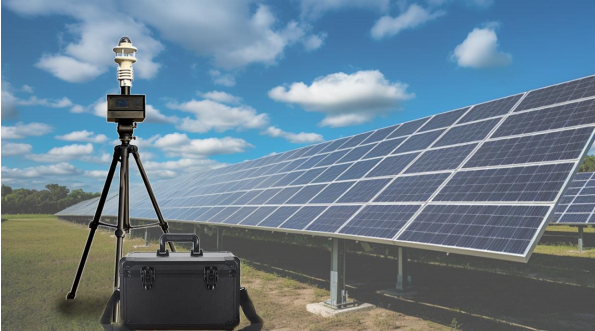 The power generation of photovoltaic modules, the comprehensive efficiency PR value of the system, and the evaluation of power generation benefits are highly dependent on on-site meteorological environmental parameters. Fluctuations in meteorological factors such as total solar irradiance, module temperature, environmental temperature and humidity, wind speed, and atmospheric pressure can directly change the actual output power of the modules. Without synchronized and accurate meteorological data support, significant data deviations may occur in IV performance testing, power generation calculation, power station efficiency evaluation, and fault loss analysis. Traditional large-scale fixed photovoltaic weather stations have a large volume, long installation and construction period, and require fixed pole wiring. They are only suitable for fixed point monitoring in large ground power stations and cannot be moved to rooftops, mountains, or distributed small-scale photovoltaic sites with detection equipment; Simple and portable meteorological devices on the market often use mechanical rotating wind speed and direction sensors, which are prone to jamming and damage in windy, sandy, and low-temperature environments. The measurement accuracy of irradiation sensors is low, and there is a lack of photovoltaic dedicated tilt total radiation acquisition modules, which cannot synchronously match outdoor IV on-site detection conditions. The stability of data storage and transmission is poor, making it difficult to meet the needs of third-party detection, mobile inspection, and multi-point comparative monitoring. Based on the demand for on-site photovoltaic testing, Suzhou LAILX has launched the LXH506 portable photovoltaic dedicated weather station, which adopts a non mechanical ultrasonic integrated sensing architecture, is lightweight and quickly deployed, synchronously collects all dimensional meteorological elements required for photovoltaic testing, adapts to multiple scenarios such as mobile IV synchronous testing, multi-point energy efficiency comparison, power generation evaluation, and power station acceptance, and provides high-precision mobile environmental data support for photovoltaic performance calculation. Portable weather station
LXH506 abandons traditional mechanical wind speed and direction sensors and adopts an integrated ultrasonic non mechanical sensing module with no rotating parts. There is no risk of wind and sand jamming or freezing failure. It can operate stably in harsh outdoor environments such as deserts, high cold, and coastal high salt fog all year round, with almost no maintenance, greatly reducing the cost of equipment maintenance in the later stage. The entire sensing system integrates high-precision photovoltaic dedicated tilt total radiation sensors, component backplate temperature probes, air temperature and humidity sensors, ultrasonic wind speed and direction modules, and atmospheric pressure sensors. It can synchronously collect all core meteorological parameters for photovoltaic detection in one installation. The measurement error of the total radiation sensor is controlled within ± 2%, fully matching the IEC photovoltaic performance testing standards, and real-time capturing changes in on-site irradiation intensity. It provides synchronous environmental data for the STC standard correction of IV testers, greatly improving the accuracy of component power detection and eliminating evaluation errors caused by light fluctuations. The equipment is equipped with a scalable and lightweight tripod, and the entire sensing host, data acquisition box, and energy storage battery are stored in an aluminum alloy portable protective box. It can be transported by a single person and set up and debugged within 5 minutes upon arrival at the detection point. No civil construction or pole fixation is required, and multi area and multi component point comparison meteorological monitoring can be completed on the same day, perfectly adapting to the mobile detection needs of distributed rooftop photovoltaics, mountain fragmented photovoltaics, and household small power stations.
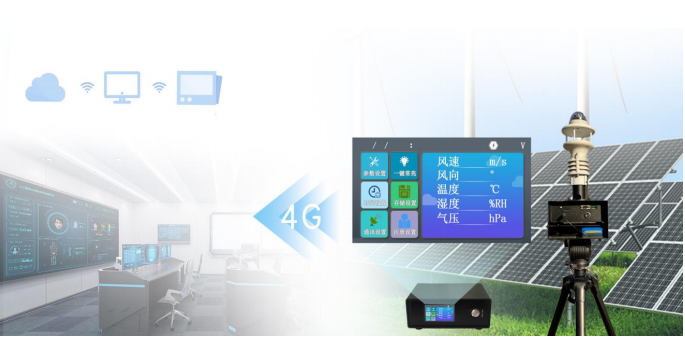
The power supply system is fully adapted to outdoor scenarios without mains power. The LXH506 is equipped with an integrated small solar patch panel and a large capacity built-in lithium battery dual power supply solution. When the light is sufficient, the solar panel charges independently, and on rainy and cloudy days, it relies on the lithium battery for continuous power supply. When fully charged, it can continuously collect 30 days of weather data without interruption, completely freeing itself from the constraints of mains power wiring. Remote outdoor photovoltaic projects without power supply can also be deployed for long-term monitoring. The data acquisition host is equipped with a low-power intelligent acquisition chip that supports second level high-frequency data acquisition. It can set multiple acquisition intervals of 1 second, 1 minute, and 5 minutes, and is suitable for short-term IV synchronous detection high-frequency sampling and long-term power generation evaluation low-frequency storage modes; Local high-capacity storage can store meteorological raw data for several years without losing monitoring records due to power outages, and supports SD card expansion to expand storage space. The transmission method is compatible with local offline storage, Bluetooth local synchronization, and 4G wireless remote upload modes. Outdoor sites can synchronize irradiation and temperature data in real-time to the LX-PV31 portable IV tester through Bluetooth, achieving synchronized collection and binding of meteorological parameters and component IV curves; The 4G module can upload real-time meteorological data to the LAILX exclusive photovoltaic cloud platform, allowing operation and maintenance personnel and testing engineers to remotely view on-site meteorological curves and historical data on their computers and mobile terminals for power generation prediction and long-term analysis of system efficiency.
The equipment is equipped with an exclusive intelligent data correction algorithm for the photovoltaic industry, which can automatically convert the theoretical power generation under standard test conditions based on real-time collected irradiance, component temperature, and wind speed values. By comparing the actual power generation data of the components, the comprehensive efficiency of the power station's PR can be accurately calculated, and the power generation revenue gap caused by obstruction, attenuation, and line loss can be quickly located. All collected data is automatically labeled with GPS positioning and collection time. When monitoring at multiple locations, meteorological data from different photovoltaic fields can be distinguished, and energy efficiency comparison analysis can be completed for different lighting areas such as mountains, slopes, and roofs; After exporting monitoring data, a visual meteorological curve report is automatically generated, including daily, monthly, and annual cumulative radiation, average temperature, and wind speed statistics. The report format is compatible with photovoltaic detection reports and power plant operation and maintenance evaluation documents, and does not require manual secondary data organization. The overall protection level of the machine is IP65, and the sensing module and collection box are all dust-proof and waterproof. It can be continuously monitored outdoors in rainy and sandstorm weather, and the low-temperature working range covers -30 ℃ to 70 ℃. It can work stably in both cold winter environments in northern China and high summer environments in southern China.
As the core equipment supporting the complete photovoltaic testing solution, LXH506 covers the entire photovoltaic industry chain testing and evaluation work. When third-party testing institutions conduct on-site component IV performance sampling, LXH506 is synchronously installed to collect real-time meteorological data, ensuring that the testing report data has complete environmental evidence and complies with national testing and filing standards; During the grid connection acceptance stage of photovoltaic EPC enterprises, portable weather stations will be set up at multiple locations to compare the radiation differences in different areas of the site, optimize component layout, and evaluate power generation plans; Large scale ground and mountain photovoltaic operation and maintenance teams are used for quarterly energy efficiency evaluation, combined with long-term meteorological data analysis of component attenuation rate, to predict annual power generation revenue; When conducting asset liquidation and residual value assessment for distributed industrial and commercial rooftop photovoltaic projects, long-term collection of meteorological data is used to calculate the actual power generation capacity; Special photovoltaic projects for agricultural and fishery light complementarity, synchronously monitoring light, temperature and humidity, taking into account the needs of photovoltaic energy efficiency and agricultural planting environment monitoring. Multiple third-party photovoltaic testing laboratories in Jiangsu have purchased a complete set of LAILX LX-PV31 IV testers paired with LXH506 portable weather stations to achieve synchronized testing of component performance and environmental meteorology. The authority and completeness of the testing reports have been significantly improved, and the customer acceptance rate has been greatly increased.
Suzhou LAILX insists on independent research and development of photovoltaic detection equipment. All sensors, acquisition algorithms, and cloud platform systems of the LXH506 portable weather station are self-developed by the enterprise, and can be interconnected with the brand's LX-PV31, LXG50, LX-F200, and LXH601 detection equipment to create a one-stop photovoltaic on-site complete detection solution. The equipment provides a two-year warranty for the entire machine, one-year free calibration for the sensing module, lifelong free data storage and viewing services on the cloud platform, and on-site debugging and training for technical engineers in key photovoltaic areas across the country. In the current industry where refined operation and precise energy efficiency evaluation of photovoltaic power plants have become essential, synchronous matching of mobile meteorological monitoring equipment is a necessary condition for on-site standardized testing. The LXH506 portable photovoltaic weather station fills the gap in the domestic high-end mobile photovoltaic weather monitoring equipment market with four core advantages: no mechanical durable sensing, lightweight rapid deployment, multi-mode data transmission, and photovoltaic exclusive precise measurement. It continues to improve the LAILX full series photovoltaic detection hardware ecosystem, and uses a complete set of domestic detection instruments to assist in the standardization and precision development of the photovoltaic industry, providing solid technical support for the high-quality development of the new energy industry under the dual carbon target in China.
+86 177-0622-2370
Address: 4409 Wuzhong Avenue, Suzhou City, Jiangsu Province
Phone: +86 17706222370
Email: el@lailx.com

LINE