Welcome to LAIXL, producing EL testers, IV testers, and drone EL
 ×
×
+86 177-0622-2370
xinwen
浏览数:583 发布于:2026-07-06
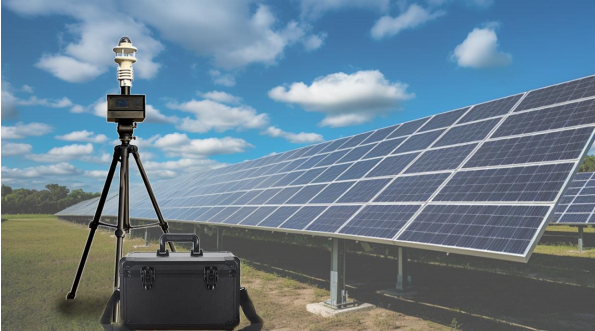 The power generation efficiency of photovoltaic modules is directly affected by meteorological environmental factors such as solar radiation, environmental temperature and humidity, wind speed and direction, and module back panel temperature. Accurate, real-time, and complete environmental meteorological data is the core basic data for theoretical calculation of power generation, power attenuation judgment, operation and maintenance efficiency evaluation, power station resource survey, and third-party energy efficiency verification. Traditional fixed meteorological stations have a long installation cycle and cannot be moved, and are only suitable for fixed monitoring of large ground power stations; The assembly of simple split type meteorological equipment is cumbersome, with insufficient sensor accuracy and poor protection, which cannot meet the needs of outdoor mobile surveying and distributed multi-point synchronous monitoring. Suzhou Laikesi LAILX is deeply engaged in the field of photovoltaic environmental monitoring, and has newly developed the LXH506 portable photovoltaic weather station. It integrates multiple high-precision sensors, has a lightweight and fast disassembly structure, supports independent off grid endurance and wireless data transmission, and is suitable for photovoltaic resource survey, distributed power station multi-point inspection, power station efficiency benchmarking, and laboratory outdoor comparative testing scenarios. It provides a flexible, portable, and high-precision environmental monitoring solution for the photovoltaic industry. Portable photovoltaic weather station
The LXH506 adopts an integrated modular design, where all sensors, data acquisition hosts, and power supply units of the entire machine are integrated and stored in a customized pull rod protective box. It is equipped with a high-strength and stretchable aluminum alloy tripod, and can be set up, calibrated, disassembled, and stored in just five minutes by a single person. No professional construction tools are required, and there is no fixed installation civil engineering process, making it perfectly suitable for mobile surveying operations. The entire set of equipment is compact in size after storage, and the trunk of the car can be fully loaded, making it easy for cross regional photovoltaic project resource exploration and distributed roof multi-point synchronous environmental data collection, solving the pain points of traditional fixed weather stations being immovable and having high survey costs. The protection level of the entire sensor unit is IP67, with a fully sealed waterproof and dustproof shell, and corrosion-resistant materials suitable for various complex outdoor environments such as coastal salt spray, northwest sand and dust, and southern rainy and humid conditions; The entire equipment operates within a temperature range of -30 ℃ to 60 ℃, with no significant decrease in sensor measurement accuracy in extreme high and low temperature environments. It operates stably outdoors throughout the year.
The equipment integrates nine core meteorological monitoring sensors required by the photovoltaic industry, without redundant modules, accurately matching the exclusive requirements of photovoltaic power generation monitoring. It synchronously and real-time collects eight basic elements, including horizontal total solar radiation, adjustable slope total radiation, module backplate temperature, ambient air temperature and humidity, wind speed, wind direction, atmospheric pressure, and cumulative rainfall, which can fully restore the real power generation environment of photovoltaic modules. The irradiation sensor adopts a high-precision secondary standard thermoelectric radiation meter with excellent cosine response characteristics, fast response speed, extremely low zero drift, and measurement accuracy of ± 2%. It can accurately capture irradiation values under different lighting conditions such as sunny, cloudy, cloudy, and scattered light. The inclined irradiation bracket supports adjustable angles from 0 to 90 degrees and synchronously collects corresponding lighting data by matching photovoltaic modules with different inclinations, solving the problem of data deviation caused by fixed irradiation equipment unable to match component inclinations; The component temperature sensor adopts a patch type high-temperature resistant probe, which can be directly attached to the photovoltaic back panel to collect the working temperature of the battery cells in real time and accurately correct the theoretical power generation of the component. The wind speed and direction are measured using an integrated ultrasonic sensing module, which has no mechanical rotating parts and is free from wind and sand jamming or wear faults. It can also accurately measure at low wind speeds and has a much longer service life than traditional wind cup and wind vane structures.
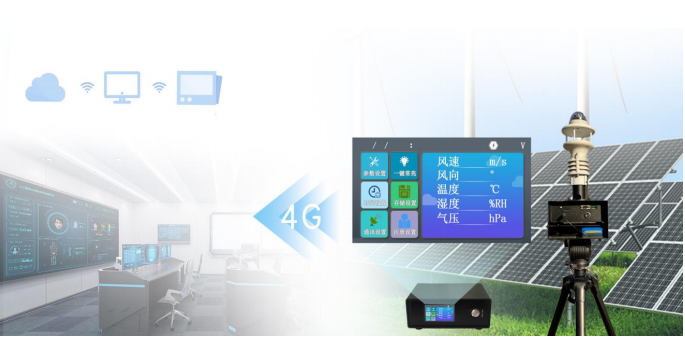
The power supply and data transmission system is fully adapted to outdoor survey scenarios without mains electricity. The LXH506 is equipped with a small supporting solar self supply panel and a large capacity energy storage lithium battery dual-mode power supply. It relies on solar energy to continuously self charge in a well lit environment. The built-in battery can work independently for 30 days in rainy and non sunny environments. Remote areas without grid photovoltaic resources survey areas do not require external power supply and can continuously collect environmental data for a long time. Data transmission supports triple mode free switching: local SD card with large capacity offline storage, which can save raw meteorological data minute by minute for the whole year; RS485 wired Modbus communication, connected to the local intelligent operation and maintenance platform of the power station; 4G wireless remote transmission, real-time uploading of field survey data to the cloud backend, allowing staff offices to remotely view and download complete meteorological monitoring data. The equipment is equipped with a local touch screen display, which allows real-time viewing of instantaneous data such as radiation, temperature and humidity, wind speed, etc. at the installation site without the need to carry a computer for on-site retrieval, making it easy for surveyors to quickly record and compare environmental differences at different locations.
The supporting LAILX photovoltaic meteorological data analysis software has professional photovoltaic energy efficiency calculation functions. After importing the complete meteorological data collected by LXH506, the software automatically matches component parameters, calculates theoretical power generation, equivalent utilization hours, and environmental loss coefficients, compares actual power generation data of the power station, accurately distinguishes power generation losses caused by insufficient lighting, component attenuation, and equipment failures, and helps the operation and maintenance team accurately locate the root cause of power generation losses and develop targeted optimization operation and maintenance plans. At the same time, the complete original meteorological data can be directly exported to Excel and PDF standardized documents, meeting the data compliance requirements of photovoltaic power station completion acceptance, third-party energy efficiency evaluation, new energy subsidy verification, and project resource feasibility report preparation. The data collection time, location, and equipment number are fully recorded, and the traceability is complete and effective.
The landing application of the equipment covers multiple scenarios such as pre photovoltaic resource survey, acceptance of newly built distributed power stations, annual efficiency benchmarking of existing power stations, outdoor experiments of photovoltaic in universities, and environmental monitoring of energy storage photovoltaic complementary projects. According to the survey team of the New Energy Design Institute, LXH506 is easy to disassemble and carry, greatly improving the efficiency of distributed resource exploration in mountainous areas and rooftops. The high-precision irradiation sensor ensures accurate resource data in the feasibility study report; Large scale ground power station operation and maintenance enterprises use multiple devices and multi-point synchronous deployment to compare the differences in lighting and temperature differences in different areas of the array, optimize component cleaning and operation scheduling plans; The third-party testing agency uses this equipment to cooperate with IV and EL testing, synchronously collects environmental data, and standardizes the full dimensional verification of power attenuation in the power station.
Suzhou LAILX continues to improve the layout of photovoltaic full chain detection and monitoring equipment. The LXH506 portable photovoltaic weather station fills the gap in the market for high-precision mobile environmental monitoring equipment, taking into account multiple advantages such as portability, measurement accuracy, long-term battery life, and intelligent data processing, significantly reducing equipment investment and labor costs for photovoltaic resource surveying and multi-point environmental monitoring. In the future, the brand will continue to upgrade sensor accuracy, expand monitoring modules such as ultraviolet radiation and PM2.5, integrate meteorological data with IV performance and thermal imaging fault data analysis platforms, and create a one-stop monitoring and testing system covering the entire cycle of photovoltaic survey, acceptance, and operation and maintenance. With domestically produced high-precision monitoring equipment, it will help the photovoltaic industry operate in a refined, digital and efficient manner.
+86 177-0622-2370
Address: 4409 Wuzhong Avenue, Suzhou City, Jiangsu Province
Phone: +86 17706222370
Email: el@lailx.com

LINE