Welcome to LAIXL, producing EL testers, IV testers, and drone EL
 ×
×
+86 177-0622-2370
xinwen
浏览数:623 发布于:2026-07-01
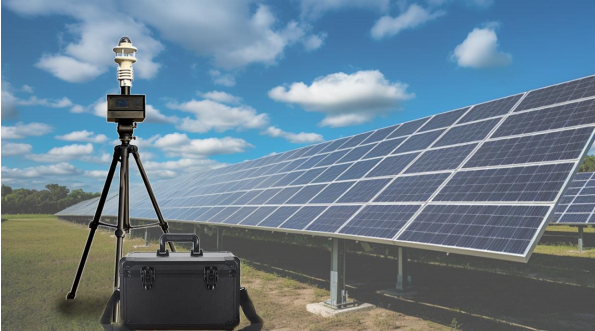 Meteorological environmental parameters such as solar irradiance, ambient temperature, component temperature, wind speed, humidity, and air pressure are essential benchmark data for measuring the conversion efficiency of photovoltaic modules, evaluating the PR value of power plant systems, predicting power generation revenue, and calibrating IV performance testing. Traditional large-scale fixed meteorological stations have long installation cycles, large volumes, and cannot be moved, and are only suitable for long-term monitoring of fixed points in large ground power stations; Ordinary simple portable meteorological equipment uses mechanical rotation sensors, which are prone to jamming and damage in wind, sand, and low temperature environments. It lacks a high-precision total radiation monitoring module specifically for photovoltaics, making it impossible to synchronously collect the environmental data required for a complete set of photovoltaic detection. The measurement accuracy is insufficient, the data transmission is unstable, and it is difficult to flexibly deploy in mountainous, rooftop distributed, and temporary acceptance detection scenarios. Suzhou Laikesi New Energy Technology Co., Ltd. (LAILX) focuses on the demand for on-site performance testing of photovoltaics and has launched the LXH506 portable photovoltaic dedicated weather station. It adopts a non mechanical ultrasonic integrated sensing design, lightweight and rapid deployment, synchronously collects seven core meteorological elements, wirelessly links IV and EL detection equipment, adapts to power station acceptance, mobile performance testing, multi-point resource comparison and monitoring, and provides high-precision, movable, all-weather environmental data support for quantitative evaluation of photovoltaic performance. Portable weather station
Highly integrated multi parameter synchronous monitoring is the core product advantage of LXH506. The equipment is equipped with LAILX self-developed ultrasonic integrated micro meteorological sensor, which has no bearings or rotating mechanical components, completely avoiding the common problems of traditional wind cups, wind and sand jamming, and low-temperature icing failure. The service life of the equipment is greatly extended, and it is almost maintenance free. A single device can synchronously and accurately collect seven core meteorological parameters of photovoltaics, including total solar irradiance, module backplate temperature, ambient air temperature, wind speed, wind direction, relative humidity, and atmospheric pressure, without the need for multiple separate sensors, truly achieving "one station, multiple measurements" and fully covering all environmental data requirements for photovoltaic performance testing. Each sensor has been accurately calibrated using laboratory standard light sources and constant temperature and humidity environments. The irradiance measurement accuracy is ± 5W/㎡, the temperature accuracy is ± 0.2 ℃, and the wind speed accuracy is ± 0.3m/s. The data is stable and reliable, accurately reproducing real-time meteorological conditions on site, eliminating component performance testing data deviations caused by environmental differences, and ensuring that the IV curve, conversion efficiency, and system PR value calculation results have industry recognized quantitative authority.
Lightweight, portable, and fast deployment design suitable for various mobile detection scenarios. The complete set of equipment includes a sensor host, a telescopic aluminum alloy tripod, and a shock-absorbing and protective pull rod box. The total weight is controlled within 5kg, and can be easily carried by a single person. It can be transported with the vehicle to various locations such as roofs, mountains, water surfaces, and household photovoltaics for temporary monitoring. The deployment process is minimalist, without the need for professional construction tools or concrete fixed bases. The tripod is opened and unfolded, the sensor host is fixed, and self calibration is completed within three minutes of startup. Complete meteorological data collection can be started within five minutes; Compared with the traditional 1-2 hour installation and debugging process of fixed meteorological stations, the deployment efficiency has been improved by more than ten times, and it is suitable for short-term operation scenarios such as project temporary acceptance sampling, multi area array irradiation comparison testing, and distributed roof multi-point synchronous monitoring. The height of the equipment bracket can be freely adjusted, suitable for temperature collection of low rise household photovoltaic and large ground array components at different heights. The component temperature probe can be directly attached to the photovoltaic back panel to accurately collect the working temperature of the components, which is different from simple air temperature monitoring and more in line with the photovoltaic power generation performance measurement standards.
24/7 stable battery life and multi-mode wireless data transmission, achieving long-term unmanned outdoor monitoring. The device is equipped with a large capacity rechargeable lithium battery, which supports continuous data collection for 72 hours when fully charged. Remote field power stations without mains electricity do not require external power supply. With optional accessories such as solar panels, it can achieve long-term offline monitoring for several weeks and is suitable for long-term observation needs of photovoltaic resource assessment. Data transmission supports local storage, WIFI wireless, Bluetooth multi-mode synchronization, with a built-in large capacity storage chip that can continuously store annual minute level meteorological monitoring data, and supports on-site local retrieval and viewing; WIFI wireless can synchronize irradiation and temperature data in real time to the LX-PV31 portable IV tester host. The IV detection and meteorological environment data are bound one by one, and the test report is automatically synchronized and entered without the need for manual recording of light temperature values, avoiding manual recording errors and greatly improving the standardization of detection reports. Bluetooth mode supports real-time viewing of real-time weather curves on tablets and mobile phones, allowing operation and maintenance personnel to compare the relationship between lighting and component power changes on-site and quickly determine the cause of power generation fluctuations.
Exclusive data management system for photovoltaic scenarios, connecting the entire detection process with digitalization. Equipped with dual end data management software for PC and mobile devices, it automatically generates hourly, daily, monthly, and annual statistical reports of meteorological data, draws trend curves of irradiation duration, temperature changes, and wind speed distribution, and intuitively displays the distribution of solar thermal resources in the power plant area. The software has a built-in photovoltaic PR efficiency automatic calculation model, which imports meteorological data and actual power generation data of the power station, automatically calculates the comprehensive efficiency of the system, distinguishes between two sources of power generation loss: meteorological fluctuations and equipment failures, and assists the operation and maintenance team in accurately locating the reasons for low efficiency. The complete set of meteorological data collected by the equipment can be directly integrated with the LAILX series IV, EL, and thermal imaging detection equipment analysis software. All detection reports are uniformly integrated with meteorological benchmark parameters, meeting the requirements of third-party photovoltaic testing institutions and power grid project acceptance data specifications. The performance evaluation report issued has a complete compliance data traceability basis. The software supports the synchronization and summary of data from multiple LXH506 meteorological stations. After the installation of equipment at multiple points in large ground power stations, the differences in radiation resources in different regions can be compared to optimize the planning of power station operation and maintenance and cleaning cycles.
Strict outdoor protection ensures long-term stable work in complex areas. The overall sensor protection level is IP66, dustproof and waterproof, and can withstand continuous light rain, severe sandstorm environment for continuous operation. It is suitable for various photovoltaic construction areas such as northwest desert, southern rainy and high humidity, and coastal salt spray; The working temperature range covers -20 ℃ to 60 ℃, and there is no significant drift in measurement accuracy in cold winter and hot summer environments. Monitoring work can be carried out stably throughout the year. The irradiation probe is equipped with a detachable dust protection cover, which can prevent the transparent lens from scratching and accumulating dust during transportation and storage, ensuring long-term measurement accuracy; The whole machine structure is reinforced for wind resistance, and there is no risk of shaking or tilting of the bracket in the eighth level strong wind environment. No additional reinforcement or fixation is required for long-term outdoor monitoring.
The current LXH506 portable weather station has been used as a supporting equipment and supplied as a complete set with the LAILX LX-PV31 IV tester to major EPC enterprises, third-party photovoltaic testing institutions, and new energy operation and maintenance groups in China. It is widely used in projects such as completion acceptance of new construction projects, annual performance retesting of existing power stations, outdoor empirical testing of new components, and preliminary evaluation of photovoltaic resources. Numerous customers have provided feedback that the three core advantages of portable and easy to deploy equipment, multi parameter synchronous collection, and data linkage detection instruments have solved the industry pain points of traditional meteorological equipment being unable to move, supporting detection data being disconnected, and insufficient measurement accuracy, greatly improving the standardization and efficiency of photovoltaic performance testing work.
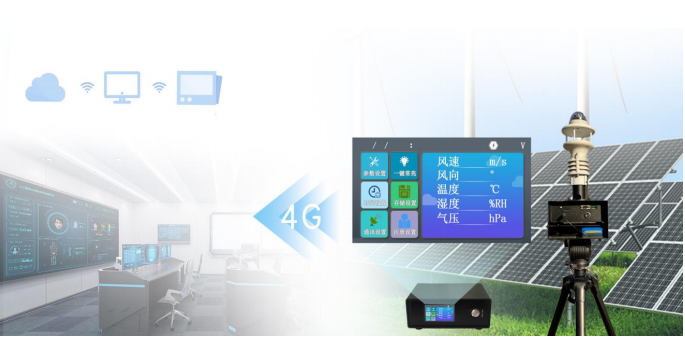
The domestic photovoltaic industry has entered a stage of parallel development of existing operation and maintenance and new installed capacity. Fine energy efficiency evaluation and digital operation and maintenance have become the mainstream of industry development. Accurate and mobile meteorological environment monitoring equipment is an indispensable basic supporting system for photovoltaic detection. The Suzhou LAILX LXH506 portable photovoltaic weather station relies on self-developed ultrasonic sensing technology, lightweight integrated design, and customized photovoltaic scene data linkage function to create a domestically produced and cost-effective mobile weather monitoring solution, and improve the Lexus photovoltaic full chain detection instrument matrix. In the future, enterprises will continue to optimize sensor accuracy, expand cloud based big data synchronization, long-term resource assessment and analysis functions, and use precise environmental monitoring data to assist in the fine operation and maintenance of photovoltaic power plants, promoting the digitalization and high-quality sustainable development of the new energy industry.
+86 177-0622-2370
Address: 4409 Wuzhong Avenue, Suzhou City, Jiangsu Province
Phone: +86 17706222370
Email: el@lailx.com

LINE