Welcome to LAIXL, producing EL testers, IV testers, and drone EL
 ×
×
+86 177-0622-2370
xinwen
浏览数:646 发布于:2026-06-26
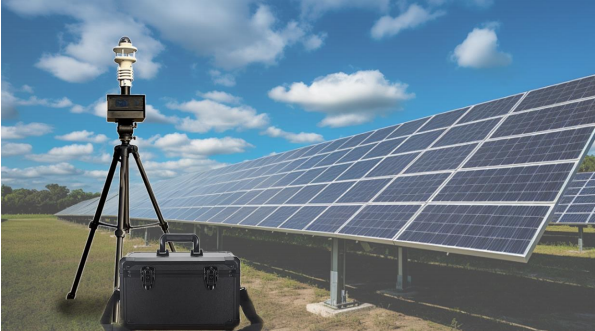 Irradiance, environmental temperature and humidity, wind speed and direction, rainfall and other meteorological environmental parameters are the core basic data for calculating the power generation of photovoltaic power plants, evaluating the efficiency of PR systems, analyzing component power attenuation, and predicting meteorological disaster risks. Traditional fixed photovoltaic weather stations have long installation cycles, high deployment costs, and cannot be moved. They can only monitor environmental data at a single point, and it is difficult for multi terrain block power stations such as mountainous areas, distributed roofs, and complementary fishing and photovoltaics to achieve multi-point synchronous monitoring; The split type simple portable meteorological equipment has complex assembly, insufficient sensor accuracy, weak anti-interference ability, and large deviation in the calculated irradiation data, which cannot support precise operation and project performance evaluation. Suzhou Laikesi LAILX has launched the LXH506 portable weather station, which adopts an integrated ultrasonic sensing design and a lightweight body that can be quickly deployed in 5 minutes. It synchronously collects all the meteorological elements required for photovoltaic operation and maintenance with high precision, adapts to multi-point mobile monitoring of photovoltaics, engineering site survey, scientific research data collection, and emergency meteorological support in multiple scenarios, and creates a mobile, high-precision, and easy to operate photovoltaic exclusive weather monitoring equipment. Portable weather station
The power generation efficiency of photovoltaic power plants is highly correlated with the on-site meteorological conditions. The solar irradiance directly determines the theoretical power generation of the components. An increase in ambient temperature will significantly reduce the conversion efficiency of the components. Strong winds, rainfall, and extreme pressure changes will affect the stability of the brackets and exacerbate the surface ash loss of the components. Accurate, real-time, and multi-point meteorological data are the core basis for power station operation and maintenance teams to calculate theoretical power generation, compare actual power generation benefits, analyze the reasons for low PR values, develop component cleaning cycles, and predict extreme weather shutdown plans. Traditional fixed meteorological stations can only be installed in the central area of power stations, and there are significant differences in radiation and temperature in different areas of mountainous undulating and roof dispersed power stations. Single point data cannot represent the real environmental conditions of the entire site, resulting in distorted performance evaluation; The simple and portable meteorological equipment on the market uses mechanical wind cups and split irradiance meters, which take more than an hour to assemble. The mechanical components are prone to jamming and wear, and the measurement accuracy quickly deteriorates after long-term outdoor use. The LXH506 adopts an integrated non mechanical ultrasonic micro meteorological sensor, with no rotating vulnerable parts, fast response speed, resistance to wind, sand, and rain interference, and significantly improved long-term stability for outdoor use. The entire set of sensors, data acquisition host, and power supply module are integrated, and can be set up by opening the tripod. A single person can complete the installation and debugging in 5 minutes without the need for professional meteorological personnel to operate, greatly reducing the time required for multi-point monitoring and deployment. A 100 MW mountain power station can carry multiple devices to synchronously collect meteorological data in different areas, fully restoring the real environmental conditions of the entire site.
The core sensing hardware ensures top-notch measurement accuracy in the industry and fully complies with the national standards for meteorological observation in the photovoltaic industry. LXH506 can synchronously and real-time collect eight basic meteorological parameters, including horizontal irradiance, slope component irradiance, environmental temperature, relative humidity, atmospheric pressure, wind speed, wind direction, and cumulative rainfall. It supports the expansion of environmental monitoring indicators such as ultraviolet radiation, PM2.5, and CO ₂ as needed, and is suitable for differentiated monitoring needs in multiple industries such as photovoltaics, agriculture, and emergency response. The measurement accuracy of key parameters has reached the level of professional meteorological stations: temperature measurement error ± 0.2 ℃, humidity ± 3% RH, wind speed ± 0.1m/s, irradiance ± 2%, ultrasonic wind direction without mechanical wear, 360 ° accurate capture of airflow direction without blind spots, even in mountainous gusts and turbulent valley environments, the measurement data is still stable and reliable. The equipment is equipped with an automatic calibration algorithm, which automatically completes sensor zero point calibration every time it is turned on, reducing measurement drift caused by temperature and sandstorms. Long term outdoor continuous monitoring does not require frequent manual calibration, reducing equipment maintenance workload; The inclined surface irradiation sensor can freely adjust the angle according to the inclination angle of the photovoltaic module, accurately match the installation posture of the on-site module, collect irradiation data that is completely consistent with the light received by the module, and control the theoretical power generation error converted from this within 3%, far superior to ordinary split type irradiation equipment, providing a reliable data basis for accurate calculation of the power plant PR value.
The lightweight and portable structure is suitable for all scenario mobile monitoring needs. The entire equipment includes an integrated sensing host, an aluminum alloy telescopic tripod, a large capacity lithium battery, and a shock-absorbing and protective trolley case. The total weight of the whole machine is controlled within 5kg. The trolley case can be carried by hand or dragged by rollers, and can be easily transported by a single person to areas that cannot be reached by vehicles such as rooftop factories, mountainous hills, floating power plants, and greenhouse photovoltaics. The height of the tripod can be adjusted by 2-5 meters, suitable for different installation heights of low distributed components and large ground high support components. The overall protection level of the equipment is IP66, with rain, dust, and UV resistance. It can be placed in a wide temperature environment from -30 ℃ to 70 ℃ for a long time, and continuous field monitoring does not require recycling. The power supply mode adopts a dual power supply design, with a built-in large capacity lithium battery that can be continuously monitored for 7 days when fully charged. It is equipped with a small photovoltaic patch panel that can be self charged outdoors, and long-term field surveys do not require external power supply; At the same time, a 220V AC power supply interface is reserved, and the station has a power supply area for long-term fixed monitoring, meeting the dual needs of short-term mobile inspection and long-term fixed-point observation.
Intelligent data storage and transmission system, achieving complete retention and remote viewing of monitoring data. The LXH506 is equipped with a local high-capacity storage chip, which can continuously store minute level meteorological raw data for a whole year. It automatically records the collection time and corresponding parameter values of each set of data, and has a built-in data backup mechanism. Power outages will not lose historical monitoring records; The transmission method supports 4G wireless remote transmission and RS485/RS232 wired docking. In mountainous areas without network cables, meteorological data can be uploaded to the cloud monitoring platform in real time through 4G modules. Operations personnel can remotely view changes in radiation, temperature, and wind speed on their office computers and mobile phones, without the need to travel back and forth to the power plant site to read data; The wired interface can directly connect to on-site laptops and local monitoring hosts of power stations, enabling real-time export of close range data. Equipped with PC meteorological data analysis software, it automatically summarizes long-term monitoring data, generates daily, monthly, and annual meteorological statistical reports, draws irradiance change curves and temperature trend charts, supports linkage comparison with power plant inverter power generation data, intuitively analyzes the impact of meteorological fluctuations on power generation, accurately locates low efficiency operation periods of power plants, assists the operation and maintenance team in optimizing operation and maintenance strategies, reasonably arranges component cleaning and equipment maintenance operation time, and maximizes annual power generation revenue.
LXH506 has strong cross industry expansion and adaptation capabilities in addition to the core photovoltaic scenarios. In the early stage of photovoltaic engineering survey, the project development team carries equipment to the mountainous areas, wasteland, and rooftop sites to be developed, continuously collects 7-30 days of meteorological data, evaluates the radiation resources and extreme wind and rainfall risks of the site, and provides on-site first-hand data for power plant capacity design, bracket wind resistance selection, and investment return calculation; In the field of photovoltaic experiments in scientific research institutions, it is used for comparative tests of different module types and bracket angles, accurately collecting meteorological variables for comparative experiments; In the emergency rescue industry, rapid deployment of flood, wildfire, and landslide disaster sites, real-time monitoring of wind speed and rainfall, prediction of secondary disaster risks, and assistance in rescue command and decision-making; In the fields of precision agriculture and ecological environmental monitoring, synchronous collection of field temperature and humidity, light, and rainfall data is carried out to support crop planting and ecological environment assessment work. One device covers monitoring needs of multiple industries and enhances the comprehensive utilization value of the equipment.
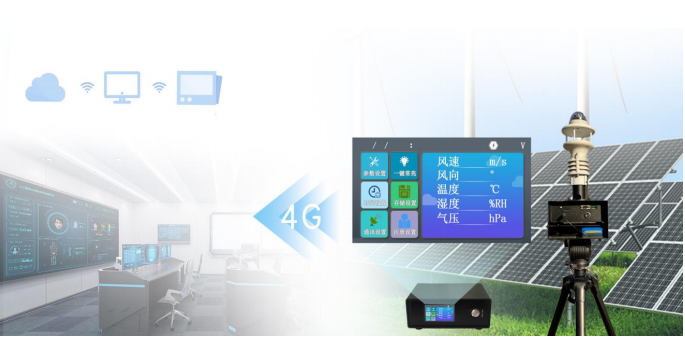
The current trend in the photovoltaic industry is towards refined operation and maintenance, as well as precise resource assessment. The market demand for multi-point, mobile high-precision meteorological monitoring equipment continues to be released. The LAILX LXH506 portable meteorological station in Suzhou, with its five core advantages of integrated ultrasonic sensing, 5-minute rapid deployment, high-precision measurement, lightweight portability, and cloud based intelligent data management, solves the industry pain points of traditional meteorological equipment being unable to move, lacking accuracy, and cumbersome deployment. It provides complete meteorological data support for the development, surveying, and operation of the entire lifecycle of photovoltaics. In the future, LAILX will continue to optimize sensor accuracy and endurance, deepen the analysis algorithm of photovoltaic power generation data linkage, improve the functions of cloud monitoring platform, continuously enrich the product matrix of photovoltaic detection and monitoring, and use high-precision and intelligent mobile monitoring equipment to help improve the quality and efficiency of the domestic photovoltaic industry, promoting the digital and refined management upgrade of the clean energy industry.
+86 177-0622-2370
Address: 4409 Wuzhong Avenue, Suzhou City, Jiangsu Province
Phone: +86 17706222370
Email: el@lailx.com

LINE