Welcome to LAIXL, producing EL testers, IV testers, and drone EL
 ×
×
+86 177-0622-2370
xinwen
浏览数:10 发布于:2026-06-26
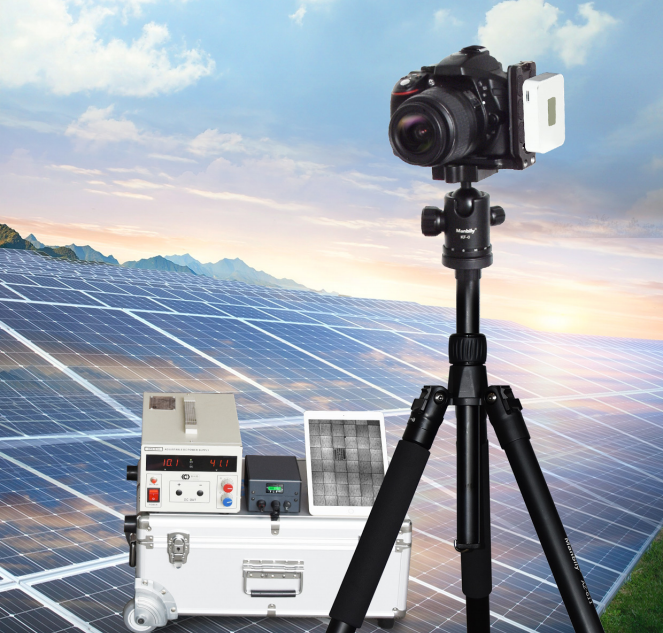 Micro scale hidden defects such as internal cracks, broken grids, virtual soldering, and black core chips in photovoltaic modules are the core causes that restrict the power generation efficiency of power plants and induce thermal spot safety accidents. Traditional fixed EL detectors are bulky and can only be used in indoor shading environments. Old portable devices have problems such as blurred imaging under strong light and high missed detection rates of small defects, which are difficult to meet the rapid detection needs of outdoor sites such as distributed roofs, mountainous ground power plants, and household photovoltaics. Suzhou LAILX independently developed the LXG30 portable EL detector, which integrates 24 million high-definition infrared imaging, adaptive strong light suppression algorithm, and lightweight integrated structural design, breaking through the bottleneck of outdoor EL detection technology. It can complete non-destructive imaging detection of components in daylight environment without the need to build a shading shed, accurately capturing 0.03mm level subtle defects. It can be quickly deployed by a single person and tested on the spot, becoming a standard mobile device for quality inspection of photovoltaic components throughout their lifecycle. It widely serves the entire industry chain, including component manufacturing, power station operation and maintenance, third-party testing, and second-hand component recycling. Rapid detection instrument for hidden cracks in photovoltaic panels
Electroluminescent EL testing is currently the only non-destructive testing technology that can visually present the internal structure of photovoltaic module cells. Its principle is to apply a constant excitation current to the module, excite the cells to generate near-infrared luminescence signals, capture images through an infrared camera, and visually display internal processes and aging defects that cannot be recognized by the naked eye. The biggest weakness of traditional outdoor EL equipment lies in the interference of sunlight and infrared stray light. The imaging image appears white under strong noon light environment, and small hidden cracks and fine broken grids cannot be recognized at all. Operators can only choose to inspect during low light periods in the early morning and evening, greatly reducing the daily inspection workload. The full coverage inspection cycle of large-scale power stations in mountainous areas can last for dozens of days, and the labor cost of operation and maintenance remains high. During the development phase of LXG30, the focus is on overcoming the challenges of strong light imaging technology. Equipped with patented strong light suppression optical filters and intelligent light control adaptive systems, the device is equipped with a high-precision ambient light sensor that real-time collects on-site light intensity. When the light intensity exceeds 5000lux, it automatically synchronously adjusts the shutter and exposure parameters, instantly blocking external infrared stray light interference. Paired with a 99.9% high refractive index germanium infrared imaging chip, the signal capture sensitivity in the 900-1100nm near-infrared band is greatly improved. Even in the summer noon sunlight scene, clear and detailed EL images are still output, with clear contours of various small defects and a leakage rate controlled within 0.1%. The daily component detection volume can be increased by three times, completely eliminating the limitations of lighting conditions on EL detection operations.
The core imaging hardware configuration lays the foundation for the high-precision detection capability of the equipment. The LXG30 is equipped with a 24 megapixel industrial grade CMOS near-infrared camera, with an imaging resolution of 6000 × 4000 and a defect recognition accuracy of up to 0.03mm. It can clearly distinguish more than 20 common component defects such as fine grid line breakage, edge micro hidden cracks, interconnection strip virtual welding, black heart attenuation film, edge etching, PID attenuation, etc. The imaging quality is benchmarked against large desktop EL detection equipment in the laboratory. The device optimizes the constant current and high voltage excitation power supply module, with precise and continuously adjustable output current, compatible with 300W to 700W full power single and double-sided photovoltaic modules, and compatible with all mainstream module types on the market such as single glass, double glass, stacked tile, and half sheet. There is no need to replace excitation accessories, and one set of equipment can complete the detection of all category components. The imaging speed has achieved a leapfrog upgrade, with a complete high-definition imaging of a single component taking only 5 seconds. Equipped with an intelligent image AI assisted analysis system, all defect positions within the image are automatically annotated, the number of defects is counted, and defect types are distinguished within 30 seconds. Simple detection reports are generated synchronously, greatly reducing the difficulty of manual image reading and judgment, and reducing the probability of human misjudgment. Even operation and maintenance personnel without professional EL image reading experience can quickly get started operating Lexi.
The lightweight integrated portable design fully adapts to various complex outdoor work scenarios. The entire set of equipment includes an excitation host, infrared imaging camera, dedicated tripod, large capacity lithium battery, and three proof storage box. The total weight of the set is only 7.8kg, and the length of the tripod after storage is less than 60cm. There are two storage modes to choose from: backpack and suitcase. It can be easily transported by a single person, and can be flexibly deployed in small spaces that cannot be reached by large equipment such as high-rise roofs, greenhouse photovoltaics, mountain steep slopes, and floating power stations. All accessories of the entire machine can be assembled and debugged within 5 minutes, without the need for on-site guidance from professional technicians. Inspection operations can be carried out immediately upon unboxing; The overall protection level of the equipment is IP64, and the shell is made of impact resistant engineering plastic, which is rainproof, dustproof, and resistant to high and low temperatures. It can work stably in environments with temperature differences between minus 20 ℃ and 60 ℃ day and night, and is suitable for harsh outdoor conditions such as sandstorms in the northwest and high humidity and heavy rain in the south. The power supply system is equipped with a large capacity rechargeable lithium battery, which can continuously complete more than 800 component imaging inspections when fully charged. Remote stations without external power sources can be inspected continuously throughout the day without the need for intermediate charging, greatly improving the continuity of field inspections.
Diversified functional design covers the differentiated usage needs of the entire photovoltaic industry chain. At the component production and manufacturing end, LXG30 can be used for finished product sampling, process optimization verification, batch detection of sintering defects, battery cell damage, welding defects and other process defects generated during component production. It supports barcode scanning to enter component batch information, automatic image classification and archiving, realizing full process traceability of production quality, helping factories optimize cutting, laminating, and welding production processes, and improving the yield rate of components leaving the factory; At the completion acceptance stage of the EPC power station, third-party testing agencies bring equipment to the site to conduct random sampling and full coverage testing of the entire station components. EL imaging images can serve as visual evidence for determining the quality of components at the factory and transportation and installation damage, clearly distinguishing between original defects and construction damage, and clarifying the responsibility boundaries of all parties in the project; In the operation and maintenance scenario of existing photovoltaic power plants, the operation and maintenance team conducts regular inspections, uses EL imaging to identify hidden cracks, PID attenuation, and hot spot hazards caused by long-term operation aging, replaces faulty components in advance, avoids string mismatch and reduces overall power generation revenue, and eliminates the safety risk of component overheating and fire; In the second-hand photovoltaic module recycling industry, equipment quickly images and determines the internal defects and attenuation degree of the components, providing intuitive basis for component grading, residual value evaluation, and recycling pricing, and standardizing the testing standards of the second-hand photovoltaic recycling industry.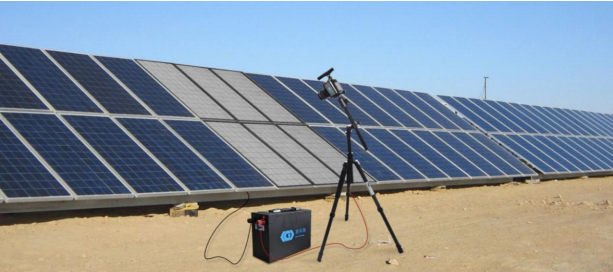
The current scale of existing photovoltaic power stations continues to expand, and refined operation and maintenance of components and non-destructive on-site testing have become essential needs in the industry. The portability, strong light imaging capability, and defect recognition accuracy of outdoor EL testing equipment have become core purchasing indicators. The Suzhou LAILX LXG30 portable EL detector has four core advantages: no need for shading, high-definition precision, portability, and full field adaptability. It solves the core pain points of traditional EL equipment outdoor operations, balances high-end imaging performance with practical mobile detection, and provides low-cost and high-efficiency non-destructive defect detection solutions for various links in the photovoltaic industry chain. In the future, LAILX will continue to iterate infrared imaging algorithms, optimize equipment lightweight structures, expand unmanned aerial vehicle (UAV) linkage EL detection supporting functions, continuously improve the product matrix of photovoltaic module lifecycle detection, and help the clean energy industry transform into refined and intelligent operation and maintenance.
Photovoltaic panel hidden crack rapid detection instrument, solar cell testing equipment, outdoor photovoltaic power station tester
+86 177-0622-2370
Address: 4409 Wuzhong Avenue, Suzhou City, Jiangsu Province
Phone: +86 17706222370
Email: el@lailx.com

LINE