Welcome to LAIXL, producing EL testers, IV testers, and drone EL
 ×
×
+86 177-0622-2370
xinwen
浏览数:660 发布于:2026-06-25
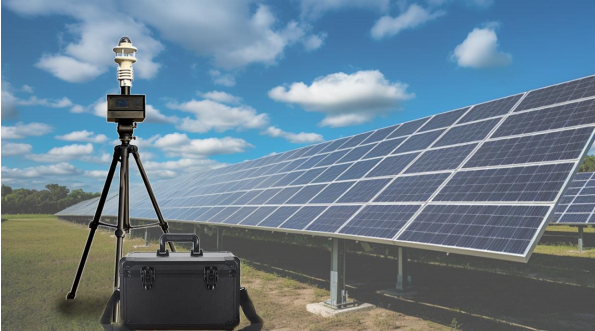 The power generation and component conversion efficiency of photovoltaic power plants are highly dependent on meteorological environmental parameters such as irradiance, ambient temperature, component temperature, wind speed, humidity, and air pressure. Accurate, real-time, and complete meteorological monitoring data is the core foundation for calculating the efficiency of the power plant's PR system, evaluating the true power generation performance of components, optimizing operation and maintenance strategies, and predicting power generation benefits. Traditional fixed meteorological stations have long installation cycles, large volumes, and cannot be moved, and are only suitable for fixed point monitoring of large ground power stations; Ordinary simple portable meteorological equipment uses mechanical rotation sensors, which are susceptible to wind and sand jamming, ice damage, low measurement accuracy, lack of photovoltaic specific total radiation monitoring modules, and cannot synchronously collect the full set of environmental parameters required for photovoltaic detection. The data transmission is unstable, the storage capacity is limited, and it is difficult to deploy in mountainous, distributed, and small-scale household power stations. Based on the core requirements of photovoltaic energy efficiency testing, Suzhou Laikesi New Energy Technology Co., Ltd. (LAILX) has launched the LXH506 portable photovoltaic weather station, which adopts a non mechanical ultrasonic sensing integrated design, lightweight and rapid deployment, synchronously collects all dimensional meteorological elements of photovoltaic testing, supports multi-mode wireless data transmission, and is equipped with an intelligent data management system to adapt to multiple scenarios such as power station acceptance, on-site IV synchronous testing, distributed mobile monitoring, and power generation evaluation, providing high-precision, movable, all-weather environmental data support for photovoltaic performance testing. Portable weather station
The current refined evaluation system in the photovoltaic industry has put forward new and strict requirements for meteorological monitoring equipment. In power station grid connection acceptance, third-party performance testing, and IV curve on-site testing operations, real-time irradiance, environmental temperature and humidity, wind speed and direction parameters need to be synchronously recorded in order to accurately convert the measured power on site to STC standard testing conditions. Without supporting professional meteorological equipment, only simple handheld probes can be relied on for single point collection, resulting in large data errors and significant deviations in the final power evaluation results; Traditional mechanical sensors and portable meteorological instruments suffer from problems such as bearing wear, sand and dust jamming, and freezing and stopping in winter. They also have a high failure rate during long-term operation in complex outdoor environments, resulting in a significant decrease in the accuracy of wind speed and direction measurements; The deployment process of most devices is complex, with assembly and debugging of poles and sensors taking 1 to 2 hours, and temporary testing projects cannot be quickly deployed; Data transmission only supports wired connections, remote mountainous power stations without network coverage cannot remotely view data, local storage capacity is small, historical data retention period is short, and monthly and annual power generation trend analysis cannot be completed; At the same time, the general weather stations on the market have not been optimized for the photovoltaic industry, and lack high-precision solar total radiation sensors, which cannot accurately capture effective light intensity and are difficult to match the professional needs of photovoltaic module power generation calculation. The LAILX R&D team combines photovoltaic IV testing and on-site operation processes for power plant energy efficiency evaluation, using ultrasonic non mechanical sensing solutions and independently developing a photovoltaic dedicated multi-element integrated monitoring host. The LXH506 portable weather station has been implemented, providing a one-stop solution to the pain points of traditional weather monitoring equipment such as insufficient accuracy, cumbersome deployment, poor stability, and weak industry adaptability.
The core sensing module of LXH506 adopts fully autonomous ultrasonic micro meteorological sensors, without any mechanical rotating parts, bearing wear, sand and dust jamming, and low-temperature freezing and blocking faults. It is suitable for all-weather stable monitoring of various outdoor complex environments such as high temperature, severe cold, high humidity, sand and snow. The device can synchronously collect six core meteorological elements for photovoltaic detection, including wind speed, wind direction, environmental temperature, relative humidity, atmospheric pressure, and total solar radiation. It can also expand environmental monitoring indicators such as rainfall, ultraviolet radiation, PM2.5, and CO ₂ as needed, comprehensively covering all environmental parameters required for photovoltaic performance evaluation. The core measurement accuracy meets the industry's top standards: the wind speed measurement range is 0 to 60m/s, with an accuracy of ± 0.3m/s; Wind direction measurement from 0 to 359.9 ° at all angles, with an accuracy of ± 3 °; The temperature measurement accuracy is ± 0.2 ℃, and the humidity is ± 3% RH. The total radiation sensor has a range of 0 to 2000W/㎡ and an accuracy of ± 2%, which fully complies with the national meteorological observation standards for photovoltaic power plant performance testing. The measured environmental data has extremely small errors. When used synchronously with the LAILX LX-PV31 portable IV tester, it can greatly improve the accuracy of component power STC conversion and ensure the authoritative and effective third-party testing data. The sensor is equipped with an aluminum alloy anti-corrosion shell, which is resistant to UV aging and has no significant degradation in measurement performance after long-term outdoor use, reducing the frequency of equipment calibration and maintenance in the later stage.
Lightweight rapid deployment and multi-mode communication design suitable for mobile detection scenarios, the LXH506 complete set of equipment weighs less than 5kg. The sensors, data acquisition host, and extendable tripod are integrated and stored in a customized shock-absorbing rod protective box, allowing for easy transportation by a single person without any burden. It can be easily transported to inconvenient locations such as mountainous areas, rooftops, and water photovoltaics. The device can be tested out of the box, with a tripod that can be quickly extended and fixed, and sensors that can be assembled with just one click. The full deployment only takes 5 minutes, without the need for professional construction personnel or pouring fixed bases. It can be flexibly deployed for temporary acceptance, mobile inspection, and multi-point comparison monitoring scenarios. After the testing is completed, it can be quickly stored and transported to the next point, perfectly adapting to the short-term testing needs of distributed, household, and small-scale industrial and commercial photovoltaic projects. The communication system supports 4G wireless, WIFI, RS485/RS232 wired multi-mode transmission. Stations in mountainous areas without broadband coverage rely on 4G modules to remotely upload data to the monitoring platform. Mobile phones and computers can view meteorological data in real-time anytime, anywhere; The wired interface is adapted for close range local data collection, and if transmission fails, historical data will be automatically resent to prevent data loss during field operations. The host is equipped with a large capacity local storage chip, which can continuously store complete minute level monitoring data for a whole year. Coupled with automatic data backup function, massive historical meteorological data is fully retained, providing sufficient data support for long-term trend analysis of power generation and evaluation of component degradation year by year.
The intelligent data processing software connects the entire process data link of photovoltaic detection. LXH506 is equipped with LAILX's independently developed LX-APP mobile software and HQservice computer analysis system. The software has complete independent intellectual property rights, and the operation interface is simple and easy to understand, without the need for professional meteorological knowledge to operate. Mobile devices can view real-time instantaneous values, hourly averages, and daily cumulative total radiation of various meteorological elements, and set alerts for temperature, humidity, and wind speed exceeding standards; The computer software supports batch export of historical data, visualization of curves, and automatic generation of monthly/annual meteorological statistical reports. The data format is compatible with Excel and PDF, and can be directly embedded in photovoltaic IV detection reports and power station performance evaluation reports. The software comes with a built-in free domain name resolution service, which does not require additional payment for cloud services. Enterprises can build their own local monitoring database to meet the needs of third-party testing agencies and large-scale photovoltaic group data management. The equipment is equipped with multiple safety designs such as signal lightning protection and power reverse protection, ensuring stable operation during outdoor thunderstorms and avoiding damage to the monitoring host caused by lightning strikes and wiring errors, greatly reducing the probability of equipment failure.
The diversified application scenarios of the product cover the monitoring needs of the entire photovoltaic industry. In on-site testing operations of photovoltaic modules and string IV, it is used in conjunction with the LX-PV31 portable IV tester to synchronously collect real-time irradiation and temperature parameters, accurately convert standard condition power, and ensure authoritative and compliant testing report data; During the grid connection acceptance stage of the newly built photovoltaic power station, temporary equipment will be installed to continuously monitor complete meteorological data for 72 hours, and the actual system efficiency PR value of the power station will be evaluated in conjunction with the calculation of power generation; In the operation and maintenance monitoring of existing photovoltaic power stations, multiple points can be moved and deployed to compare the differences in lighting and temperature between different arrays, analyze the causes of uneven power generation, and optimize operation and maintenance cleaning and component replacement strategies; Third party testing institutions are used for special testing of power station performance appraisal and assessment of power generation loss; At the same time, it is suitable for long-term meteorological monitoring in photovoltaic research laboratories, agricultural photovoltaic complementary comprehensive bases, and integrated wind solar storage projects, meeting the dual needs of temporary mobile detection and short-term fixed monitoring.
The R&D leader of LAILX in Suzhou stated that the LXH506 ultrasonic sensor, data acquisition motherboard, and supporting analysis software have all been domestically developed and independently developed, breaking free from the limitations of high prices and lagging after-sales service of imported meteorological equipment. The equipment has undergone multiple reliability tests such as high and low temperatures, rain, dust, and long-term continuous operation before leaving the factory, and is suitable for various complex climate environments in the north and south of China. The enterprise has a nationwide after-sales service network, providing on-site equipment deployment training, annual accuracy calibration, and lifelong free software iteration upgrade services. For large photovoltaic enterprises, a multi site centralized monitoring and management platform can be customized to adapt to the unified data control of large-scale stations.
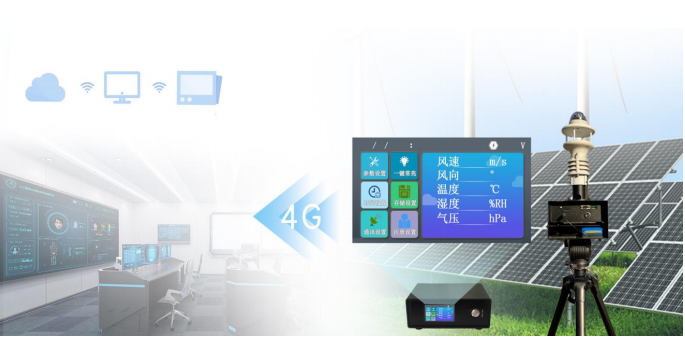
Under the trend of the photovoltaic industry transforming towards refinement and digitization, high-precision and mobile meteorological monitoring is the basic data support for accurately evaluating the power generation performance of power plants and quantifying operation and maintenance benefits. The LAILX LXH506 portable photovoltaic meteorological station in Suzhou fills the market gap in small and distributed photovoltaic mobile meteorological monitoring equipment with four core advantages: no mechanical high stability sensing, five minute rapid deployment, multi-mode wireless transmission, and photovoltaic special data optimization. It forms a complete photovoltaic station detection product matrix with LAILX IV, EL, infrared thermal imaging, and insulation grounding comprehensive detection equipment, and constructs a comprehensive detection system from performance, defects, electrical safety to environmental monitoring. In the future, Suzhou Laikesi will continue to deeply cultivate the new energy testing track, continuously iterate and optimize photovoltaic specialized testing instruments, and use domestically produced high-precision equipment to help improve the quality, efficiency, and sustainable development of China's photovoltaic industry.
+86 177-0622-2370
Address: 4409 Wuzhong Avenue, Suzhou City, Jiangsu Province
Phone: +86 17706222370
Email: el@lailx.com

LINE