Welcome to LAIXL, producing EL testers, IV testers, and drone EL
 ×
×
+86 177-0622-2370
xinwen
浏览数:652 发布于:2026-06-24
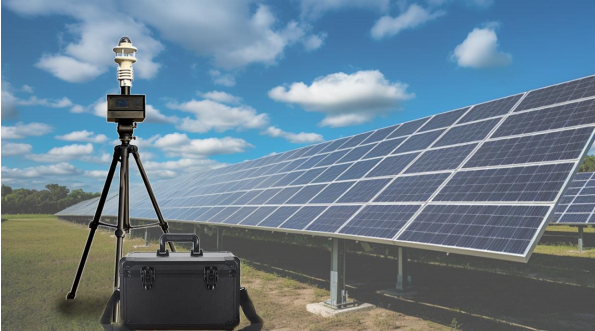 Light irradiation, environmental temperature and humidity, wind speed and direction, and rainfall are the core basic data that determine the power generation efficiency of photovoltaic modules, evaluate the theoretical PR value of power plants, analyze power attenuation, and predict meteorological disaster risks. Traditional fixed large-scale meteorological stations have long installation cycles, are immovable, and can only monitor single point meteorology. Mountain areas, distributed roofs, and temporary experimental photovoltaic projects cannot be flexibly deployed, resulting in large-scale monitoring blind spots. Suzhou LAILX is deeply engaged in the research and development of photovoltaic environmental monitoring equipment, and has launched the LXH506 portable weather station, which integrates high-precision sensing modules with multiple elements, lightweight and fast installation structure, and can be deployed in the field in 5 minutes. It synchronously collects all meteorological parameters required for photovoltaic operation and maintenance, and has both wired and wireless dual transmission modes, meeting the needs of multi-point mobile monitoring for power station acceptance, outdoor testing, and temporary inspection. It has become a benchmark equipment for mobile weather monitoring in the photovoltaic industry. Portable weather station
The LXH506 machine is equipped with an industrial grade high-precision sensor array without mechanical wear, and comes standard with seven core monitoring modules: total irradiance, ambient temperature, relative humidity, wind speed, wind direction, atmospheric pressure, and rainfall. It can expand special sensing accessories for ultraviolet radiation, PM2.5, CO ₂, and module back plate temperature according to user needs, fully covering all environmental indicators for photovoltaic power plant performance evaluation. The core sensing components have been calibrated by the meteorological metrology laboratory, with a temperature measurement accuracy of ± 0.5 ℃, wind speed accuracy of ± 0.1m/s, and irradiance measurement error of less than ± 3%. All parameter measurement standards comply with the national meteorological observation specifications for photovoltaic power plants, and the collected data has metrological authority and can be directly used for power plant theoretical calculation, STC standard conversion, and project acceptance report preparation. The sensor design without moving parts significantly reduces equipment wear and tear, with no lag or wear in wind, sand, and rain environments. The long-term field use and maintenance cycle is extended by three times, reducing the cost of sensor replacement and operation.
The biggest core advantage of the equipment is its lightweight and rapid deployment structure. The complete set of sensing modules, control host, and high-density carbon fiber tripod are stored in a portable three proof box. The entire equipment is lightweight and can be easily transported by a single person. The tripod has a compact folding storage volume and can be easily loaded into the vehicle's trunk and small construction vehicles. It is suitable for various non fixed installation basic scenarios such as mountain photovoltaics, household roof distributed, agricultural photovoltaic complementary greenhouses, and temporary monitoring points for offshore photovoltaics. The entire equipment setup process is minimalist, consisting of three steps: tripod deployment and fixation, sensor module docking with the host, and power on start-up. The entire process takes no more than 5 minutes, without the need for professional construction personnel or concrete bases. Temporary monitoring tasks can be installed at any time, and dismantling and transportation can be carried out immediately after monitoring is completed, perfectly solving the pain points of traditional fixed weather stations that cannot be moved and have complicated installation. The overall protection level of the machine is IP65, with a fully sealed sensor housing that is dustproof and waterproof. The working temperature covers -40 ℃ to 60 ℃, and it can operate stably throughout the year in high-altitude, desert, coastal high salt spray, and rainy areas in the south.
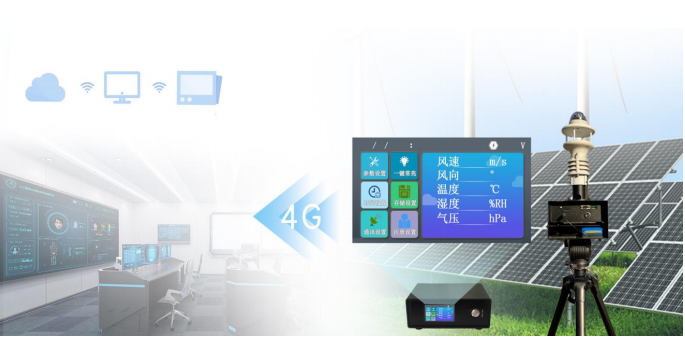
The data collection and transmission system is adapted to the remote management needs of photovoltaic operation and maintenance, equipped with a 4G full network wireless communication module. In mountainous and remote areas without network cables, meteorological data can be remotely and real-time uploaded to the computer monitoring platform. The data transmission penetration is strong and is not affected by the signal shielding interference of photovoltaic array metal brackets; Equipped with RS232 and RS485 dual wired interfaces, it can be directly connected to inverters and photovoltaic monitoring backend at close range, realizing the linkage collection of meteorological data and power generation data, and synchronously analyzing the corresponding relationship between irradiation changes and power generation fluctuations. The device is equipped with a large capacity local storage chip, which can continuously collect and store historical meteorological data for a whole year around the clock. It supports automatic data backup and segmented export, and will not lose monitoring records due to power outages. The background is equipped with professional photovoltaic meteorological analysis software, which automatically generates daily, monthly, and annual irradiation statistics reports, draws temperature, humidity, and wind speed trend curves, accurately calculates theoretical power generation in different periods, and is used for power plant PR efficiency evaluation, component attenuation comparison, and operation and maintenance plan optimization.
The equipment is specially designed for the photovoltaic industry, with a built-in photovoltaic irradiation correction model that can automatically correct the effective irradiation values on the surface of the components based on environmental temperature and wind speed, eliminating the interference of environmental airflow and temperature changes on power generation calculations and greatly improving the accuracy of theoretical power calculation for power plants. The low-power circuit design greatly extends the field endurance, comes standard with a large capacity lithium battery pack, and can continuously monitor for more than 30 days without an external power source. It can also be equipped with solar supplementary light power supply components, and long-term unmanned field monitoring does not require frequent battery replacement, making it suitable for long-term testing and monitoring projects in remote mountainous areas. The operation host is equipped with a Chinese color display screen, which broadcasts all meteorological parameters in real-time. It supports setting data collection intervals, high and low temperatures, strong winds, and heavy rainfall warning thresholds. If the parameters exceed the standard, warning information will be automatically recorded. Operation and maintenance personnel can predict the risk of extreme weather damage to the photovoltaic array in advance and carry out component protection and array reinforcement operations in a timely manner.
Under the trend of refined operation and maintenance in the photovoltaic industry, meteorological environmental data has become an indispensable foundation for power plant efficiency evaluation, fault tracing, and new project site selection. The demand for multi-point mobile meteorological monitoring continues to grow. The LAILX LXH506 portable meteorological station in Suzhou, with its four core advantages of multi-element synchronous sensing, fast disassembly and movement, high-precision measurement, and wireless remote transmission, is widely used in scenarios such as acceptance of new photovoltaic projects, multi-point comparison monitoring of existing power stations, outdoor aging testing of photovoltaic modules, and performance evaluation of distributed rooftop power stations. It can also be extended to mobile meteorological monitoring in multiple fields such as agriculture, emergency rescue, and ecological research. The product relies on the comprehensive technical training, after-sales calibration, and lifetime firmware free upgrade services provided by LAILX in Suzhou. It has been purchased and implemented in bulk by major new energy design institutes, third-party testing institutions, and photovoltaic group operation and maintenance centers in China. In the future, LAILX in Suzhou will continue to optimize sensing accuracy, add a special monitoring module for backside irradiation of double-sided components, establish a linkage analysis channel between meteorological data and IV, EL, and thermal imaging detection data, and build an integrated and complete detection system for "electrical performance+component defects+environmental meteorology" of photovoltaic power plants. Domestic portable meteorological monitoring equipment will be used to promote the digital and refined upgrading of photovoltaic operation and maintenance.
+86 177-0622-2370
Address: 4409 Wuzhong Avenue, Suzhou City, Jiangsu Province
Phone: +86 17706222370
Email: el@lailx.com

LINE