Welcome to LAIXL, producing EL testers, IV testers, and drone EL
 ×
×
+86 177-0622-2370
xinwen
浏览数:665 发布于:2026-06-23
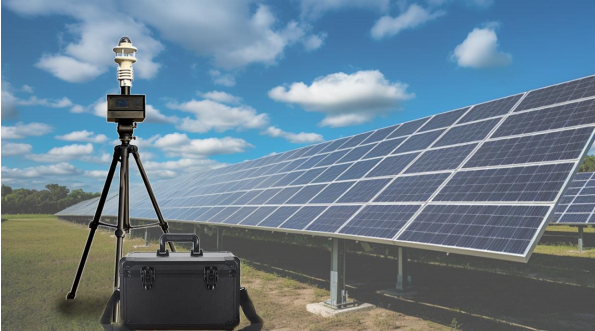 The power generation efficiency of photovoltaic modules is directly affected by meteorological parameters such as solar irradiance, environmental temperature and humidity, module temperature, wind speed and direction. The evaluation of power generation, correction of IV power data standards, analysis of operation and maintenance attenuation, and survey of photovoltaic resources all rely on accurate and synchronized meteorological data support. Traditional fixed meteorological stations are bulky, cumbersome to install, and costly, and are only suitable for long-term fixed monitoring of large ground power stations; Small and simple meteorological sensors have single parameters, which cannot synchronously collect all the core elements required for photovoltaics, and are inconvenient to carry to distributed, mountainous, and rooftop photovoltaics for mobile surveys. Suzhou LAILX has launched the LXH506 portable photovoltaic weather station, which integrates all elements of the photovoltaic industry weather sensors, lightweight integrated body, rapid deployment, wireless data transmission, adapts to photovoltaic resource exploration, on-site IV synchronous temperature measurement and irradiation, short-term comparative monitoring of power plants, and distributed project environmental assessment in multiple scenarios, providing supporting environmental data support for precise photovoltaic detection. Portable photovoltaic weather station
The photovoltaic industry standard clearly requires that module power IV testing must synchronously collect on-site irradiation and module temperature data, complete STC standard operating condition conversion, and power detection data without synchronized meteorological parameters does not have acceptance and credibility; The preliminary resource survey for a new photovoltaic project requires on-site collection of annual radiation, temperature, and humidity data at the site, which serves as the core basis for calculating installed capacity and revenue. LXH506 integrates multiple types of high-precision sensors for the exclusive needs of the photovoltaic industry, including slope total radiation sensors, environmental temperature and humidity probes, component patch temperature sensors, wind speed and direction sensors, and atmospheric pressure sensors. It can synchronously collect all 7 core environmental parameters required for photovoltaic detection. The sensors use highly stable optical components, with minimal cosine error in total radiation and zero drift for long-term outdoor use. The irradiation measurement accuracy is ± 2%, and the temperature error is ± 0.3 ℃. The data accuracy reaches the level of professional meteorological monitoring equipment, fully meeting the requirements of NB/T photovoltaic detection specifications and IEC photovoltaic performance testing standards.
The ultimate lightweight design of the equipment enables fast and infrastructure free deployment. The total weight of the complete set including the bracket is only 2.8kg, which can be stored in a portable backpack and carried by a single person on foot to mountains, rooftops, fish ponds, and complex mountain photovoltaic sites; The tripod is made of stretchable aluminum alloy material, which can be unfolded in just 2 minutes without the need for a concrete base or wiring construction. It can be placed and leveled on site to start collecting data, and can be directly stored and transported after the survey is completed. It is suitable for multi site mobile survey operations. The overall protection level of the machine is IP67, waterproof, dustproof, and UV resistant. It can work continuously outdoors for 7 × 24 hours without interruption. It is equipped with a built-in solar self power supply system and a large capacity energy storage battery. It can be charged independently by photovoltaic panels on sunny days, and can maintain stable data collection for 15 days in continuous rainy and cloudy weather. It completely eliminates the limitation of external mains power supply and does not require additional power supply in remote areas without power grids.
The data collection and linkage function enables the interconnection of photovoltaic detection equipment. The LXH506 supports millisecond level synchronous data collection and can be wirelessly linked with the LX-PV31 portable IV tester to automatically retrieve real-time irradiation and component temperature data during IV curve testing. It automatically completes standard operating condition power correction without manual recording or input, eliminating data deviation caused by manual recording. The local storage capacity of the device can retain complete meteorological data for one year, supporting 4G wireless remote transmission. The data is uploaded in real-time to the LAILX cloud monitoring platform, and historical radiation and temperature curves can be viewed anytime and anywhere on mobile phones and computers. Excel format meteorological data reports can be exported for photovoltaic resource evaluation, power generation simulation calculation, and annual operation and maintenance attenuation data analysis. The cloud platform supports multi site data comparison, making it convenient for operation and maintenance personnel to distinguish environmental differences between different formations and roof areas, and optimize component cleaning and operation cycles accordingly.
The multi scenario landing fully reflects the practical value of the equipment. The resource survey team of the New Energy Design Institute is equipped with LXH506 to carry out nationwide distributed photovoltaic site surveys, which can complete 3-5 roof and mountain site data collection in a single day. The lightweight body greatly reduces the labor intensity of field surveys, and accurate meteorological data improves the accuracy of project power generation calculation; The third-party photovoltaic testing agency will use the meteorological station in conjunction with the IV tester to synchronously collect power and environmental data on site. The testing report data issued will be complete and compliant, and will pass the acceptance of the owner and the energy bureau in one go; Industrial and commercial rooftop photovoltaic operation and maintenance enterprises use equipment to monitor the temperature difference of different roof irradiation zones, adjust the cleaning frequency accordingly, balance the overall power generation efficiency, and increase the average annual power generation by 1.8%. The equipment is also suitable for household photovoltaic demonstration monitoring, university photovoltaic laboratory teaching, energy storage supporting environmental monitoring and other scenarios.
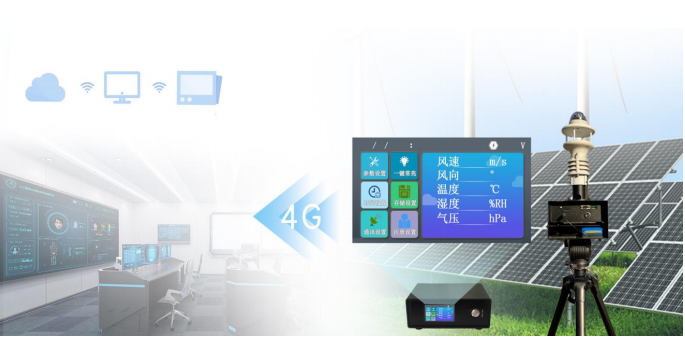
Suzhou LAILX, as a domestically developed brand of photovoltaic detection instruments, has independently developed the LXH506 complete set of sensors, acquisition motherboards, and cloud systems. Compared with imported portable meteorological equipment, it has higher cost-effectiveness and localized after-sales response speed. It provides a two-year warranty for the whole machine, annual free calibration of sensors, and lifelong free use of cloud platforms. Combining its IV, EL, infrared thermal imaging, and insulation grounding comprehensive testing instruments, LAILX has formed an integrated detection solution covering the entire chain of photovoltaic surveying, quality inspection, acceptance, and operation and maintenance. It continues to iterate portable meteorological monitoring technology, optimize sensor integration and cloud data analysis capabilities, and use precise and lightweight meteorological monitoring equipment to help the photovoltaic industry digitize and refine operation and maintenance, promote high-quality development of the clean energy industry, and steadily implement the dual carbon strategy.
+86 177-0622-2370
Address: 4409 Wuzhong Avenue, Suzhou City, Jiangsu Province
Phone: +86 17706222370
Email: el@lailx.com

LINE