Welcome to LAIXL, producing EL testers, IV testers, and drone EL
 ×
×
+86 177-0622-2370
xinwen
浏览数:7 发布于:2026-06-22
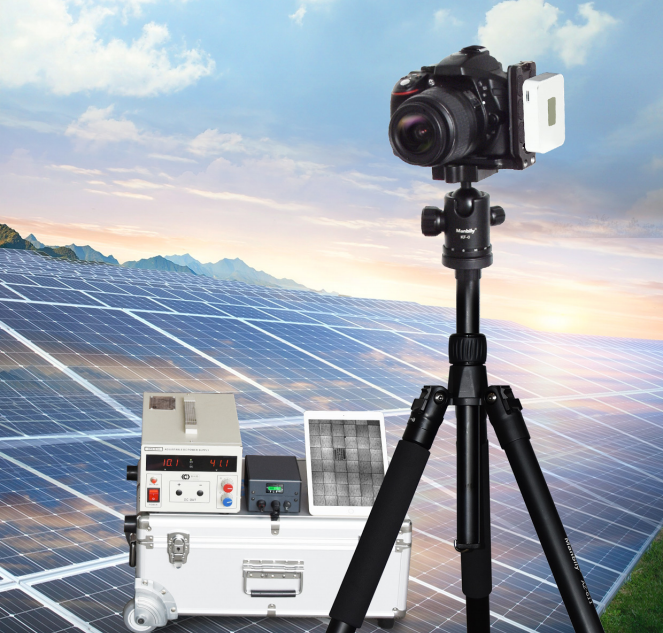 Hidden cracks, faulty soldering, broken grids, PID attenuation, and internal defects of hot spots of photovoltaic modules are the core hidden dangers that restrict the power generation of the power station and shorten the service life of the modules. The traditional laboratory EL detector must build a dark shed and rely on fixed mains power. It can only be used in the factory workshops, and cannot enter the mountain, roof, mudflat and other outdoor power stations to carry out nondestructive testing; Early simple portable EL devices had shortcomings such as strong light interference, blurred imaging, short battery life, cumbersome assembly, and high defect detection rate, which have long plagued photovoltaic operation and acceptance work. Suzhou Laikesi New Energy Technology Co., Ltd. (LAILX) has been deeply involved in electroluminescent non-destructive testing technology for many years. It has overcome multiple core technologies such as outdoor strong light suppression, lightweight high-voltage excitation, long endurance power supply, and AI defect recognition. It has launched the LXG30 portable EL detector, which realizes non-destructive testing of outdoor components day and night, and connects the entire process of component factory sampling, power station grid connection acceptance, and operation and maintenance fault investigation, becoming a standardized benchmark equipment for EL testing on photovoltaic sites. Photovoltaic power station tester
The LXG30 machine adopts a modular and lightweight integrated design. The entire set of imaging cameras, programmable excitation power supply, carbon fiber tripod, and large capacity lithium battery are stored in a shock resistant and wear-resistant portable case. The total weight of the entire equipment is only 7.8kg, which can be carried or carried by a single person for transportation. The length of the tripod after storage is less than 60 centimeters, and it can be flexibly arranged in confined work spaces such as high-rise roofs, steep mountain slopes, and narrow commercial roofs. The equipment can be fully assembled and debugged within 5 minutes after unpacking, without the need for professional technical personnel to operate, greatly reducing the threshold for on-site inspection. The overall protection level of the machine reaches IP64, and the shell is made of impact resistant engineering plastic, which has the characteristics of rain, dust, and high and low temperature resistance. It can adapt to extreme outdoor environments such as northwest sandstorms, coastal high salt fog, and southern rainy and humid conditions. Unlike traditional desktop EL devices that can only be used indoors, it truly realizes non-destructive imaging testing anytime and anywhere on site without the need to build a shading shed. During the day, it suppresses natural light interference through self-developed strong light filtering algorithms, and at night, the imaging clarity in low light environments is further improved, and the day and night detection effect is stable and consistent.
The core imaging system is equipped with a self-developed 20 megapixel industrial grade near-infrared CMOS camera, paired with a professional near-infrared optical lens, with a pixel accuracy of up to 1.5mm/pixel. It can clearly capture micro level internal defects, accurately identify more than ten types of internal hidden faults such as hidden cracks, fragments, virtual soldering, broken grids, black cores, black edges, mixed battery cells, PID attenuation, sintered mesh, edge engraving, etc., and solve the problem of missed detection of subtle defects in ordinary portable EL devices. The equipment is equipped with a programmable and adjustable excitation power supply, with an output voltage of 0-60V and a continuous adjustable current of 0-5A. It is compatible with all types of photovoltaic modules including monocrystalline silicon, polycrystalline silicon, half sheet, double glass, and perovskite. It supports two modes: independent imaging of individual modules and batch scanning imaging of groups. Large ground power stations can quickly complete batch detection of the entire array, and the imaging images are transmitted in real-time to handheld touch terminals for real-time inspection of defect locations on site, without the need to bring them back to the laboratory for secondary analysis, greatly reducing the troubleshooting cycle.
The intelligent function is the core highlight that sets LXG30 apart from similar products. The device is equipped with LAILX's self-developed AI defect intelligent recognition algorithm, which automatically marks the defect area, classifies and statistics the defect type after shooting, and automatically generates a standardized EL detection report. The report includes complete content such as component number, shooting time, defect location, defect level, and rectification suggestions. It supports local storage of images and PDF formats, and can be synchronized to computer terminals through wireless transmission, adapting to the acceptance data archiving needs of third-party testing institutions. The equipment is equipped with a cross laser positioning module to accurately align the component shooting area, avoiding imaging offset and missed shots; Equipped with a large capacity lithium battery, it can continuously complete EL imaging of more than 800 components when fully charged, meeting the requirements of daily large-scale power station inspection operations. It also supports dual power supply mode for mains electricity, and can be connected to an external power source for long-term sampling in the factory workshop, catering to both outdoor mobile and indoor fixed use scenarios. The equipment circuit is equipped with multiple protection mechanisms such as short circuit, open circuit, current backflow, overheating, and static electricity, which stimulate the output to adaptively match the component parameters, and will not damage the photovoltaic components due to wiring errors, ensuring the dual safety of the equipment and components.
In practical application scenarios, LXG30 covers the full process testing needs of the photovoltaic industry: component manufacturing enterprises can use it for sampling of finished products on the production line, screening defective components in advance, and reducing after-sales losses; During the grid connection acceptance stage of photovoltaic power plants, third-party inspectors can bring equipment to the project site to randomly inspect the array components and verify hidden cracks and damages generated during construction and transportation; During the daily operation and maintenance phase of the power station, EL scanning is quickly carried out to locate internal defective components and replace and repair them in a timely manner, in order to prevent the expansion of faults and the occurrence of hot spots and fire safety hazards. Compared with the traditional manual naked eye and simple tool inspection mode, the LXG30 detection efficiency has been improved by more than ten times, and the defect recognition accuracy has exceeded 99%, effectively reducing power plant operation and maintenance losses and electricity costs.
Suzhou LAILX has a complete after-sales and technical service system. LXG30 provides a one-year warranty for the entire machine and a two-year warranty for the camera core components. Dedicated technical engineers are equipped in various photovoltaic regions across the country to provide on-site equipment debugging, operation training, and troubleshooting services. The equipment software is upgraded for free for life, and the AI defect recognition model is continuously iterated to meet the testing needs of new photovoltaic modules. The current domestic portable EL device market has long suffered from pain points such as insufficient imaging accuracy and poor outdoor adaptation. LXG30, with its three core advantages of independent controllable imaging algorithm, lightweight outdoor design, and intelligent AI analysis, has broken the high price monopoly of imported EL devices. With high cost-effectiveness and localized scene optimization, it has quickly gained recognition from major domestic power generation groups, third-party testing institutions, and photovoltaic operation and maintenance enterprises.
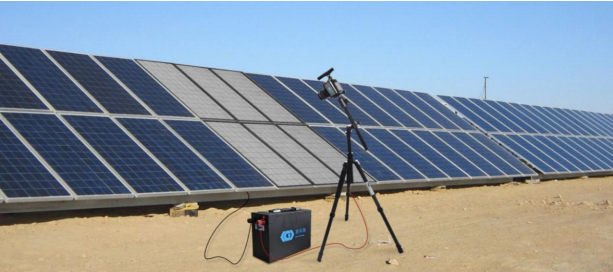
The high-quality development of the photovoltaic industry cannot be separated from full process quality control, and EL non-destructive testing is a key link in controlling the internal quality of components. The LAILX LXG30 portable EL detector solves the pain points of the outdoor inspection industry with technological innovation, realizing mobile, all-weather, intelligent non-destructive testing, and promoting the standardization of photovoltaic module quality testing. In the future, Lexus will continue to optimize EL imaging hardware and intelligent analysis platform, expand new solutions such as EL detection on drones and cloud based defect big data management, and use domestically produced independent detection equipment to help improve the quality, efficiency, safety, and stable development of the clean energy industry.
Photovoltaic power station tester, outdoor photovoltaic power station tester, solar cell testing equipment
+86 177-0622-2370
Address: 4409 Wuzhong Avenue, Suzhou City, Jiangsu Province
Phone: +86 17706222370
Email: el@lailx.com

LINE